Hundreds of Americans still dying of COVID each day despite signs the latest surge may be slowing

After several weeks of steady increases in coronavirus infections and hospitalizations, there are encouraging signs that the latest viral resurgence may be abating in the United States.
The rate of new infections appears to be dropping, with the U.S. now reporting 107,000 new cases each day — an average that has fallen by 12% in the last week, according to data collected by the Centers for Disease Control and Prevention (CDC).

The number of virus-positive Americans currently receiving care in hospitals across the country has plateaued at around 43,000 patients, according to data from the U.S. Department of Health and Human Services. Throughout the summer, hospital admission rates had been rising in many areas of the country, particularly in the South.
Hospitalizations, however, remain significantly lower now than during every other COVID-19 surge. There were more than 160,000 patients hospitalized with the virus during the surge last winter.
Despite some positive advances, coronavirus-related deaths remain at a persistently high level.
On average, nearly 400 American deaths to COVID-19 are reported each day, a daily total that has not seen any significant declines since the spring.
Over the last seven days alone, the U.S. has reported just under 2,700 COVID-19 deaths.
Since the beginning of 2022, nearly 205,000 Americans have been lost to COVID-19.
Over the last seven days alone, the U.S. has reported just under 2,700 COVID-19 deaths.
The latest viral surge has been largely driven by highly infectious variants, which continue to infect and reinfect Americans. It has been more than eight months since the original omicron variant emerged, and although the original strain is no longer circulating in the U.S., its subvariants continue to spread.
BA.5, a subvariant of omicron, is currently estimated to account for more than 87% of new COVID-19 cases in the U.S.
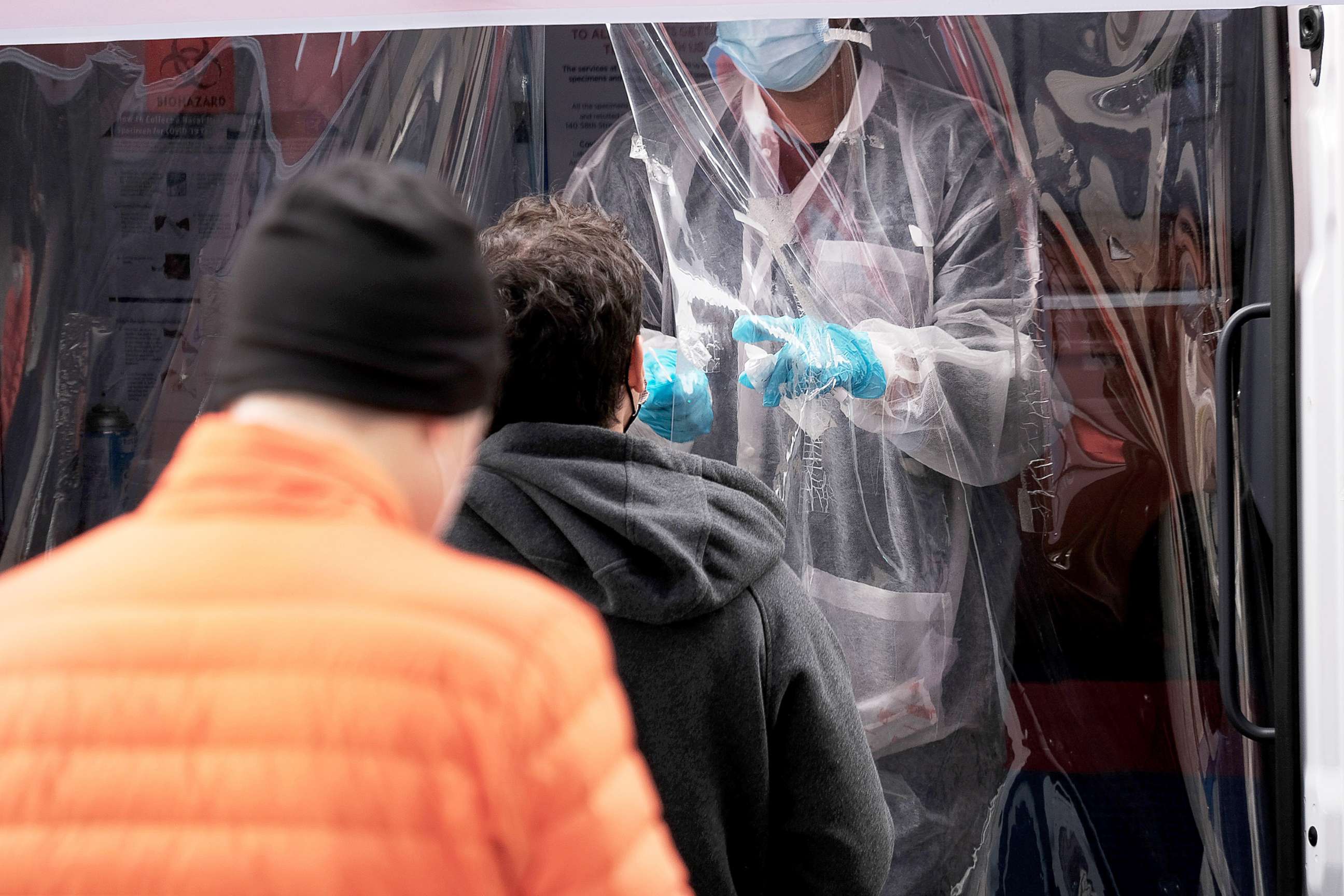
Omicron and its subvariants have been better at chipping away at vaccine efficacy, which has caused health experts to reignite their call for Americans to get vaccinated and boosted.
Last week, Dr. Anthony Fauci, the government's top infectious disease expert, warned that Americans who are not up to date on their COVID-19 vaccinations may be in "trouble" this fall, with immunity waning over time.
Although the burden of hospitalization and death continues to affect primarily individuals who are still unvaccinated, as well as those at highest risk, such as the elderly or the immunocompromised, other people who "don't fall into those categories" may also find themselves at-risk for severe disease, Fauci said during an interview with KNXAM.
More than 70 million Americans remain unvaccinated. Less than half of eligible Americans have received their first booster and only about one-third of people 50 years and older, who are eligible for a second booster, have received their supplemental shot.
Fauci stressed that in order to "get your arms around" the pandemic, more people must be vaccinated, domestically and globally, "so you don't give this virus such ample opportunity to freely circulate, and when you do that, the virus has more of an opportunity to mutate, and when you give it an opportunity to mutate, that's when you get new variants."