Measles cases seem to be slowing down in the US. What's behind it?

About a month ago, the rate of new measles cases was accelerating at a seemingly unprecedented rate with more than 100 infections being confirmed every week.
However, over the last couple of weeks, the rate of newly confirmed cases appears to be slowing.
The Centers for Disease Control and Prevention (CDC) confirmed an average of 22 weekly cases over the last two weeks.
Even in western Texas, which had been driving most new cases in the U.S., about 11 cases have been confirmed since May 23.
Public health experts told ABC News they believe measles cases are slowing down due to a mix of vaccination, a build of natural immunity and people staying home when sick. The CDC only includes confirmed cases, therefore not all cases may be accounted for.
"It was really about two weeks ago where we're going, 'Is this really slowing down?'" Katherine Wells, director of public health for the in Lubbock, Texas, told ABC News.
Increase in vaccination
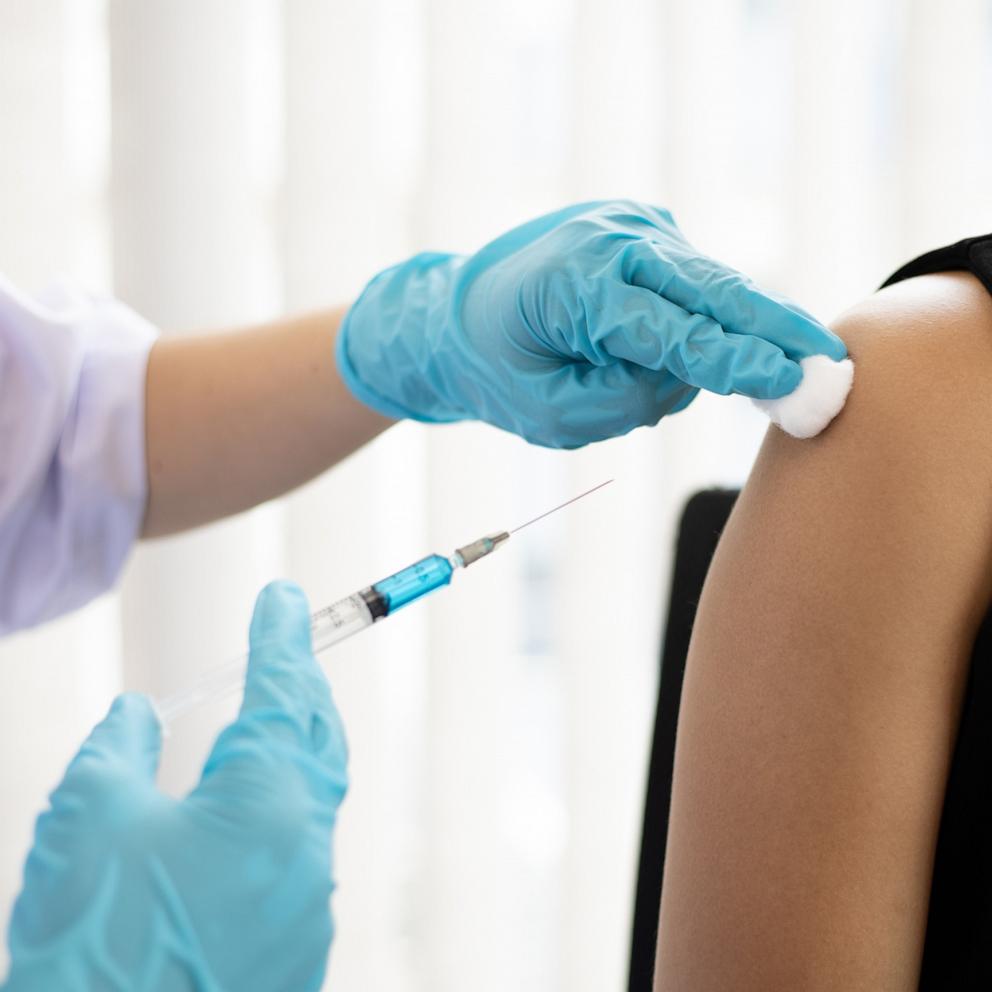
The CDC currently recommends that people receive two vaccine doses, the first at ages 12 to 15 months and the second between 4 and 6 years old. One dose is 93% effective, and two doses are 97% effective, the CDC says. Most vaccinated adults don't need a booster.
Health officials in Texas also expanded vaccination recommendations for those between 6 months and 12 months old to receive a third earlier dose.

Wells said Lubbock saw an increase in children and adults getting vaccinated, including parents who previously did not believe in vaccination.
"It's parents that were more in the line of, 'I didn't get my child vaccinated because there's perceived risk with the vaccine, and why vaccinate for a virus that I've never seen before?'" Wells said. "And then when we started seeing measles in the community, I think that their individual risk assessment changed, and they were like, 'OK, well, now we'll get that vaccine.'"
Wells estimates that at least 2,500 additional vaccines were distributed in the community based on data received from the state health department and other health care providers.
Dr. Perry Halkitis, dean of the Rutgers School of Public Health in New Jersey, said most people in the U.S. are vaccinated against measles.
"In the United States, we still have a good proportion of the population that is vaccinated for measles, which means that we have some level of protection as compared to COVID-19, which we didn't have any protection from when it first broke out," he said.
Buildup of natural immunity
When the first measles cases were confirmed in western Texas, health officials said the infections primarily affected insular communities, such as the Mennonite community.
Since then, measles has likely run through those communities, infecting those who were unvaccinated and mostly sparing those with natural immunity or vaccine-induced immunity.
"At a certain point, with people contracting measles, they're also developing immunity," Wells said. "We had a lot of cases in one community. But with that, they've also built up natural immunity to measles, so that just adds more kind of speed bumps and slows down the virus from spreading."
Dr. Jason Schwartz, an associate professor of public health in the Yale School of Public Health, explained that measles is incredibly contagious.
Just one infected patient can spread measles to up to nine out of 10 susceptible close contacts, according to the CDC.
"Ultimately that reservoir of unvaccinated individuals -- who are either too young to be vaccinated or can't be vaccinated or had family members who chose not to vaccinate them -- ultimately that gets exhausted," he told ABC News. "So, I think that's the story here and the idea that the outbreak, to some degree, kind of burned itself out in terms of its susceptible population."
Schwartz did add that the U.S. is still seeing flare-ups of isolated measles cases and small outbreaks in various part of the U.S. not associated with large outbreaks seen in Texas or New Mexico.
On Tuesday, Nebraska health officials confirmed a measles case in a "vaccinated child with no out-of-state travel history," making Nebraska the 32nd state to report a case of measles this year.
Changing behavior
Anecdotally, Wells said she believed some people in Lubbock and the surrounding community changed their behavior in response to measles.
With public awareness campaigns, people began staying home when they knew they were infected, which has limited exposures in places like doctors' offices and day cares, she said.

"We're not seeing as many people going into the doctor's office ... and we're not seeing seeing hospitalizations like we were seeing before … which is a very good sign," Wells said.
Halkitis said this change of behavior is similar to the mpox outbreak in 2022.
"My comparison to that is mpox, where we saw a huge change in behaviors in gay men and a large uptake in vaccination," he said. "I haven't seen a similar push [with measles]. We're talking about, remember, a small segment of the population that's unvaccinated. So, you have a hard-core group of people that seems somewhat intransigent in their ability to change their behavior around vaccines."
Although measles is not seasonal, Halkitis said the real indicator of whether measles will continue trending down is if cases stabilize in the fall, when kids are back in school and airborne viruses are easier to spread.