Certain Neutrogena, Aveeno sunscreens recalled due to traces of cancer-causing chemical
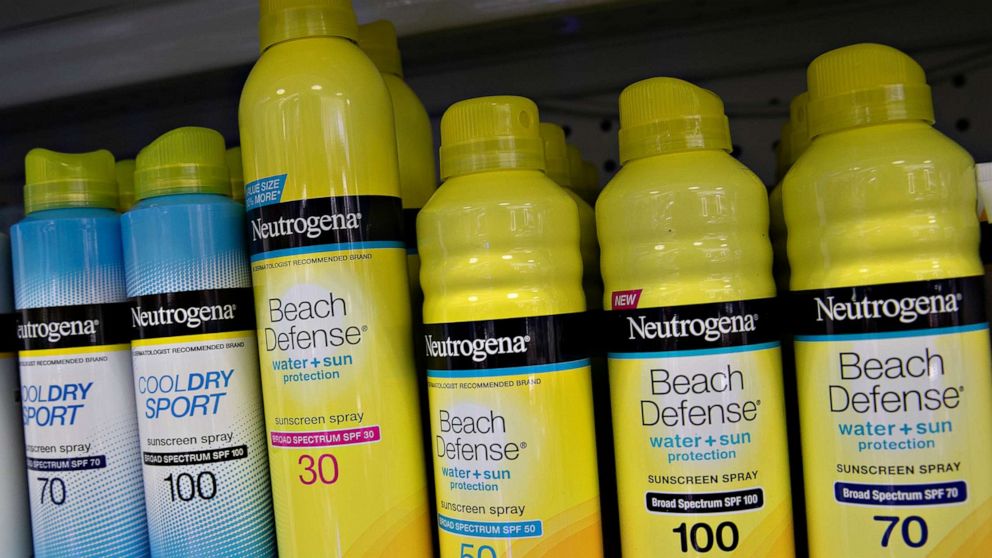
Johnson & Johnson has issued a voluntary recall of several sunscreen products after finding they contain trace amounts of a cancer-causing chemical.
The recalled products include five Neutrogena and Aveeno aerosol sunscreens, according to a statement released Wednesday by the company.
Some samples of the affected products, all spray-on sunscreens, were found to contain low levels of benzene, according to Johnson & Johnson, the parent company.

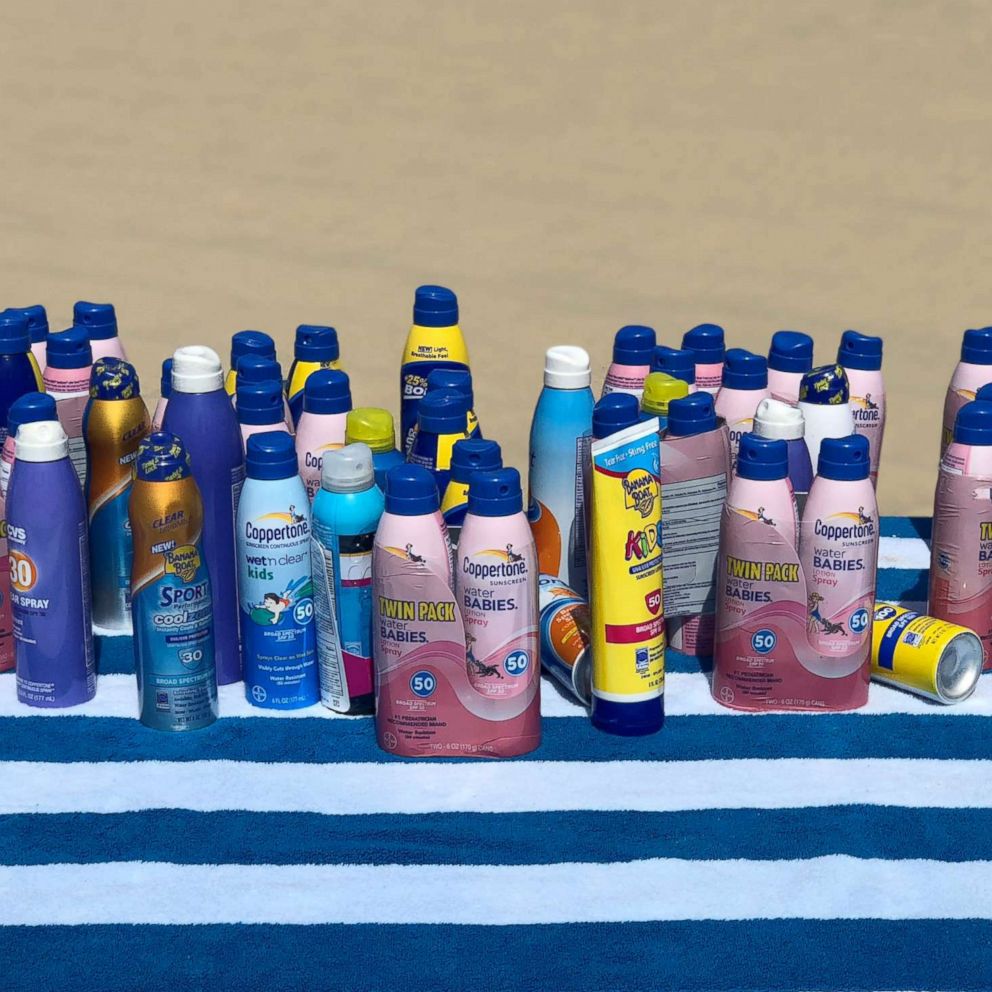
Johnson & Johnson said it recalled the products out of an "abundance of caution," noting the low levels of benzene found in the samples would not be expected to impact people’s health.
"Based on exposure modeling and the Environmental Protection Agency’s (EPA) framework, daily exposure to benzene in these aerosol sunscreen products at the levels detected in our testing would not be expected to cause adverse health consequences," the company said in a statement. "Out of an abundance of caution, we are recalling all lots of these specific aerosol sunscreen products."
Benzene is a colorless chemical that can cause complications like cancer, anemia and immune system damage, as well as irregular menstrual periods and a decrease in ovary size in women, according to the U.S. Centers for Disease Control and Prevention (CDC).
The most severe health complications typically come after long term exposure to benzene, which the CDC defines as exposure of one year or more.
Because benzene is not an ingredient in sunscreen, the recalled products are a contamination issue, according to Dr. Whitney Bowe, a New York-based dermatologist.
"You’re not going to find the word benzene on the sunscreen label because it’s not supposed to be there," Bowe said Friday on "Good Morning America." "Somewhere during the supply chain process, somewhere during the manufacturing process, some of these products got contaminated."
The five sunscreen products impacted by the voluntary recall are:
NEUTROGENA® Beach Defense® aerosol sunscreen
NEUTROGENA® Cool Dry Sport aerosol sunscreen
NEUTROGENA® Invisible Daily™ defense aerosol sunscreen
NEUTROGENA® Ultra Sheer® aerosol sunscreen
AVEENO® Protect + Refresh aerosol sunscreen
Product images and lot information is available on www.Neutrogena.com and www.aveeno.com.
Johnson & Johnson is advising consumers to stop using these products and discard them.
"Consumers may contact the JJCI Consumer Care Center 24/7 with questions or to request a refund by calling 1-800-458-1673. Consumers should contact their physician or healthcare provider if they have any questions, concerns or have experienced any problems related to using these aerosol sunscreen products," the company said in a statement. "JJCI is also notifying its distributors and retailers by letter and is arranging for returns of all recalled products."
For consumers who may be wondering whether or not they should use an aerosol sunscreen in light of the recall, Bowe said she in general recommends cream, gel and lotion-based sunscreen.
"It's actually very difficult to get an even application of the spray," she said, referring to aerosol sunscreens. "And there are some theoretical concerns when it comes to inhalation as well."
Bowe added the take home message for consumers is to continue to use sunscreen, saying the "benefits still outweigh the risks."
"Ultraviolet rays are a known carcinogen. Melanoma can be deadly. I still recommend using sunscreen and/or relying on sun protective fabrics," she said. "The take home message [is] keeping using your sunscreen, just avoid these particular products for now."