Sick Orlando Hospital Worker Tests Negative for MERS

May 14, 2014— -- An Orlando hospital worker exposed to the deadly MERS virus has tested negative for the infection, health officials said today.
The worker, whose name and gender have not been released, was hospitalized with flu-like symptoms May 12, roughly 24 hours after being exposed to a patient with MERS visiting from Saudi Arabia. Another hospital worker who developed symptoms but was never hospitalized has also tested negative for the virus, officials said.
The MERS patient, who works as a health care provider in Saudi Arabia, was admitted to Dr. P. Phillips Hospital in Orlando May 8, a week after developing symptoms of MERS mid-flight from Jeddah, Saudi Arabia, to London. He traveled through Boston and Atlanta before arriving in Orlando, where he visited two area hospitals.
A total of 20 hospital workers at Dr. P. Phillips Hospital and Orlando Regional Medical Center have been tested for the virus, health officials said. Test results for the remaining 18, who are in home isolation, are spending.
Health officials have also contacted an estimated 80 additional people who may have been exposed to the virus in waiting rooms at the two hospitals. The MERS patient was not wearing a mask despite his respiratory symptoms and a fever as high as 102 degrees, and did not immediately inform hospital staff that he worked at a hospital in Saudi Arabia that treated MERS patients, officials said.
Another 500 people who shared three U.S.-bound flights with the MERS patient have been contacted, health officials said today. So far none have shown symptoms of the virus.
5 Things to Know About the MERS Virus Now That It's Here
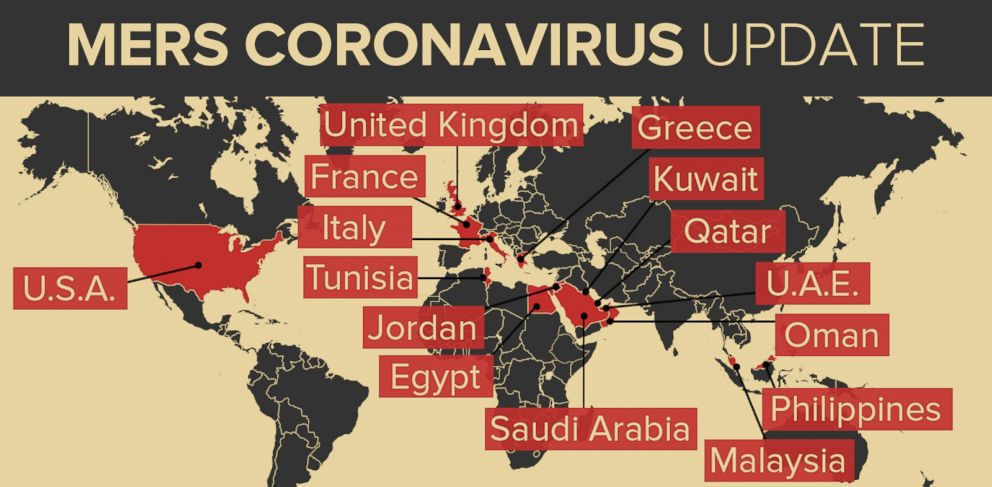
The United States is the latest of 15 countries to report cases of MERS. Saudi Arabia, ground zero for the outbreak, has reported 495 cases and 152 deaths. But the outbreak has not yet met the threshold for a “public health emergency of international concern,” the World Health Organization designation granted to other infamous infections like swine flu and polio.
“The thing you look at is the spread and what you can do about it,” WHO spokeswoman Christy Feig said of the agency’s announcement today. “In general, it’s not spreading well between people in the community, and we need to see that happening very easily.”
Even if MERS were spreading easily, there’s no antiviral drug or vaccine for it.
“With polio, you can do something about it,” Feig said, noting that the recent resurgence was declared a public health emergency of international concern May 5 – a move aimed at bolstering vaccination efforts. “There’s no vaccine for MERS."
It's "absolutely possible" for MERS to meet WHO's threshold for an emergency declaration, Feig added.
Find out how to protect yourself from MERS.
The Orlando MERS scare comes two weeks after a U.S. man was hospitalized with symptoms of the respiratory virus in Indiana. The man, whose name has not been released, was also working as a health care provider in Saudi Arabia before traveling by plane to London and Chicago and by bus to Munster, Indiana. He was discharged from the hospital Friday in what health officials hoped would mark the end of MERS in the United States.
The Orlando and Munster cases are not linked, officials said.
Health officials are not recommending that anyone change their travel plans at this time, but signs distributed to 22 U.S. airports urge people traveling to the Arabian Peninsula to avoid close contact with sick people, wash their hands often and call a doctor if they develop a fever, cough or shortness of breath within 14 days of their trip. U.S. airports will not use thermal scanners to test travelers for high temperatures, officials said today.