A smart drug implant – controlled from a smartphone – could treat chronic disease
Arthritis. Diabetes. Heart disease. Over 130 million Americans deal with the burden of chronic disease every day. But there’s a tiny new hope to get drug treatments in a big new way.
Though everybody is different, conventional treatments have a one-size-fits-all approach: pills or injections day in and day out and complicated regimens. A lot depends on the patient’s ability to reliably keep up.
“There is a need for long-term, reliable and convenient drug delivery systems to treat chronic diseases,” Alessandro Grattoni, Nanomedicine department chair at Houston Methodist, told ABC News. “Many patients have to take several drug doses each day and it can be easy to get confused.”
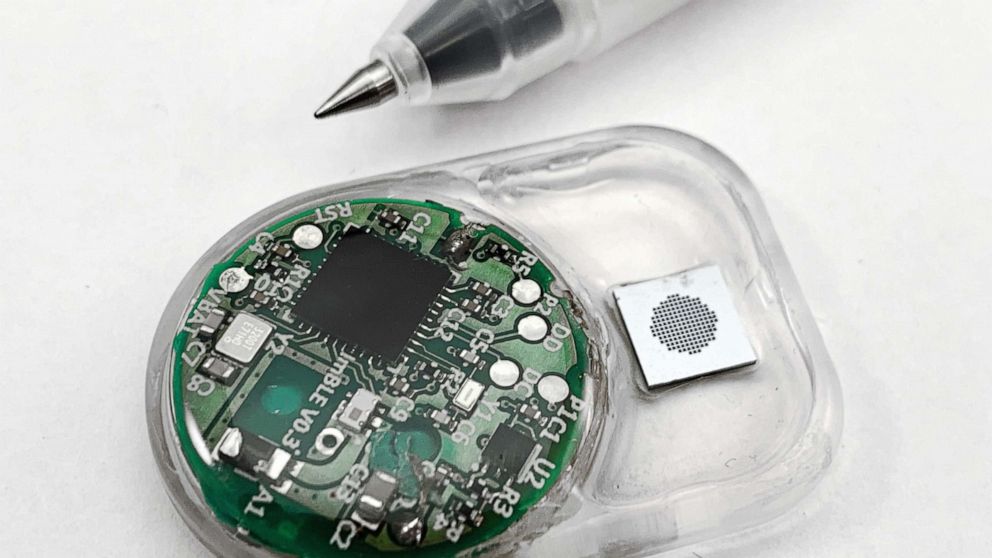
Grattoni and researchers at Houston Methodist have created a small implantable device – called a nanochannel delivery system (nDS) – that can deliver drugs over long periods of time in a very precise, personalized way. And like so many other parts of our lives, the nDS can connect via Bluetooth.
The nDS -- no larger than a grape -- sits under the skin, powered by a rechargeable battery. An electric field controls the dosage of the drug because electric fields and tiny nanochannels are less likely to fail compared to conventional mechanical devices, such as an insulin pump. A refillable drug reservoir means drugs can be delivered for months before a refill is needed.
“Over long distances, the implant could be controlled via the internet,” Grattoni said. “This gives flexibility to both clinicians and patients because drug doses and timings could be adjusted remotely.”
That means the nDS can deliver drugs as part of an automatic dosing schedule. The patient doesn’t have to remember the schedule, there’s minimal room for confusion and the drugs can even be delivered while they’re asleep.
“Different diseases require drugs to be delivered at various times of the day to have optimal efficacy,” Grattoni said. “This may include the middle of the night, so automating this process with the nDS could be very useful and convenient for patients.”
The innovation is part of a broader drive toward telemedicine, where doctors treat patients without meeting face-to-face. Telemedicine is becoming an important part of American health care, connecting doctors with people living in rural areas far away from large hospitals. The nDS will even be tested on the International Space Station in 2020, part of a collaboration with NASA.
One potential problem: given the recent FDA warning that some Medtronic insulin pump are vulnerable to hacking, future wireless devices such as the nDS will need electronic safeguards. Making sure the device is secure is something the team says is a priority and it may actually save lives.
“Adults and children and even individuals with disabilities who need to take drugs multiple times per day, or people located in remote geographical areas, are those who could benefit most,” Grattoni said. The implant could also be used to administer preventative medications such as HIV pre-exposure prophylaxis.
The device, which took eight years to develop, will enter human trials in the next few years and will ultimately need FDA approval for use within the U.S. Grattoni and his team want to see a world where anyone who needs consistent, reliable medication will have an option under their skin – an option no bigger than a grape.
Dr. Laith Alexander is an MB/PhD student at the University of Cambridge, U.K., working with ABC News Medical Unit.