Teen Explains What Life is Like in a Coma
— -- For two weeks Claire Wineland kept picturing herself in Alaska looking at forests, caves and wildlife.
“I remember sitting there and staring at the most beautiful scenery ever for hours and hours … it would be freezing cold but I didn’t care,” she recalled in a recent video. “Turns out I was being ice-packed the whole time.”
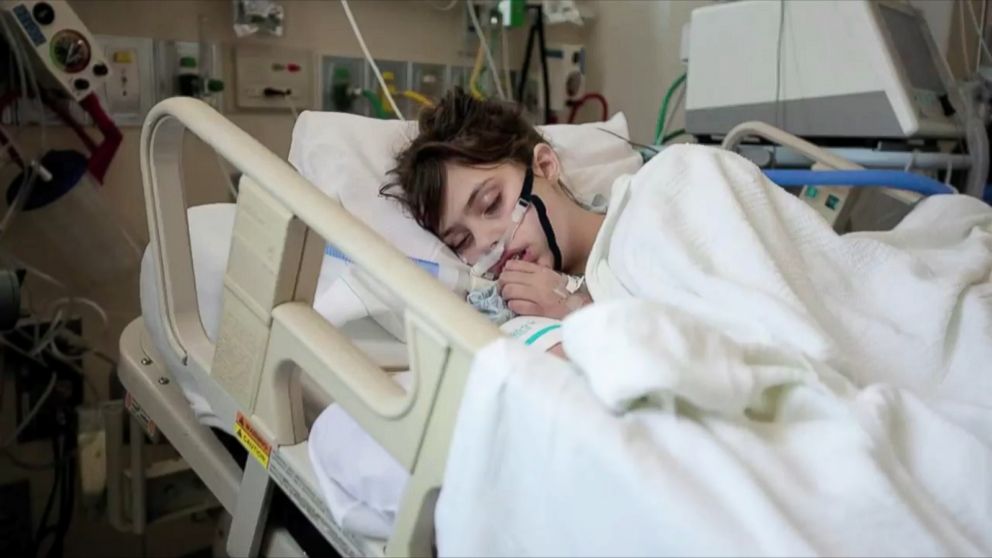
While in her mind she was in Alaska, in reality Wineland was in a California hospital in a medically-induced coma. Following a routine surgery, Wineland, who has cystic fibrosis, contracted a dangerous infection called blood sepsis. In the years after her coma, Wineland has started a non-profit and video channel sharing her stories of surviving life as a sick person. She shared her story this week in a video titled “What It’s Like to be in a Coma.”
During those two weeks, Wineland said, she remained aware of noises and people around her.
“Everything that happens in the real world, you hear, you’re aware of,” she said In a new video. “You kind of know what’s going on. But it goes through this weird filter thing… It turns into something else when it hits your consciousness.”
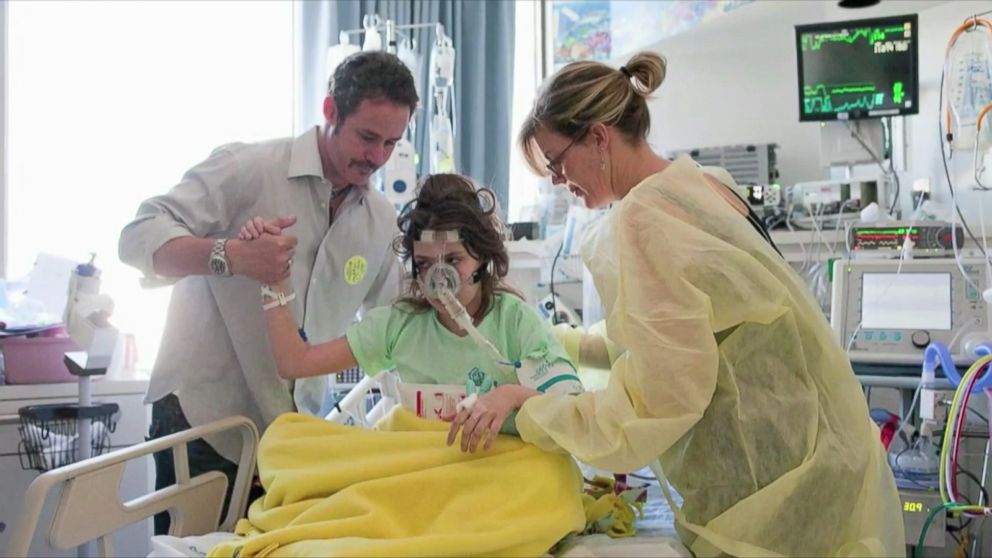
Experts say it’s helpful to hear stories about what patients go through in the ICU when under heavy sedatives. Dr. Michael DeGeorgia, a neurologist from University Hospitals Case Medical Center, said patients can face post-traumatic stress disorder or other trauma from being left in the dream-like state during sedation. He clarified that a medically-induced coma is different from a coma caused by traumatic brain injury.
“When you’re dreaming, your entire brain is not [synchronized]. When you wake up from dream, the memory is almost there but can’t quite get it,” DeGeorgia said “When you’re in and out of sedation [your brain is] not quite synchronized in laying down memories.”
DeGeorgia said sedated patients will try to make sense of their surroundings, even though they may appear unconscious or out of it. For Wineland, this meant she thought she was in Alaska when ice packs were applied to her body and that she was on a hammock when she was inverted to drain fluids.
“My brain would make up a story for while I was in those positions,” Wineland said in her video. “I was upside down and swelling like a balloon. In my head I was in this weird hammock thing and my foot was stuck.”
DeGeorgia said in recent years doctors are now recommending using less sedative because patients can have traumatic experiences from their time in sedation when they can’t make sense of what’s going on or what procedures they may need.
“We now know that to varying degrees that patients can be aware of what you’re saying,” said DeGeorgia. “ They may indeed be partially aware of what they’re saying. You have to be attentive to patient and assume they’re listening to you.”
Wineland told ABC News even after she “woke” up from her coma she faced problems. As the drugs were slowly reduced she was unclear when she was hallucinating. “I can’t remember what was real and what wasn’t real from that week,” she recalled of the week when she first woke up. “Every time I talk about it, I remember something else.”
Wineland, a recent high school graduate, said she wanted to share her story on her website and Youtube channel so that people could understand more about what cystic fibrosis and other chronic disease patients face.
“[There’s a] hidden world and subculture of being sick,” said Wineland. “No one really talks about it, it’s [always] a story of dying person and not a sick person. The life of a sick person is incredibly fascinating.”