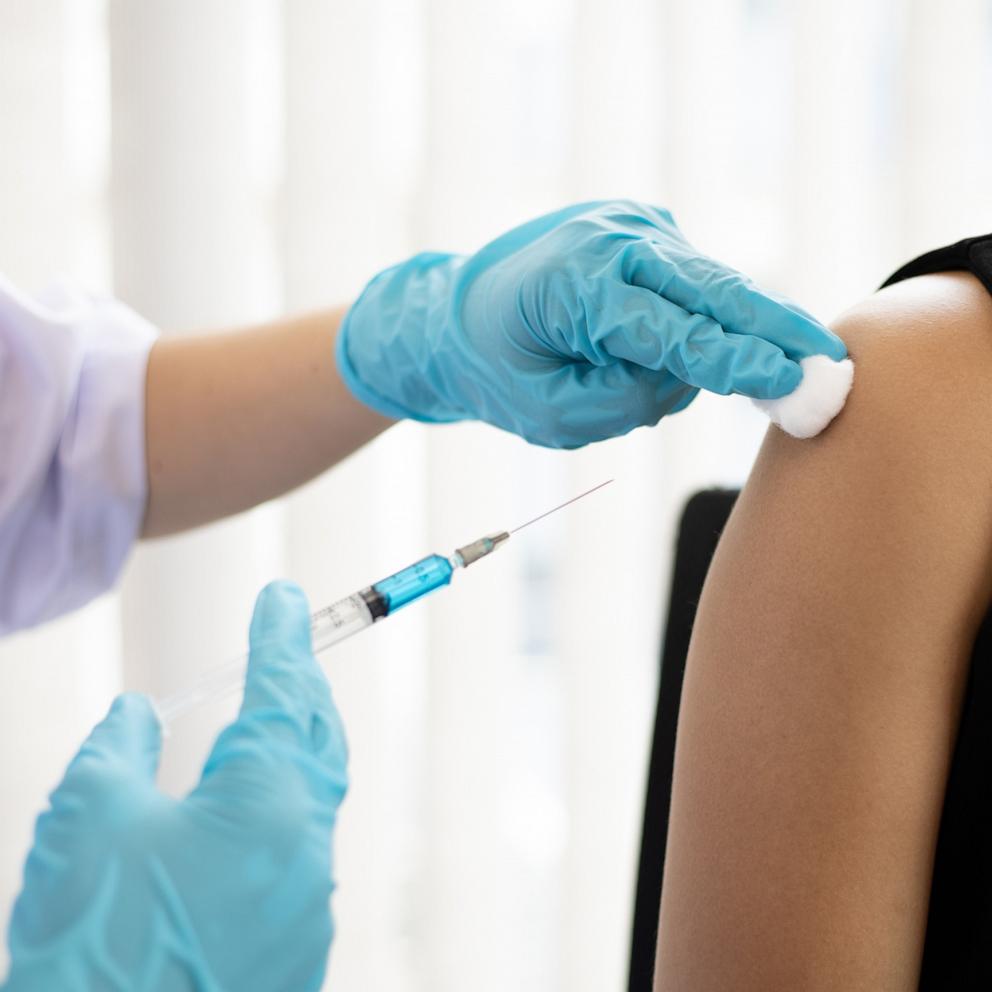
US flying blind to potential COVID-19 resurgence, experts say, as states scale back on testing, data reporting

In the wake of a flurry of warnings from officials over a potential COVID-19 resurgence in the United States, there are growing concerns among health experts that dwindling access to public data, the shuttering of COVID-19 testing sites and with an increasing number of people using at-home tests instead, it could leave the nation vulnerable to unforeseen upticks.
"Comprehensive case data is critical to an effective response. As we have seen throughout the pandemic, lack of data leads to poor decision making and ultimately costs lives," Dr. John Brownstein, an epidemiologist at Boston Children's Hospital and an ABC News contributor, said.
Since last summer, dozens of states and the federal agencies have opted to scale back on regular data reporting. Few states still offer COVID-19 data reports seven days a week, with most now moving to weekly or alternate-day schedules.

"Federal public health has no statutory authority to direct what and how public health data are reported. As such, CDC relies on a patchwork of approaches to collect data voluntarily provided from state and local jurisdictions," a spokesperson from the Centers for Disease Control and Prevention said in a statement to ABC News on Monday. "This pandemic demonstrated the inadequacies of the fractured patchwork system. Immediate and complete data are needed to make the best recommendations to keep people safe and to inform policy making."
Earlier this year, the Department of Health and Human Services also ended the requirement for hospitals to report several key COVID-19 metrics, including a daily total of the number of COVID-19 deaths, the number of emergency department overflow and ventilated patients, and information on critical staffing shortages.
The decision comes weeks after the CDC unveiled a new plan for determining COVID-19 risk in communities and updated its recommendations for face coverings, allowing nearly all of the country to go mask-free under the new guidelines.
Some health experts have criticized the guidance, suggesting it gives Americans a false sense of security, as it relies less on transmission-related data, and more on hospital bed availability.
In recent weeks, wastewater surveillance has become a critical metric. At this time, indicators suggest COVID-19 infection rates may be higher than initially thought; an uptick in the number of wastewater sites monitored by the CDC have seen an increase in the presence of the COVID-19 virus in their wastewater.

Although wastewater can be a helpful tool used as a preliminary indicator of COVID-19 trends in the U.S., experts said using it alone will not be sufficient in predicting data trends.
"While we have other surveillance tools like wastewater viral levels and hospitalization counts, testing data provides an understanding of the full extent of community transmission and ultimately risk to our health systems," Brownstein said.
From coast-to-coast, dozens of states have moved to shutter public testing sites, as at-home COVID-19 tests have become more available in pharmacies, and offered to Americans through the federal testing program.
However, most Americans are not reporting their results to officials, and thus, experts said infection totals are likely undercounted.
Reported testing levels are now at their lowest point in eight months, with reported test numbers dropping by nearly 75% since the beginning of the year.
"Testing has always been a cornerstone of our pandemic response. Without this surveillance data, we are flying blind and are almost certainly going to repeat mistakes of the past," Brownstein said. "When we close testing sites, we not only put individuals, their contacts and their communities at risk, we undermine critical public health infrastructure."
Of additional concern is the potential for the CDC, which has compiled key COVID-19 metrics throughout the pandemic, to lose access to data, following the loss of federal funding.

"We are the compiler of the data, but we do not have the authority to collect it. And so we rely on states being willing to share it with us and the data use authorization, data use agreements, in order to do so," CDC Director Dr. Rochelle Walensky told CBS News, earlier this month.
When the public health declaration lapses, the agency will no longer have access to many key data metrics.
"Data related to COVID-19 test results and hospitalizations are currently available because of the public health emergency declaration. When that declaration lapses, so does CDC's access to this important information," the C.D.C. representative explained.
The CDC has embarked upon an aggressive data modernization effort, the agency told ABC News. With adequate funding, these efforts will allow the sharing of data and information across the public health ecosystem.
"System-wide modernization and change to benefit all of public health requires CDC to have the authority to coordinate and guide how data are reported and shared for evidence based decision-making," the CDC representative said. "The nation can no longer continue with the current, fractured approach of collecting public health data to be better prepared for future pandemics."