US life expectancy drops 1 year in first half of 2020 amid coronavirus pandemic, CDC says
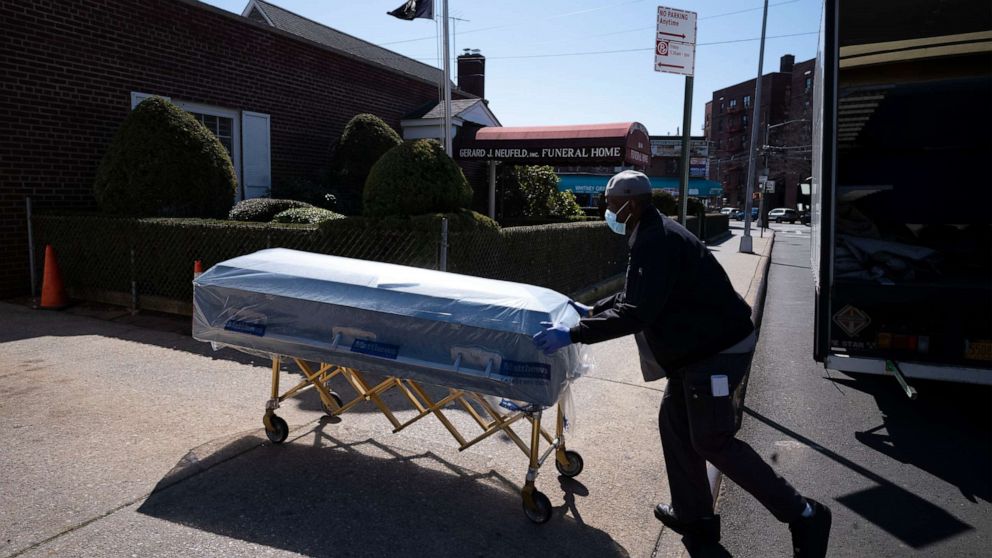
Life expectancy in the United States dropped a full year during the first half of 2020, as the coronavirus pandemic took hold of the nation, according to provisional estimates in a new report published Thursday by the Centers for Disease Control and Prevention.
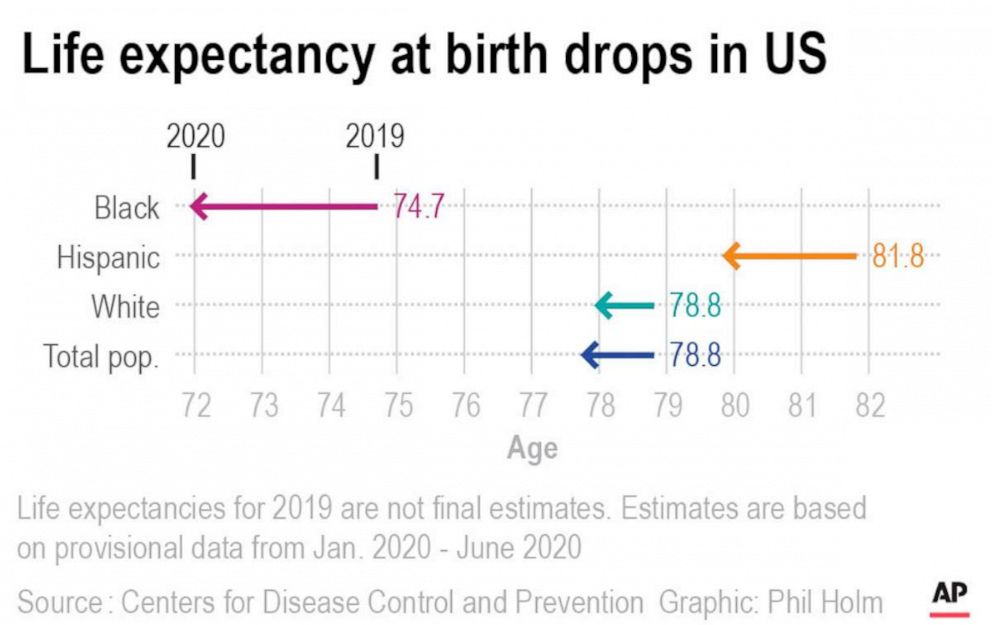
Life expectancy is a statistical measure of the average time a baby born today is expected to live. From January through June of last year, that was 77.8 years for the entire U.S. population, down from 78.8 years in 2019. It's the lowest level since 2006, the report said.
The decline in life expectancy was seen across racial and ethnic groups but was most severe in minorities, with Black Americans losing 2.7 years (from 74.7 to 72.0) and Hispanic Americans losing 1.9 years (from 81.8 to 79.9) during the same period. Meanwhile, white Americans lost less than a year (from 78.8 to 78.0), according to the report.
Hispanic Americans traditionally have the most longevity compared to other racial and ethnic groups in the U.S., and provisional estimates show they still do. Hispanics saw their "advantage" in this regard compared to Black Americans increase from 7.1 years in 2019 to 7.9. years in the first six months of 2020, the report said.
White Americans saw their life expectancy advantage compared to Blacks increase by a staggering 46%, from 4.1 to 6 years, reversing a trend that had been narrowing the gap between the two races since 1993. It's the largest gap in life expectancy between white and Black populations in the U.S. since 1998. Conversely, the gap between Hispanic Americans and white Americans decreased by 37%, from 3 to 1.9 years, according to the report.
"Another consequence of the decreased life expectancy estimates observed during the first half of 2020 was a worsening of racial and ethnic mortality disparities," the report noted.
The preliminary report did not analyze life expectancy trends for Asian Americans or Native Americans.
Life expectancy in men in the U.S. fell 1.2 years over the same period (from 76.3 to 75.1), while for women it declined just under a year (from 81.4 to 80.5), according to the report.
The provisional estimates were calculated by the CDC's National Center for Health Statistics using death records in the U.S. from January through June 2020. Although the mortality data used in the report includes more than 99% of the deaths that occurred during that period, the report noted that the estimates "do not reflect the entirety of the effects of the COVID-19 pandemic in 2020."
Importantly, the recent surge in COVID-19 infections over the winter months -- as well as the seasonality in mortality -- is not accounted for in the data. The data also hinges on the timely submission of death certificates, which may have been delayed due to pandemic-related logistical reasons, the report said.
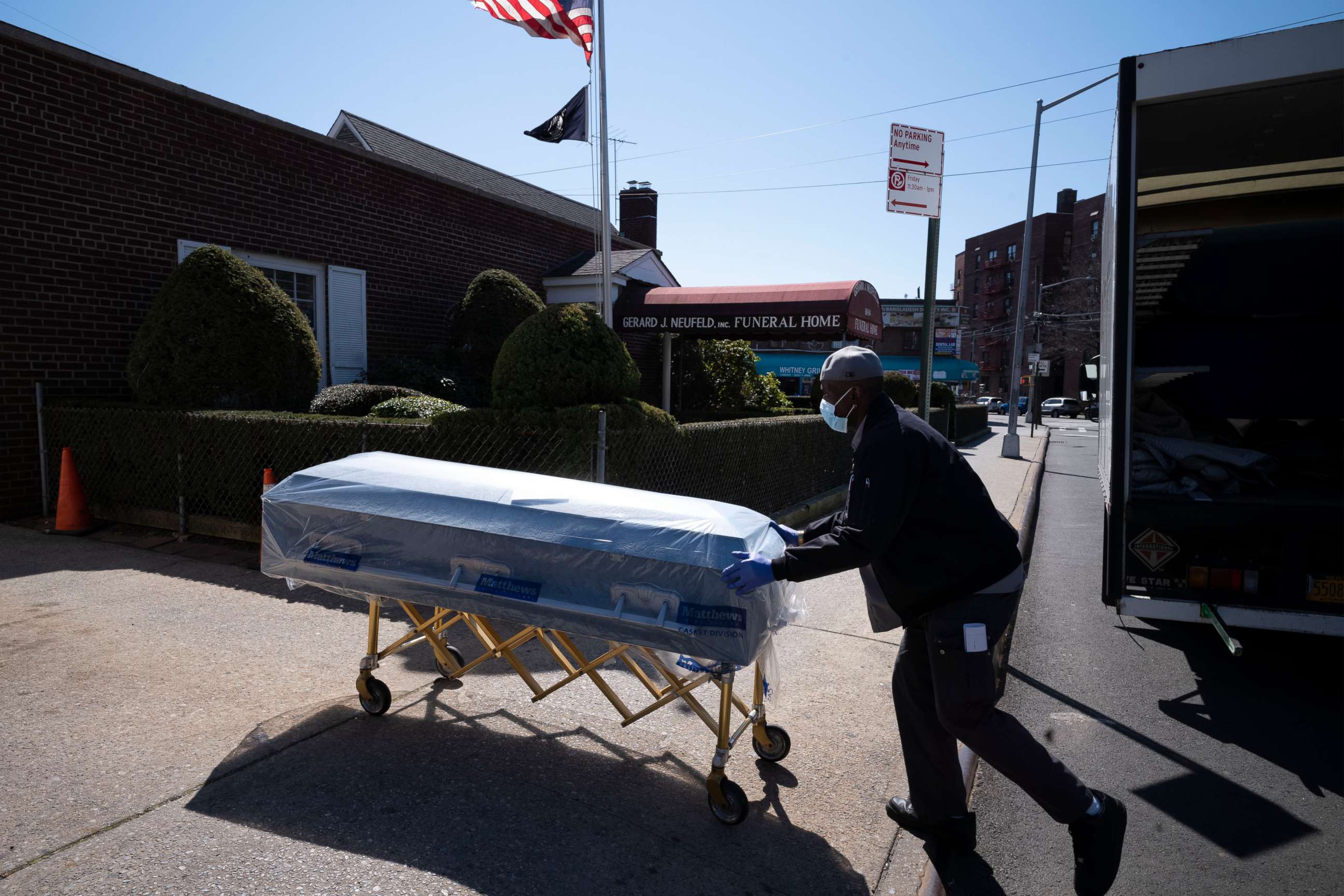
It's the first time that the CDC has published life expectancy estimates using provisional data. Additional death certificates from that period may yet come in or death certificate information may later be revised, the report noted. It's already known that 2020 was the deadliest year on record in the U.S., with overall deaths -- mainly due to COVID-19 -- topping 3 million for the first time.
ABC News' Dr. Abarna Ramanathan contributed to this report.