Will the US plan for testing travelers from China help stem the spread of COVID?

The Centers for Disease Control and Prevention announced this week it would require a negative COVID-19 test from all travelers arriving to the U.S. from China as well as those from Hong Kong and Macau.
It comes as China experiences a surge of COVID-19 cases and hospitalizations after dropping its so-called "zero COVID" policy.
"CDC is announcing this step to slow the spread of COVID-19 in the United States during the surge in COVID-19 cases in the People's Republic of China given the lack of adequate and transparent epidemiological and viral genomic sequence data being reported from the PRC," the CDC said in a statement.
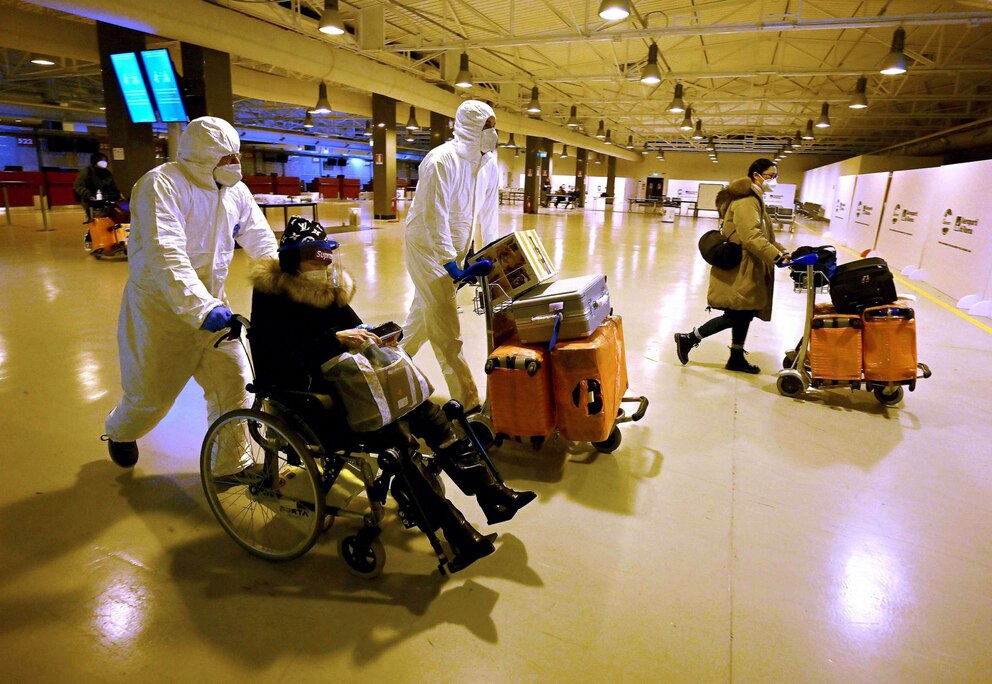
What's more, Italian officials said Wednesday that nearly half of passengers on two flights from China to Milan tested positive for the virus.
Public health experts told ABC News that while they understand why the U.S. announced the measure, it is not a viable long-term solution.
"Pre-departure testing is not a fool-proof method to limit the spread of COVID," said Dr. John Brownstein, an epidemiologist and chief innovation officer at Boston Children's Hospital and an ABC News contributor. "It's hard to see a significant public health value."
"The people that pre-departure testing will catch are overall drops in the bucket," he added.
Brownstein and others said passengers testing before traveling may help protect other people on the plane by making sure they don't contract the virus, but it won't help the general public.
"One can imagine that the plane -- if people are traveling and they have COVID, and they don't know it -- would be safer," Dr. Peter Chin-Hong told ABC News. "So, I guess the fear, and the rationale for having this kind of travel restriction, is to prevent scary variants from coming in, or at least to delay it."
He continued, "But at this point, the United States has seen so many waves of infection that probably the scariest variant wouldn't do as much damage as if it were a naive population, like in March of 2020."
Chin-Hong explained that this means because most of the U.S. population has antibodies either through natural infection or through vaccination, a new variant will likely not cause as much damage as it would have earlier in the pandemic when most Americans didn't have antibodies.
The experts said another reason the U.S. instituted the rule is because there is little information coming out of China about the true scale of its COVID situation.
China has not reported any evidence of new variants, but has also been accused of underreporting case counts, hospitalizations and deaths.
For example, China's National Health Commission says the country has only seen 5,241 COVID-19 deaths since the pandemic began, while data from Johns Hopkins suggests China has had over 16,000 deaths since the pandemic started.
Brownstein said it may be more effective to test passengers upon arrival in the United States, which is a rule recently implemented in Italy.
"I can imagine a situation where someone tests negative [before flying], but is incubating the virus and boards the plane," he said. "But pre-departure testing is especially not valuable in a world where we already have intense transmission."
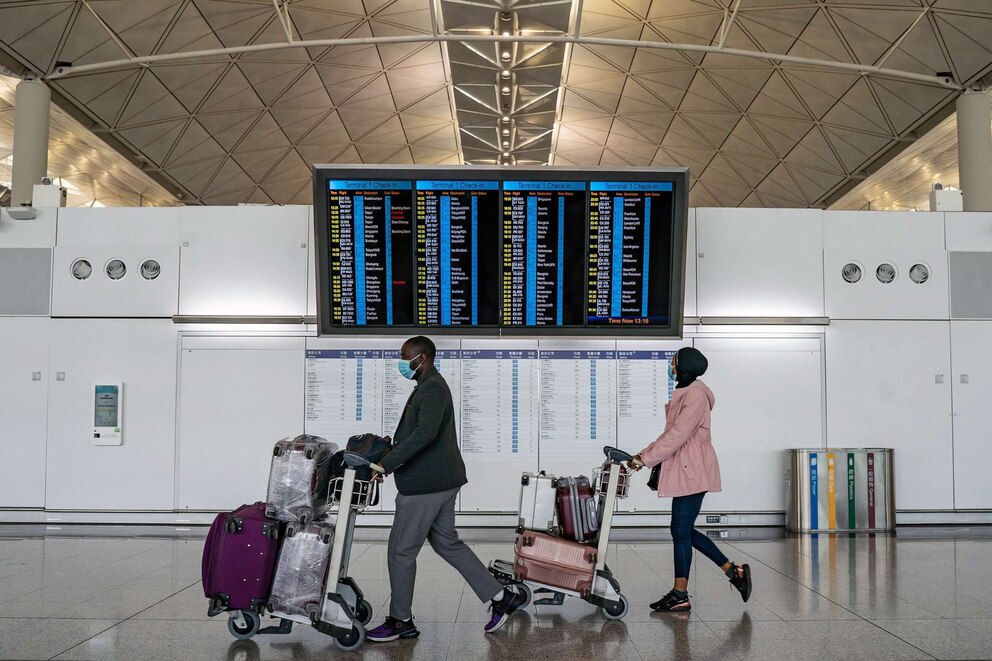
Chin-Hong said China had strict testing measures in place too, but COVID-19 was still able to spread rapidly within the country, and travelers from China could circumvent the U.S. rule by flying to another country first.
He said what the U.S. should focus on is administering the updated bivalent booster to seniors aged 65 and older, because they are at the highest risk of serious disease, hospitalization and death. According to the CDC, only 37.5% of elderly people have been boosted.
"The main thing the U.S. should be doing is independent of China, is continue to invest in vaccinating older individuals, particularly those over 65 because that's where most of the deaths are and that's where the booster rate is still abysmally low," Chin-Hong said. "If you can divert those resources to building up the immune defenses of the people who could get sick, that will have more longevity."