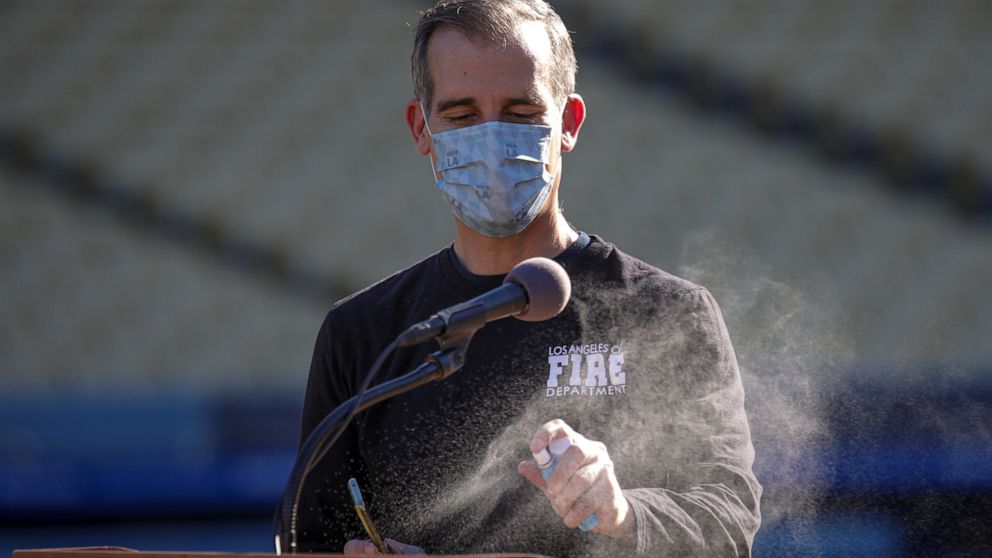
A pandemic of the novel coronavirus has now infected more than 94.2 million people worldwide and killed over 2 million of them, according to real-time data compiled by the Center for Systems Science and Engineering at Johns Hopkins University.
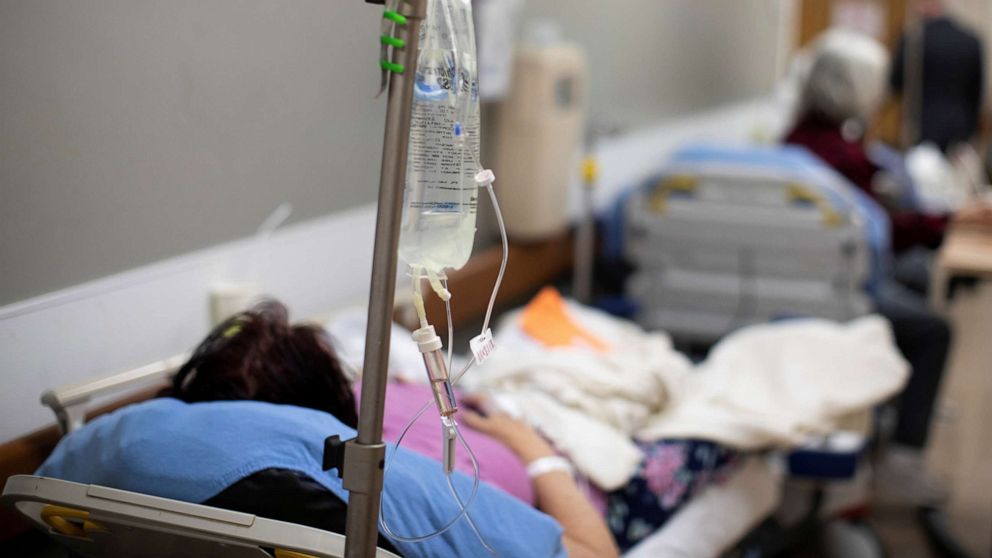
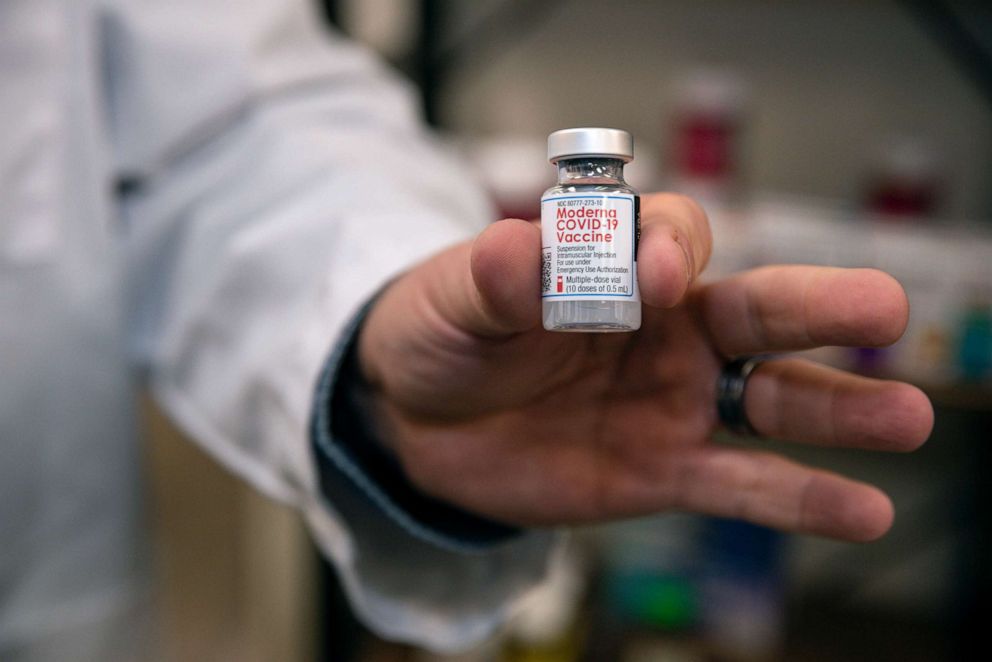
A pandemic of the novel coronavirus has now infected more than 94.2 million people worldwide and killed over 2 million of them, according to real-time data compiled by the Center for Systems Science and Engineering at Johns Hopkins University.
There has been a nationwide decrease in the seven-day averages for tests, cases, hospitalizations and deaths in the U.S, according to the COVID Tracking Project.
Many states are reporting a decrease in the number of new cases per million people, though California, Virginia and South Caroline reported more than 1,000 new cases per million Sunday.
Along with the states that do not regularly report on Sunday, Washington reported data system issues over the weekend. There will be some disruptions to reporting expected on Monday due to Martin Luther King Jr. Day.
States reported 1.8 million tests, 186,000 cases, 124,387 people currently hospitalized with COVID-19, and 2,044 deaths on Sunday, according to the COVID tracking project.
-ABC News Darren Reynolds
The number of patients entering hospitals in the U.K. every day is showcasing the dire situation as the new variant of the COVID-19 virus that originated there continues to spread.
Sir Simon Stevens, Chief Executive of England’s NHS, announced Sunday that "every thirty seconds across England another patient is being admitted to hospital with coronavirus."
Hospitals and staff are under “extreme pressure,” Stevens said.
Prime Minister Boris Johnson also announced Sunday that the vaccine was being administered at a rate of "140 jabs a minute."
-ABC News’ Zoe Magee
The state of California is poised to surpass 3 million positive COVID-19 cases within two days, according to data from the California Department of Public Health.
On Sunday, the state health department reported 42,229 new cases and 432 new deaths.
Los Angeles County, the hardest hit in the state, surpassed 1 million cases on Saturday. Dodger Stadium, the largest vaccination site in the country, reopened on Friday, but officials told ABC News they only have enough doses to last until Wednesday.
ABC News’ Matthew Fuhrman and Zohreen Shah contributed to this report.
New York Gov. Andrew Cuomo is urging the federal government to send more COVID-19 vaccines to the state as the variant that originated in the U.K. continues to spread.
Nearly 14,000 positive tests were reported Sunday, with 18 known cases of the variant and an infection rate of 5.6%, Cuomo announced.
While 7 million New York residents are currently eligible to receive the vaccine, the federal government sent less vaccines than what was expected, he added.
"We have the weapon that will win this war and we can see the light at the end of the tunnel, but how fast we get there depends upon two things-our own individual actions and the federal supply, which is where we are facing the greatest challenge," Cuomo said in a statement.
A newly identified variant of the virus that causes COVID-19 may have emerged in the U.S. in May and could be one of the predominant versions circulating now, researchers at Southern Illinois University found.
Just because a new variant has emerged doesn't mean it's inherently dangerous, experts cautioned. It’s unknown if this new U.S. variant is more transmissible and deadly, but scientists say they are monitoring and continuing to study newly emerging viral variants. On Wednesday, researchers at Ohio State reported two newly identified ones. On Thursday, researchers at Southern Illinois University said they also identified a new variant, which is likely the same as the two identified in Ohio.

Now, researchers at Southern Illinois University are sharing even more details about this U.S. variant, which they are calling 20C-US. Origins of this variant can be traced to May 2020 from a sample in Texas, they said.
The 20C-US variant appears to be widespread in the Upper Midwest and comprises roughly 50% of the samples in the U.S., said Keith T. Gagnon, coauthor of the study and associate professor at Southern Illinois University.
"Let’s not get overly excited -- but be diligent," Gagon said. "Here it was, underneath our noses, for months."
“It doesn't look like it’s going to get in the way of vaccines," Gagnon added.

ABC News’ Sean Llewellyn, Eric Strauss and Sony Salzman contributed to this report.