• Video
  • Shop
  • Culture
  • Family
  • Wellness
  • Food
  • Living
  • Style
  • Travel
  • News
  • Book Club
  • Newsletter
  • Privacy Policy
  • Your US State Privacy Rights
  • Children's Online Privacy Policy
  • Interest-Based Ads
  • Terms of Use
  • Do Not Sell My Info
  • Contact Us
  • © 2026 ABC News
ABC News

Climate and environment updates: 7 key measures of Earth's health in danger, report warns

PHOTO: Reef fishes swim over a reef affected by coral bleaching from high water temperature on May 08, 2024 in Trat, Thailand.
1:54
Sirachai Arunrugstichai/Getty Images
Summer temperatures stretching later into the season
By ABC Climate Unit
Last Updated: October 6, 2025, 1:43 PM

The climate crisis is not a distant threat; it's happening right now and affecting what matters most to us. Hurricanes intensified by a warming planet and drought-fueled wildfires are destroying our communities. Rising seas and flooding are swallowing our homes. And record-breaking heat waves are reshaping our way of life.

The good news is we know how to turn the tide and avoid the worst possible outcomes. However, understanding what needs to be done can be confusing due to a constant stream of climate updates, scientific findings and critical decisions that are shaping our future.

That's why the ABC News Climate and Weather Unit is cutting through the noise by curating what you need to know to keep the people and places you care about safe. We are dedicated to providing clarity amid the chaos, giving you the facts and insights necessary to navigate the climate realities of today -- and tomorrow.
Key Headlines

  • 7 key measures of the Earth's health are in now in danger: Report
  • Earth's oceans face 'triple planetary crisis,' new report warns
  • Climate change is straining America's health care system: Study
Here's how the news is developing.

Oct 06, 2025 1:43 PM

7 key measures of the Earth's health are in now in danger: Report

Scientists from around the world are warning that more than 75% of the planet's health and life support systems, known as Planetary Boundaries, are in danger.

The 2025 Planetary Health Check report from the Planetary Boundaries Science Lab found seven of the nine critical Earth system boundaries have been breached due to human activities. These Planetary Boundaries were established by the lab as a way of measuring the planet's current health.

According to the report, ocean acidification -- where the water's pH, a measure of its acidity or alkalinity, is lowered due to excess carbon dioxide -- is the newest boundary broken and for the first time has reached dangerous levels.

"The ocean is becoming more acidic, oxygen levels are dropping and marine heatwaves are increasing," said Levke Caesar, co-lead of Planetary Boundaries Science Lab and one of the authors of the report.

The report found evidence of recent shell damage to marine life, attributed to increased ocean acidity, particularly in polar and coastal waters. The authors warn this is due to increased levels of human-introduced carbon dioxide, which raises the risks for other marine life.

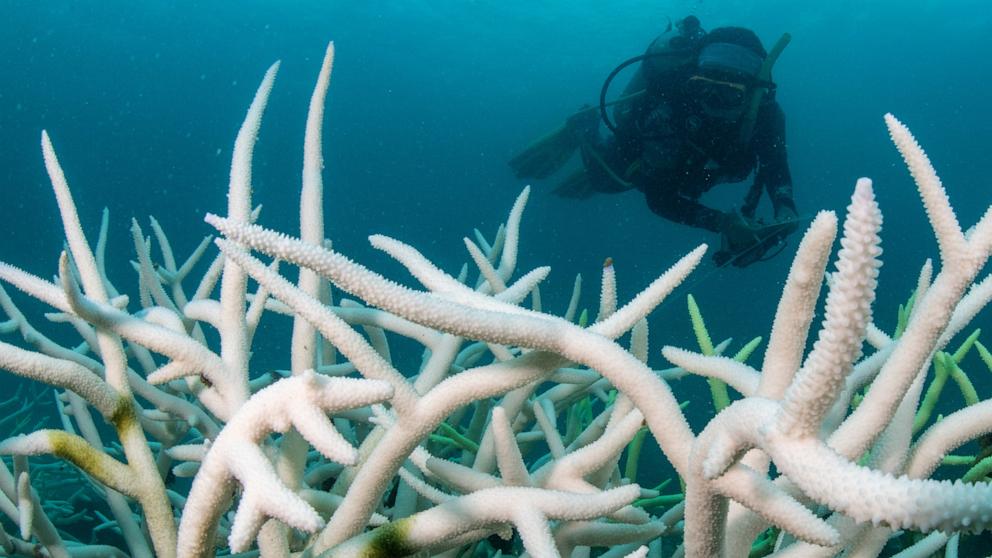
PHOTO: Reef fishes swim over a reef affected by coral bleaching from high water temperature on May 08, 2024 in Trat, Thailand.
Sirachai Arunrugstichai/Getty Images
Reef fishes swim over a reef affected by coral bleaching from high water temperature on May 08, 2024 in Trat, Thailand.
Sirachai Arunrugstichai/Getty Images

Caesar also said the ocean's acidification, combined with warming and loss of oxygen, will have "rippling" consequences that negatively impact food insecurity, global climate stability and human well-being.

"The Ocean is our planet's life-support system," said Dr. Sylvia Earle, an oceanographer and member of the Planetary Guardians.

The report also warns increasing ocean acidification can disrupt ocean currents important for regulating marine climate and global weather patterns, leading to more intense climate extremes and undermining agricultural stability.

"Today, acidification is a flashing red warning light on the dashboard of Earth's stability. Ignore it, and we risk collapsing the very foundation of our living world," added Earle.

The other six planetary health boundaries that have been crossed are climate change, biodiversity loss, freshwater use, biogeochemical flows, land system change and novel entities, which is the safe limit for the production and release of chemicals, plastics and other synthetic substances.

The authors found these six metrics of the planet's health are facing increasing pressures, suggesting further deterioration and destabilization of the Earth's health could come soon.

"We are witnessing widespread decline in the health of our planet," said Johan Rockström, director of the Potsdam Institute for Climate Impact Research. "But this is not an inevitable outcome. ... Even if the diagnosis is dire, the window of cure is still open. Failure is not inevitable; failure is a choice. A choice that must and can be avoided," Rockström added.

Only Ozone Depletion and Aerosol Loading, which measure the global air quality and the planet's ability to protect from harmful sunlight, remain within safe limits and show some signs of improvement, according to the report.

-ABC News meteorologist Kyle David Reiman


Sep 30, 2025 12:49 PM

Earth's oceans face 'triple planetary crisis,' new report warns

Covering more than two-thirds of the Earth's surface, the ocean plays a vital role in regulating the planet's weather and climate. Yet, today, no part of it remains untouched by what the United Nations is calling the "triple planetary crisis" of climate change, biodiversity loss and pollution. And according to the latest Ocean State Report, released by the Copernicus Marine Service on Tuesday, every ocean basin is now affected by rapid warming, acidification, rising sea levels and plastic pollution.

"The science is unequivocal: the ocean is changing fast, with record extremes and mounting impacts. We know why, and we know what it means," said Dr. Karina von Schuckmann, senior adviser at Mercator Ocean International and chair of the Copernicus Ocean State Report.

The ocean plays a crucial role in shaping Earth's weather and climate patterns by absorbing, storing and releasing heat into the atmosphere. It absorbs about 90% of the excess heat generated by human-induced greenhouse gas emissions. The Copernicus analysis found that ocean warming has accelerated since the 1960s, driving increasingly more frequent and intense marine heat waves. In 2023 and 2024, these heat waves broke records and caused widespread disruption to coastal economies worldwide.

PHOTO: A marine biologist from the Department of Marine and Coastal Resources conducts an assessment on a reef damaged by coral bleaching, May 8, 2024 in Trat, Thailand.
Sirachai Arunrugstichai/Getty Images
A marine biologist from the Department of Marine and Coastal Resources conducts an assessment on a reef damaged by coral bleaching, May 8, 2024 in Trat, Thailand.
Sirachai Arunrugstichai/Getty Images

Rapid ocean warming and acidification are also affecting marine life. Nearly 16% of endangered and 30% of critically endangered corals are at risk, including those found in U.S. waters such as the Carolinas, Florida, Texas, Hawaii and Puerto Rico, according to the report. Some of the world's most productive marine habitats, home to major commercial fisheries, have already declined by more than 25% due to climate change.
These impacts are exacerbated by vast amounts of plastic waste from every continent, polluting all ocean basins. Notably, 75% of countries that generate more than 10,000 tons of plastic waste annually are located near vulnerable coral reef ecosystems.

"Protecting the ocean's vital role in sustaining life and livelihoods starts with understanding how and why it is changing. The latest Copernicus Ocean State Report reveals record-breaking events, accelerating trends, and growing impacts on marine ecosystems and societies -- providing the science needed to inform effective, forward-looking decisions," von Schuckmann said.

-ABC News meteorologist Dan Peck


Sep 28, 2025 8:27 PM

Climate change is straining America's health care system: Study

Climate change is a public health emergency, driving heat, poor air quality, stronger storms, and new diseases that threaten people's health and strain health care systems, according to a new report from The Commonwealth Fund examining the impact of climate change on health and health care.

The report examined the preparedness of all 50 states and the District of Columbia to address rising health threats from climate change, identifying significant gaps in how health care systems respond to extreme weather, pollution and other climate-related risks.

The highest performers were Vermont, New York, Washington, New Jersey and Maine due to their clean energy policies, lower vulnerability to environmental hazards and lower greenhouse gas emissions. The worst performers were West Virginia, Kentucky, Louisiana, Florida and Mississippi.

However, the report makes clear that even the most prepared states need to do more.

"It's a mix for every state. There's no state that's at the top, "Matthew Eckelman, a professor of civil and environmental engineering at Northeastern University and report co-author, told ABC News. "What it tells us is that each state has some work to do."

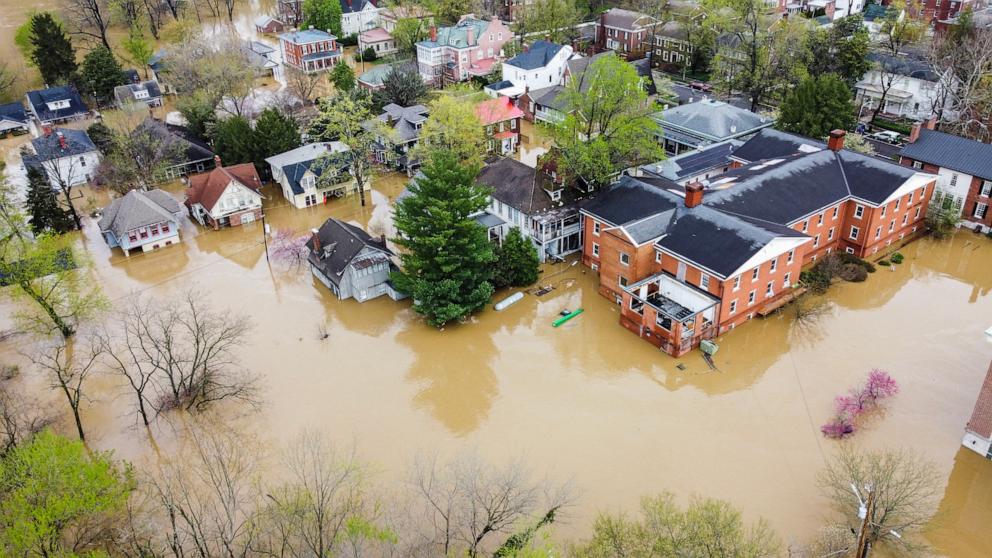
PHOTO: Severe flooding in Frankfort, Kentucky, caused by days of heavy rainfall across the Midwest, April 7, 2025.
Leandro Lozada/AFP via Getty Images
Severe flooding in Frankfort, Kentucky, caused by days of heavy rainfall across the Midwest, April 7, 2025.
Leandro Lozada/AFP via Getty Images

Rising temperatures and more frequent, intense heat waves have become the deadliest weather hazard in the United States, accounting for nearly 250,000 additional deaths, according to the World Health Organization. Extreme heat disproportionately impacts older adults, outdoor workers, people with chronic conditions and low‑income populations.

According to the report, Nevada, New Mexico, and Arizona are the most vulnerable to extreme heat, with Arizona experiencing more than 140 days over 100℉ in 2024 and Nevada approaching 115 days.

Air quality is another growing concern.

Warmer temperatures and more frequent wildfires are leading to higher concentrations of ground-level ozone and particulate matter, both of which can exacerbate asthma, respiratory diseases, and heart conditions.

Smoke from wildfires — especially across the U.S. West — is now a significant health hazard and may be responsible for 200,000 excess deaths annually. Arizona and California had the worst air quality, while residents of Alaska and Hawaii can breathe the easiest with the cleanest air.

The report explains that extreme weather events such as floods, hurricanes, and storms can cause injury, water contamination and mental trauma.

These events often disrupt health services and basic infrastructure, compounding their long-term effects and jeopardizing the health of communities. Louisiana, Mississippi, and Florida stand out in this category, facing especially severe flood risks. The report estimates that nearly 15 percent of Florida hospital beds are located in high-hazard flood zones.

The health care system is not only at risk from these climate threats, but is also contributing to the problem, the researchers found.

More than 8.5% of the national greenhouse gas emissions originate from the health sector, with West Virginia, Wyoming, and North Dakota contributing the highest percentage per capita, according to the report.

And, while the report examines the national and state picture, weather events are also having a profound impact on local communities.

"Some disasters recently here in the U.S. have wiped out significant health infrastructure," Eckelman said.

Flooding in Western North Carolina wiped out some critical manufacturing facilities that supply life-saving medical supplies for the rest of the country, Eckelman explained. So, while the weather event only impacted one region of the country, it affected the supply chains everywhere, he added.

The authors of the report encouraged governments and health facilities to develop resilience plans and emergency plans so that they can continue operating during these events. They also challenged health care institutions to do their part.

"They can take a little bit of control over the emissions associated with their own operations and really abide by their mission to do no harm, not only through the care that they provide, but also in their behavior within the environment itself," Eckelman said.

- Dr. Tate-Drummer is a general surgery resident in the metro-Atlanta area and a member of the ABC News medical unit.


Sep 17, 2025 6:39 PM

Wealthy households are more likely to flee hurricanes and flooding than other households: Study

Extreme weather events can devastate communities. Now, a new study finds that it can also have long-term effects on a community's demographics that may hinder its ability to respond to future weather disasters.

The study from the University of Vermont, published in the journal Population and Environment, found that higher-income households left their communities at a higher rate than other households after hurricanes and damaging floods.

"Hurricanes had an impact on both net migration of people and net migration of income," said Mahalia Clark, lead author of the study.

The study examined anonymous IRS data from 2011 to 2021 to examine human migration and household income, and overlaid county-level data on weather-related property damage from data housed at Arizona State University.

"There hasn't been a ton of research that looks at how multiple different climate hazards affect human migration in the U.S.," said Clark. "There's even less on that migration's economic impacts."

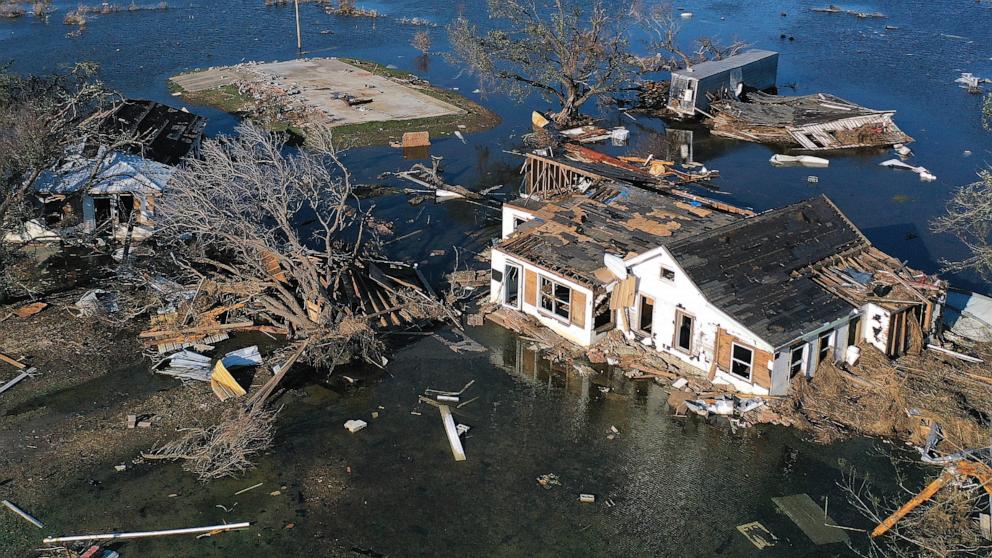
PHOTO: In this Oct. 10, 2020, file photo, an aerial view of flood waters from Hurricane Delta is shown surrounding structures destroyed by Hurricane Laura, in Creole, Louisiana.
Mario Tama/Getty Images, FILE
In this Oct. 10, 2020, file photo, an aerial view of flood waters from Hurricane Delta is shown surrounding structures destroyed by Hurricane Laura, in Creole, Louisiana.
Mario Tama/Getty Images, FILE

Some regions experienced a different response to hurricanes and damaging flooding. The study found that the Northeast, for example, had fewer higher-income households leaving impacted communities.

"In the Northeast, we might be seeing those higher-income households being more responsive to this emerging threat," Clark said.

The study found that hurricanes had more of an impact on migration rates than other extreme weather events, but flooding had the highest impact on the income migration rates in affected areas.

"This suggests that you have either more higher-income households leaving, or fewer higher-income households arriving in those places," Clark said. "On average, the household income of the people leaving is higher than the average household income of people coming in."

-ABC News meteorologist Kyle David Reiman


GMA Newsletters

Sign up for our newsletters to get GMA delivered to your inbox every morning!

Up Next in news

PHOTO: Gas station clerk Abdulrahman Abohatem speaks to ABC affiliate WXYZ.

Gas station clerk speaks out after foiling alleged kidnapping

April 15, 2026
PHOTO: Pauls Valley High School principal Kirk Moore took down a shooter in the halls after shots were fired.

Oklahoma high school principal takes down would-be shooter, hailed as hero

April 15, 2026
VIDEO: American influencer found dead in Tanzania

American influencer found dead in Tanzania

April 15, 2026

The latest lifestyle and entertainment news and inspiration for how to live your best life - all from Good Morning America.
  • Contests
  • Terms of Use
  • Privacy Policy
  • Do Not Sell My Info
  • Children’s Online Privacy Policy
  • Advertise with us
  • Your US State Privacy Rights
  • Interest-Based Ads
  • About Nielsen Measurement
  • Press
  • Feedback
  • Shop FAQs
  • ABC News
  • ABC
  • All Videos
  • All Topics
  • Sitemap

© 2026 ABC News
  • Privacy Policy— 
  • Your US State Privacy Rights— 
  • Children's Online Privacy Policy— 
  • Interest-Based Ads— 
  • Terms of Use— 
  • Do Not Sell My Info— 
  • Contact Us— 

© 2026 ABC News