Expert hydration tips to keep cool amid dangerous summer heat waves


The latest summer heat wave is forecast to bring scorching temperatures across the country with at least 130 million people, from Texas to Maine, on alert for dangerous heat and humidity over the next few days.
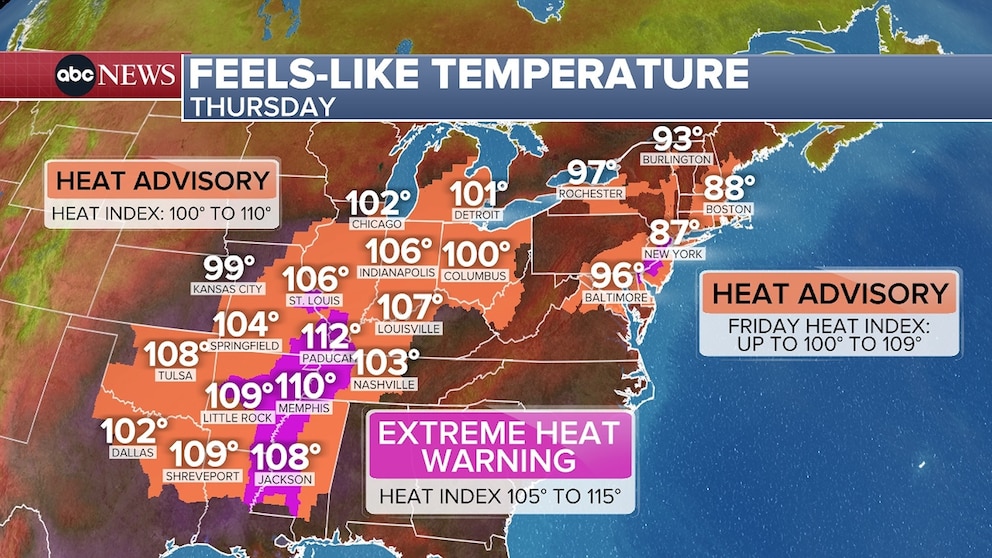
With high temperatures expected to range from the mid-90s to the low-100s, "Good Morning America" tapped Dr. Liz Weinandy, lead dietitian at the Ohio State University Wexner Medical Center, to explain what to watch out for if dehydration hits, as well as the best things to drink and eat to keep your body nourished.
Symptoms of dehydration
"There are several signs a person might be dehydrated," she said. "Headache or confusion, extreme thirst, very dark urine, infrequent urination, fatigue, muscle cramping and lightheadedness. In extreme cases of dehydration, it can lead to heatstroke or hyperthermia (abnormally high body heat)."
When it comes to preventative measures and staying hydrated, Weinandy said, "the best way to avoid dehydration is to drink before you get thirsty."
"In some situations, it is easier to get dehydrated, like being active in hot temperatures," she continued.
Best drinks for hydration besides water
While some supplements like hydration packets that are added to water can be helpful for some, Weinandy said H2O still reigns supreme for staying hydrated.

"Water is usually best and suitable for most people unless they are excessively sweating, then replacing electrolytes like potassium and sodium start to become more important," Weinandy explained. "Sports drinks and electrolyte replacement solutions are very appropriate in this situation, although keep in mind most people do not need them."


"As for food, most fruits and vegetables have a higher water content compared to other foods," she said. "Melons, strawberries, pineapple, cucumbers, tomatoes and lettuce are especially high in water and can help prevent dehydration."
Nutritionist and registered dietitian Maya Feller joined "GMA" on Wednesday with more tips on foods to consume that are high in water content.

Cucumber, which is 95% water, is also a good source of fiber, vitamin K, and vitamin A, Feller said.
Other high-in-water foods include tomatoes, watercress, apples, celery, lettuce, watermelon, peaches and zucchini.
Who's at-risk for dehydration?
Weinandy said another factor to keep in mind is that "some groups are at a higher risk of becoming dehydrated."
"Infants, elderly and people who cannot communicate clearly" can all be more prone to dehydration, she said. "Also, being dehydrated increases the risk of developing kidney stones because urine is more concentrated."
How much water to drink to stay hydrated
ABC News chief medical correspondent Dr. Jennifer Ashton said the amount of water you should consume daily depends on your age, height and where you live.
Most guidelines call for the average woman to drink around 2.7 liters per day, and 3.7 liters for men.
One liter is equivalent to 33 ounces.
"Your body's own systems will tell you when you need more water and it's called thirst," Ashton said. "A lot of times people think they're hungry and they're actually thirsty. See how it works for you."
This story was originally published on June 23, 2022.