• Video
  • Shop
  • Culture
  • Family
  • Wellness
  • Food
  • Living
  • Style
  • Travel
  • News
  • Book Club
  • Newsletter
  • Privacy Policy
  • Your US State Privacy Rights
  • Children's Online Privacy Policy
  • Interest-Based Ads
  • Terms of Use
  • Do Not Sell My Info
  • Contact Us
  • © 2026 ABC News
  • Living

You can see 5 planets in the sky this month, NASA reveals
1:43
Headlines from ABC News Live
Griffith Observatory
ByTommy Brooksbank
July 15, 2020, 11:35 PM

If you're looking to watch something out of this world while quarantined at home, turn off the TV and look up at the sky.


Editor’s Picks

Retired NASA astronaut shares isolation tips from spending a year in space

  • Mar 23, 2020

1st black female astronaut in space offers advice to young girls

  • May 23, 2018

May's flower moon lights up the sky around the globe

  • May 07, 2020

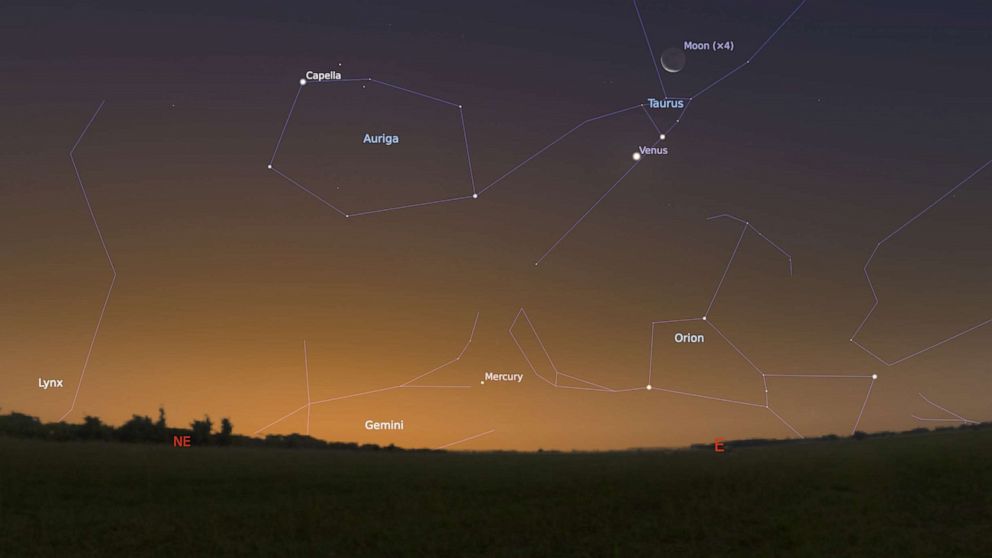
Mercury, Venus, Mars, Jupiter and Saturn are all visible to the naked eye across the continental United States for the next two weeks, NASA's Jet Propulsion Laboratory confirmed in a statement to ABC News.

Related Articles

MORE: Retired NASA astronaut Scott Kelly shares isolation tips from spending a year in space

"We're very lucky to have such an eye-catching lineup this summer," Dr. Laura Danly, curator at Griffith Observatory, said. "We tend to take for granted all this stuff that is going on over our heads, but if you tune in you can see our solar system at work."
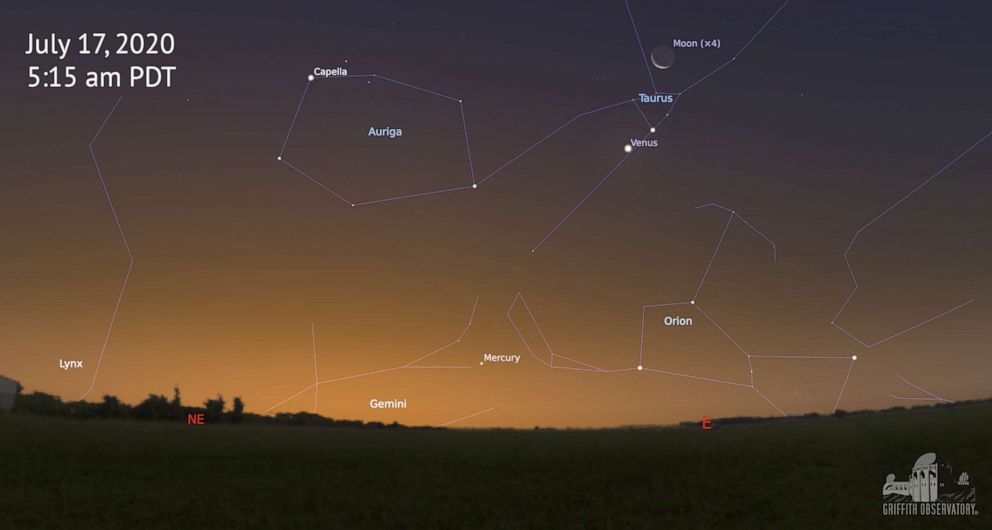
Mercury, Venus, Mars, Jupiter, and Saturn are all visible just before dawn across the continental United States during the month of July, 2020.
Griffith Observatory

It's going to take a little effort to catch the celestial beauty unless you're an early riser. All five planets appear within the hour before dawn only, very low in the east. You'll need a clear view of the horizon, and a pair of binoculars wouldn't hurt to spot Mercury. A comet will also be visible without a telescope.

The event is not unheard of but somewhat rare -- mostly due to Mercury's close orbit to the sun, which will obscure the planet at the end of the month. What is particularly noteworthy about the current alignment is how close four of the five planets -- Venus, Mars, Jupiter and Saturn -- are to each other.

Related Articles

MORE: US astronauts dock at International Space Station

"Usually they're more spread out," Danly explained. "To get all four visible like that is a very beautiful sight."

Mercury will be gone by the end of the month, but the other four planets will be marching across the sky all summer long.


Editor’s Picks

Retired NASA astronaut shares isolation tips from spending a year in space

  • Mar 23, 2020

1st black female astronaut in space offers advice to young girls

  • May 23, 2018

May's flower moon lights up the sky around the globe

  • May 07, 2020

Up Next in Living—

Booksellers share AANHPI book picks from debut mystery to surreal short stories

May 20, 2026

Service dog steals the spotlight at college graduation ceremony

May 19, 2026

Costco patio swings recalled after reports of injuries from falls

May 19, 2026

$10k San Francisco treasure hunt: What to know about the hunt and controversy

May 18, 2026

Shop GMA Favorites

ABC will receive a commission for purchases made through these links.

Sponsored Content by Taboola

The latest lifestyle and entertainment news and inspiration for how to live your best life - all from Good Morning America.
  • Contests
  • Terms of Use
  • Privacy Policy
  • Do Not Sell My Info
  • Children’s Online Privacy Policy
  • Advertise with us
  • Your US State Privacy Rights
  • Interest-Based Ads
  • About Nielsen Measurement
  • Press
  • Feedback
  • Shop FAQs
  • ABC News
  • ABC
  • All Videos
  • All Topics
  • Sitemap

© 2026 ABC News
  • Privacy Policy— 
  • Your US State Privacy Rights— 
  • Children's Online Privacy Policy— 
  • Interest-Based Ads— 
  • Terms of Use— 
  • Do Not Sell My Info— 
  • Contact Us— 

© 2026 ABC News