2021 was pivotal year for abortion laws in America

For half a century, American women have had the right to choose to end a pregnancy at any point before a fetus is viable outside the womb. If 2021 saw that freedom start to crumble, 2022 could see it more widely wiped away.
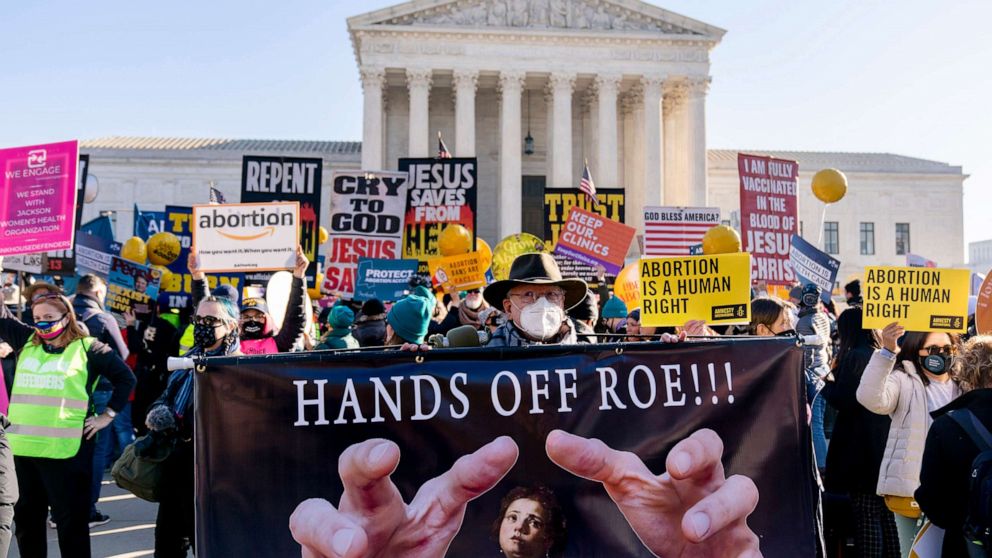
"I think this is the time," said an anti-abortion rights activist from Hattiesburg, Mississippi, who declined to share her name this fall while outside the state’s only remaining abortion clinic in Jackson.
Mississippi, which has asked the Supreme Court to end constitutional protection for abortion, appears likely to at least win affirmation of its 15-week ban on the procedure -- more than two months earlier than the current standard allows.
Texas, which now forbids abortions after six weeks, has become the first state to effectively eliminate most procedures statewide since Roe v. Wade was decided in 1973. SB8, which has been in effect for nearly four months, has defied repeated legal challenges with its novel enforcement mechanism that pits citizen against citizen.
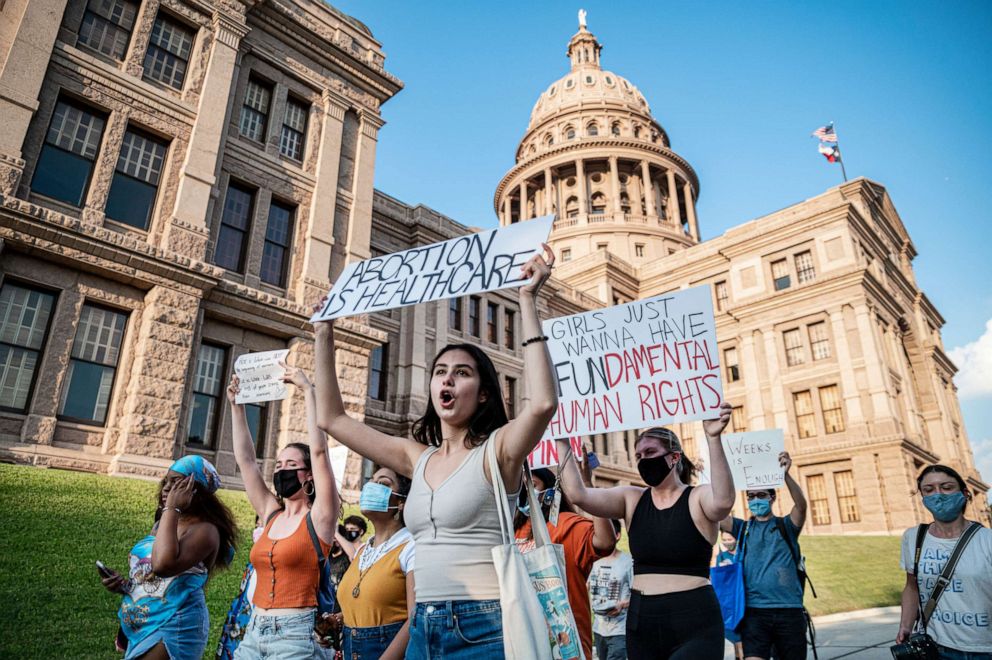
Other Republican-led states are racing to follow suit. A record number of states have enacted more than 100 stringent new restrictions on abortion access in the last year alone, according to the Guttmacher Institute, an abortion rights research organization.
In the months ahead, the nation’s highest court could give states a green light to go even further, potentially scrapping the viability line for abortion bans and shredding decades of precedent.
"The Supreme Court is in dialogue with social movements, with political institutions, with health care providers, and that's what brought us to this moment," said Florida State University Law professor Mary Ziegler, a leading abortion law historian.
The moment is especially pivotal for social conservatives who have spent decades laying legal and political groundwork to roll back abortion access despite broad public support for Roe.
"Could the days of the Court's 'abortion distortion' jurisprudence finally be behind us? I'm optimistic," said Carrie Severino, president of the Judicial Crisis Network, a conservative legal advocacy group that has advocated for the reversal of Roe.
A dozen states have so-called trigger laws set to ban all or nearly all abortions the moment the Supreme Court delivers a favorable decision. Ten more have similar laws that could quickly follow suit.
The anti-abortion movement is "well-organized, well-funded, and they stick together," said Derenda Hancock, co-founder of the Pink House Defenders, a volunteer patient escort group at Jackson Women’s Health in Mississippi. "In the meantime, the pro-choice movement has a lot of inner fighting, inner stress."
To counter the momentum, abortion providers and women’s health advocates have been scrambling to advance new initiatives.
Whole Woman's Health, a leading abortion care provider in Texas, is now providing the procedure for free before six weeks of pregnancy, in accordance with state law.

The Biden administration announced this month that the abortion pill mifepristone can now be distributed by mail or at commercial pharmacies if authorized by a physician, rather than in-person at a hospital, clinic or medical office.
It "did not come a moment too soon," ACLU attorney Julia Kaye said.
But the moves to shore up abortion access so far only have a limited impact.
Nineteen states have laws banning distribution of mifepristone by mail: 13 are in the South, and six in the Midwest, according to Guttmacher.
Only 15 states and the District of Columbia have laws that protect the right to abortion.
The House of Representatives for the first time passed a bill to protect abortion rights, but it faces long odds in a narrowly divided Senate.
If the Supreme Court overturns Roe, the battle over abortion rights in 2022 would shift to state legislatures, legal analysts said.
"At least in the short term, this would mean it would be a state-by-state issue, and even more than is already the case," Ziegler said. "Your ability to get an abortion would depend on where you live."
There would likely be renewed attempts to enshrine abortion protections into either state law or state constitutions, as well as emboldened efforts by abortion opponents to legislate rights for a fetus.
"I think that the end game for many opponents of abortion is actually enshrining in the law a constitutional protection for the fetus," said Cardozo Law professor and ABC News Supreme Court contributor Kate Shaw.
The Supreme Court is expected to deliver its decision in June, just months before the midterm elections.
"The trend around the globe is toward liberalization of abortion," Nancy Northup, president and CEO of the Center for Reproductive Rights, said. "If the U.S. takes this step back, we're just going to have to go forward."