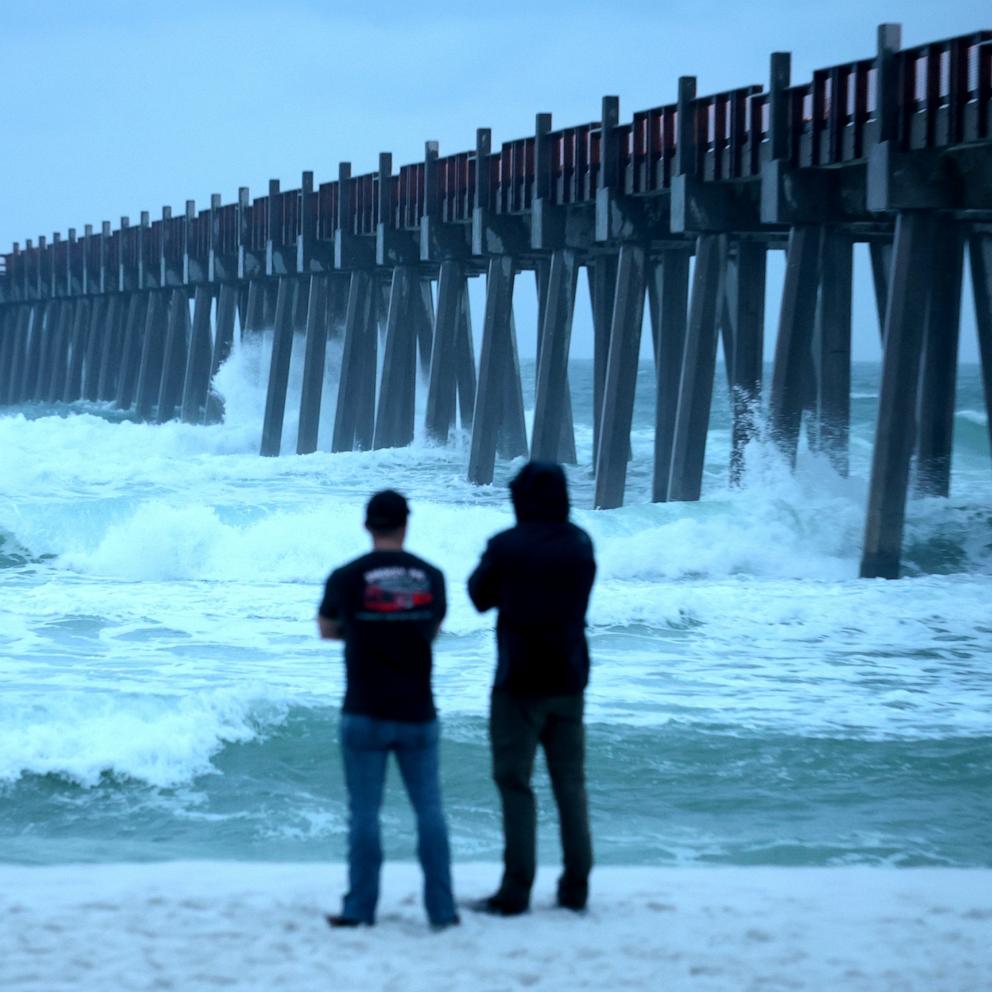
30th anniversary of Hurricane Andrew: How modern-day storms carry same surprise factor as 'The Big One' 3 decades ago

It has been 30 years since Hurricane Andrew -- a fast-moving Category 5 storm that devastated communities in southeast Florida -- barreled through the region, destroying entire neighborhoods and taking hundreds of thousands of residents by surprise.
On Aug. 24, 1992, Hurricane Andrew made landfall in southern Miami-Dade County near Elliot Key just before 5 a.m., packing wind gusts that measured at 177 mph in some areas before the weather instruments failed and produced a storm surge of up to 13 feet in areas near Biscayne Bay. The system would then move across South Florida and exit in the Gulf of Mexico.
And because of the characteristics many modern-day cyclones display as a result of climate change and warming ocean waters, the surprise factor brought on by Andrew can be expected to occur more often in the future as storms continue to experience rapid intensification -- despite the vast advances in forecast technology, meteorology experts told ABC News.

Technology available in 1992 could not properly forecast Hurricane Andrew
The technology available today to track and forecast the characteristics of cyclones as they form in the Atlantic Ocean is eons away from what was available to meteorologists 30 years ago, Eric Blake, senior hurricane scientist at the National Hurricane Center, told ABC News.
The new tools include satellite imagery that allows scientists to see inside a storm every 30 seconds, as well as aircraft that are able to fly into the center of the storm to get radar and wind data from the center and model techniques that use the current structure of the storm to forecast how it may behave in the near future.
"In 1992, we had nothing," Blake said, "We had statistics and persistence and forecaster intuition."
Intensity forecasts were especially bad in 1992, and meteorologists notoriously boasted about not having any skill in forecasting intensity, Blake said. It was only within the past 15 years that intensity forecasts began to improve, with about a 50% advancement since Hurricane Andrew, he added.
Thirty years ago, it would have been almost impossible for meteorologists to issue warnings for anything other than a low-end hurricane a few days after activity was detected, especially for a geographically small storm like Andrew, Blake said.
Just a few days before landfall, the National Hurricane Center almost wrote its last advisory for Andrew because the system was so disorganized, Blake said. But those characteristics quickly changed.
Meteorologists "would almost never forecast rapid intensification" due to the lack of tools in the early 1990s, Blake said. These days, virtually no tornado storm or hurricane storm comes without warming, Shepherd said.
But predicting rapid intensification is the remaining source of large errors in hurricane forecasts, Ryan Truchelut, chief meteorologist at Weather Tiger, a consulting and risk management firm, told ABC News.
"We detect it roughly a quarter of the time," Blake said. "It's not ideal, but we're getting better."
Track forecasts have always been a generation ahead of intensity forecasts, in terms of accuracy and availability, but they have still improved immensely over the past three decades, Blake said.
Track errors are 75% better than what they were in 1992, Blake said, describing the difference as "a big number."
"We've added several reliable days to the forecast," he said, and meteorologists now have more days leading into warning the public that a serious threat is on the way.

But the intensity of storms can still sneak up on us
Even with the improvements in technology, there are still storms that over-perform what is expected, Phil Klotzbach, senior research scientist at Colorado State University's Department of Atmospheric Science, told ABC News.
For example, as Hurricane Michael approached the Gulf Coast of the U.S. in October 2018, it dissipated before forming and intensified more than forecasters anticipated, Klotzbach said. This storm caught many people in the southeast U.S. off guard, even with the modern technology, Truchelut said.
Hurricane Andrew is one of four Category 5 hurricanes ever to make landfall in the continental U.S., and every one of those systems was a tropical storm just three days before landfall, Truchelut said.
Models first detected Hurricane Andrew as a tropical wave off the coast of Africa 10 days before it made landfall in Florida. Over the following week, it strengthened to a weak tropical depression and then a tropical storm -- becoming the first named storm late in the hurricane season -- before weakening west of the Bahamas.
On Aug. 22, 1992, two days before Andrew made landfall, the storm system rapidly strengthened into the first hurricane of the 1992 season. The first hurricane warnings for southeast Florida were issued the next morning, and 24 hours later, the cyclone made landfall.
Blake emphasized that while meteorologists are getting better at predicting how hurricanes will behave, the science is not yet perfect.
Looking at the storms in recent hurricane seasons, meteorologists have seen systems clocking in at a Category 2 at nightfall that had suddenly intensified to a Category 4 by morning, Shepherd said.
Warmer ocean waters are likely to blame for an apparent increase of rapid intensification behavior, the experts said.
While meteorologists have always known the possibility of rapid intensification, there has been an uptick on rapidly intensifying storms over recent years, Marshall Shepherd, director of the Atmospheric Sciences Program at the University of Georgia and former president of the American Meteorological Society, told ABC News.
"Particularly in this era of climate change, where we know that the intensity of storms is likely amplified because of these warmer ocean waters, we're going to see a generation of rapidly intensifying storms," Shepherd said.
This is why it is especially important for people to heed early warnings and take action as hurricane threats approach.
"People may think they have more time than they do," Shepherd said. "They don't."
The cleanup that followed Andrew led to lasting change
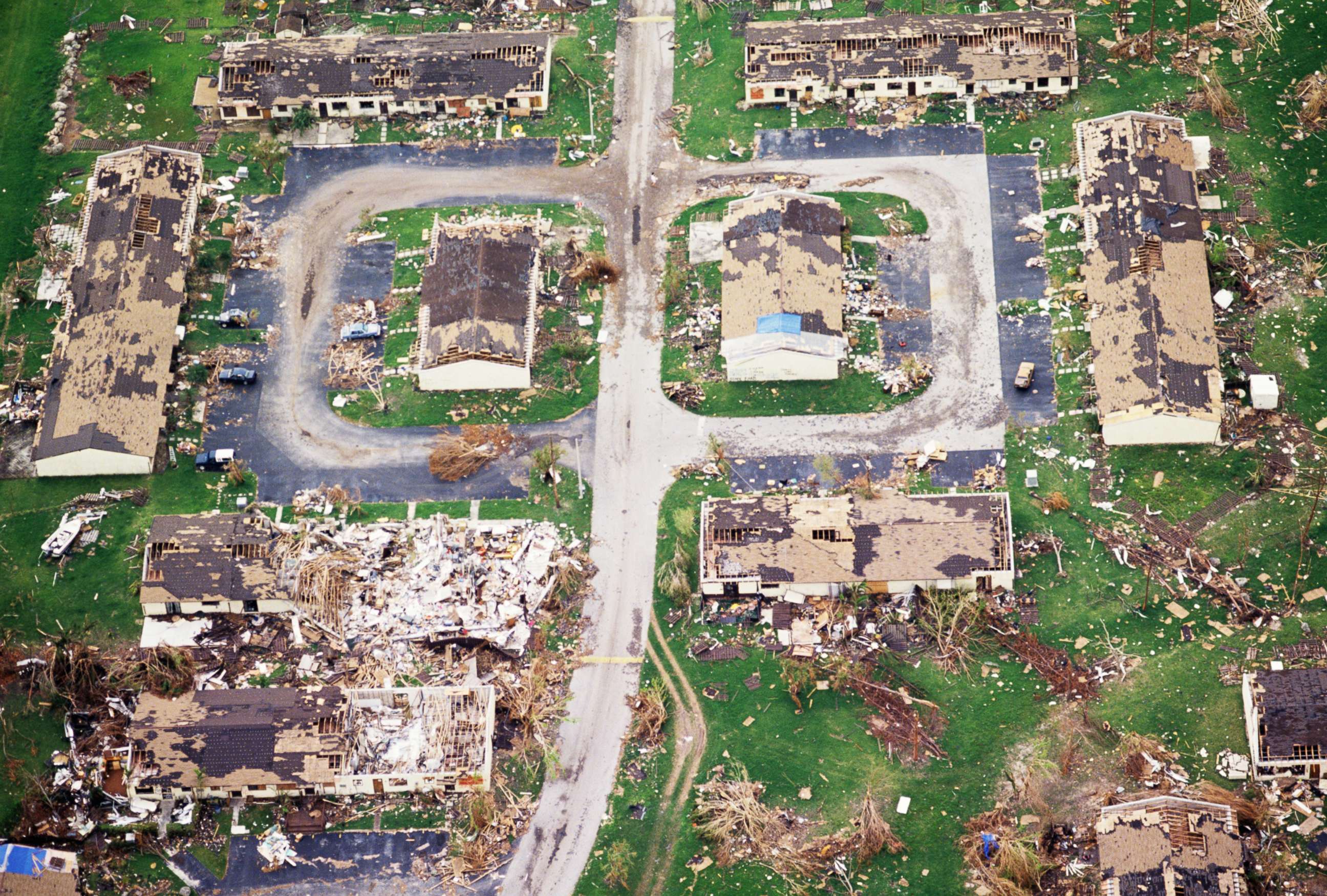
The aftermath was as if Armageddon struck a thriving American city in the modern era of the 90s. Typically busy roads were filled with silence and, for some, destruction was visible as far as the eye could see: flattened trailer parks, facades of buildings completely ripped off, and telephone poles that had toppled to the ground like dominoes.
Survivors who evacuated described the state of their homes when they returned. In Lakes of the Bay in Miami, not a single house was left standing. Some homes had their roofs ripped off and were inundated with chest-deep water, fish coming out of the kitchen cabinets when they opened.
Others who decided to ride out the storm described hunkering down in small rooms as powerful winds that carried the sounds of a freight train ripped off exterior downs, allowing rain coming down horizontally to enter.
The storm was eventually known colloquially as "The Big One" and displaced hundreds of thousands of residents in Miami-Dade County -- their homes reduced to rubble. It also sparked a series of changes to Florida's building codes -- revealing shoddy business practices and poor enforcement of building codes in South Florida.
The transformation also required the strengthening of the structures of homes in the event that another "Big One" came ashore, bringing dangerous winds and rain with it.
Hurricane Andrew caused $26.5 billion in damage, making it the most expensive and most destructive hurricane on record in American history at the time, according to the NHC. Twenty-six deaths -- including 15 in Miami-Dade County, were directly associated with the storm –- a relatively low number considering the vast destruction it caused to the landscape, according to the NHC.
ABC News' Melissa Griffin contributed to this report.