Why some advocates say the water in Puerto Rico is not safe to drink

Some Puerto Ricans are worried about the safety of their drinking water.
Over the last few decades, some residents and advocates on the island have become skeptical about the water that comes out of their faucet, deciding to drink only bottled water.
"I buy bottled water," Bruneli, a resident of Barceloneta, told ABC News. "I've found that the water isn't reliable."
The issue stems from a combination of factors, including a failing infrastructure at treatment centers and pollution from the booming manufacturing industry, Erik Olson, a senior strategic director at the National Resources Defense Council, told ABC News.
Puerto Rico also does not get the same amount of resources allocated to other jurisdictions in the U.S. and budget cuts have been made to all government agencies on the island, including environmental quality and protection agencies, Ruth Santiago, an attorney and environmental health advocate with Earth Justice, told ABC News.

The issues, which also include decades of violations at water utilities, leave residents feeling like not enough is being done to ensure the quality of their water.
Barceloneta, a town on the northern coast of Puerto Rico known for housing many manufacturing plants, is also the site of a 33-acre plot full of toxic waste that has been there for decades, Julio Lopez Varona, the co-chief of campaigns at the Center for Popular Democracy, told ABC News.
The landfill, where many hazardous wastes were disposed of from the 1970s to the 1990s, has been established as a superfund site by the U.S. Environmental Protection Agency and has been monitored for 30 years, Carmen Guerrero Perez, director of the U.S. Environmental Protection Agency's Caribbean Environmental Protection Division, told ABC News.
"At this moment, based on the five-year reviews that have been conducted, there hasn't been any migration from contamination at that specific area," Perez said.

The EPA is tasked with enforcing the Clean Water Act and overseeing local enforcement of the Safe Drinking Water Act. The most common violations include failure to test the water and failure to report problems, Olson said. Health-based violations, such as contamination with bacteria and failure to treat the water in accordance to EPA guidelines and chemical contamination issues, have also occurred, Olson said.
While Perez said the EPA has "a number of different enforcement strategies," enforcements are akin to "a slap on the wrist," Santiago said.
Both the local and federal government need to "step up" on enforcements, Olson said.
"Puerto Rico cannot continue to be the place where the U.S. extracts wealth and harms people because that's just wrong," Varona said.
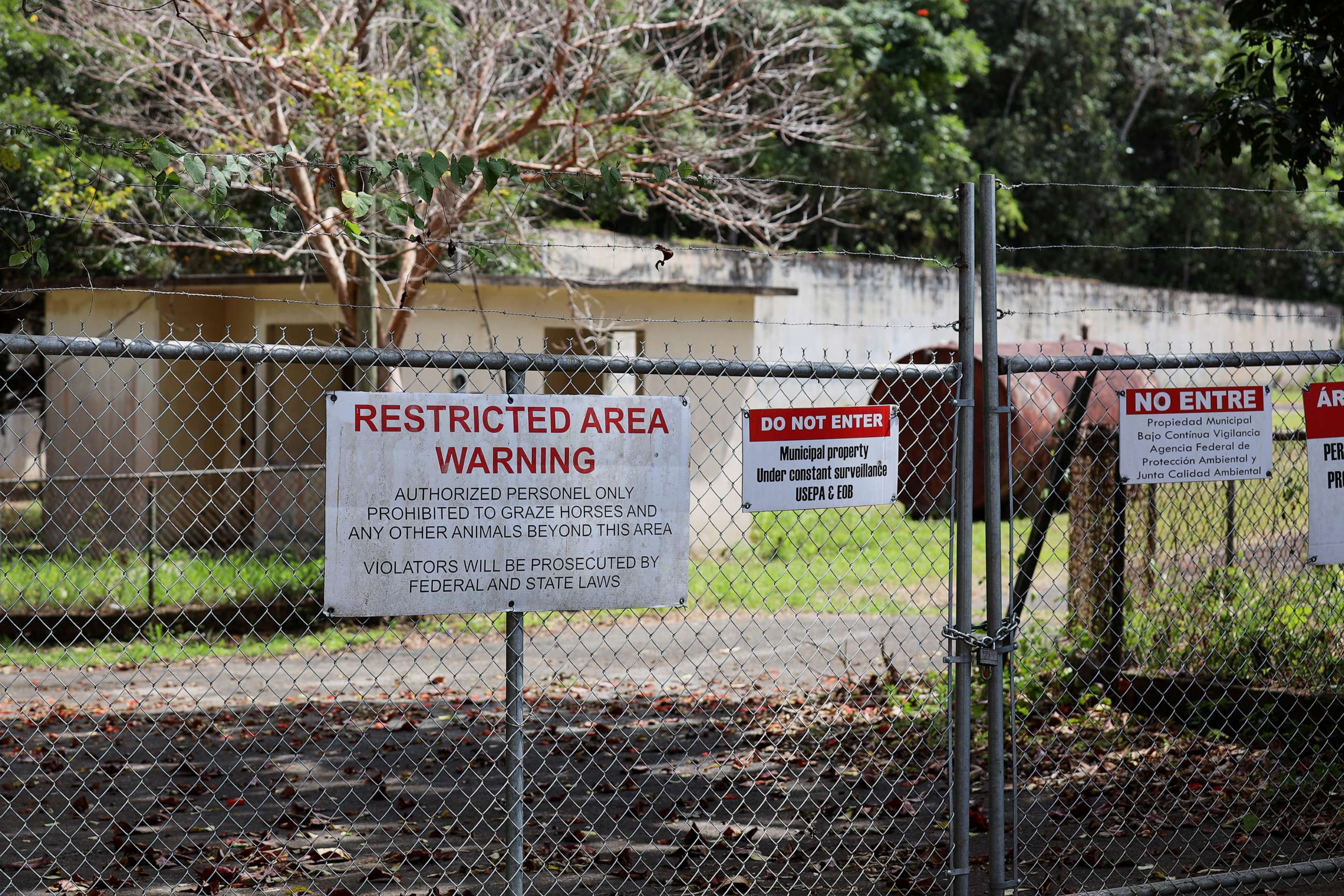
Poorer communities are the demographic most likely to live near the sites that need the most cleanup and monitoring, advocates said. In Barceloneta, there is an "active community" near the waste site, Varona said.
"That's sort of one of the elements of environmental injustice, right? The overburdening of communities that are poor," Santiago said.
On April 4, the EPA said more than $62 million in funding is being dedicated to essential drinking water infrastructure upgrades in Puerto Rico.