Appeals court judges voice skepticism about legal basis for Trump's sweeping tariffs
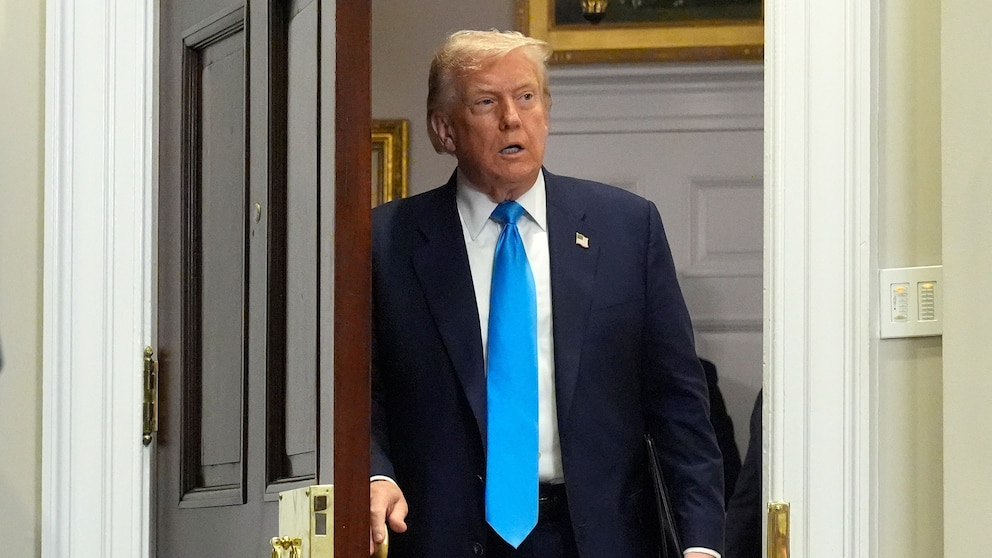
A panel of appeals court judges on Thursday voiced deep skepticism with the Trump administration's attempt to justify sweeping tariffs based on a national emergency.
As the clock ticks down to President Donald Trump's Aug. 1 deadline for the resumption of reciprocal tariffs, the U.S. Court of Appeals for the Federal Circuit is hearing arguments Thursday over whether Trump's sweeping tariffs are lawful.
A group of small businesses and a coalition of states are asking the appeals court to invalidate the bulk of Trump's tariffs, arguing that Trump overstepped his power when he invoked the rarely used International Emergency Economic Powers Act (IEEPA) to enact a flurry of tariffs in April.
At the start of Thursday's hearing, judges on the appeals court panel questioned why Trump is relying on a law that has never been used to justify tariffs, saying that the law itself never mentions the word "tariffs" and voicing concern that the president justifying the unilateral action based on an emergency could amount to "the death knell of the Constitution."
"One of the major concerns I have is that IEEPA doesn't mention tariffs anywhere," one judge said. "Here IEEPA doesn't even say tariffs -- doesn't even mention it."
Assistant Attorney General Brett argued that Trump was responding to an "unusual and extraordinary threat" stemming from trade deficits and drug trafficking.
"But IEEPA is rarely used -- it's been over 50 years," a judge said. "This is the first time that IEEPA has been used for tariffs."
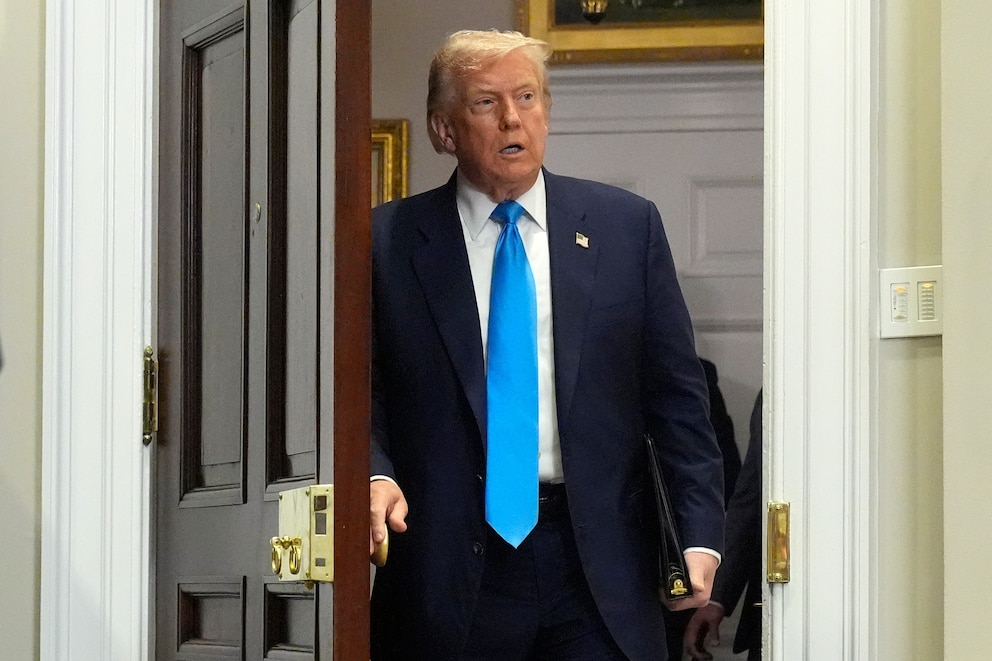
Another judge raised concerns that Trump's sweeping tariffs do not directly address the national security concerns he is trying to resolve.
"If the President says there's a problem with our military readiness and he puts a 20% tax on coffee, that doesn't seem to necessarily [work] unless he links it up," the judge said.
Shumate responded that Trump's tariffs might not directly address the specific threats, but are being used as a broader "bargaining chip." Neal Katyal, a lawyer representing the coalition of businesses who brought the case, called that argument "bogus."
The hearing comes at a critical time for Trump, as he rushes to complete trade deals ahead of a self-imposed Friday deadline for dozens of reciprocal tariffs to restart. Lawyers for the Trump administration have argued that a court invalidating the tariffs would create a "foreign policy disaster scenario" as trade negotiations remain ongoing.
"To all of my great lawyers who have fought so hard to save our Country, good luck in America's big case today," Trump wrote on his social media platform Thursday morning. "If our Country was not able to protect itself by using TARIFFS AGAINST TARIFFS, WE WOULD BE 'DEAD,' WITH NO CHANCE OF SURVIVAL OR SUCCESS."
The legal authority for Trump's tariffs was thrown into uncertainty in May when the New York-based Court of International Trade ruled that the president did not have the power to unilaterally impose his global "Liberation Day" tariffs, as well as the tariffs on China, Mexico, and Mexico that Trump imposed to combat fentanyl trafficking.
A federal appeals court quickly stayed the Court of International Trade's decision before it could take effect, while the Trump administration's appeal worked its way through the courts.
At issue is whether Trump had the authority to enact tariffs without authorization from Congress through the International Emergency Economic Powers Act, which gives the president the power to impose tariffs under an "unusual and extraordinary threat."
While the Trump administration has argued that the tariffs combat fentanyl trafficking and seek to settle the country's trade imbalances, the Court of International Trade was unconvinced that the Trump administration demonstrated an "unusual and extraordinary threat" and that those tariffs "deal with the threats."
In court filings, the Trump administration has argued that court's decision is "riddled with legal errors" and "would significantly harm the United States if it were to take effect." They have justified the tariffs by citing the country's fentanyl crisis and the "grave threats to the United States' national security and economy" stemming from trade imbalances.
"President Trump has found that America's exploding trade deficit, the implications of that deficit for our economy and national security, and a fentanyl importation crisis that has claimed thousands of American lives constitute national emergencies," lawyers with the Department of Justice have argued.
The Trump administration has also argued that invalidating the tariffs would "deprive the United States of a powerful tool for combating systemic distortions in the global trading system, thus allowing other nations to continue to hold American exporters hostage to their unreasonable, discriminatory, and sometimes retaliatory trade policies."
The group of small businesses and state attorneys general have pushed back against those claims, arguing that the International Emergency Economic Powers Act does not give Trump "unlimited tariff authority" and that he has failed to prove "an unusual and extraordinary threat."
"The President's chaotic assertion of that purported authority, which changed by the day and wreaked havoc on capital markets and the economy, illustrates both the breadth of powers that the President claims and the danger of unlimited authority in this domain," they wrote.