Albino sharks among fascinating species in 'horribly underexplored' deep sea
This is an Inside Science story.
Forget the white whale -- some of the most rarely seen albinos on the planet are deep-water sharks that spend most of their lives in a world without light.
"It's not common, that I'm aware of, in any particular shark or ray group," said David Ebert, director of the Pacific Shark Research Center of the Moss Landing Marine Laboratories in California. Since it's even rarer for researchers to see deep-sea creatures at all, "it is fascinating when we do see [albino sharks] come up."
While little is known about these albinos -- only a handful of individuals from a handful of species have ever been observed by researchers -- occasional specimens are making marine biologists wonder how a lack of pigment may affect deep-water sharks, as well as their relatives rays and chimaeras (sometimes called ghost sharks). It could potentially make them more susceptible to predators or affect their ability to recognize mates. In deep-sea species that use bioluminescent signaling, it may even affect their ability to communicate.
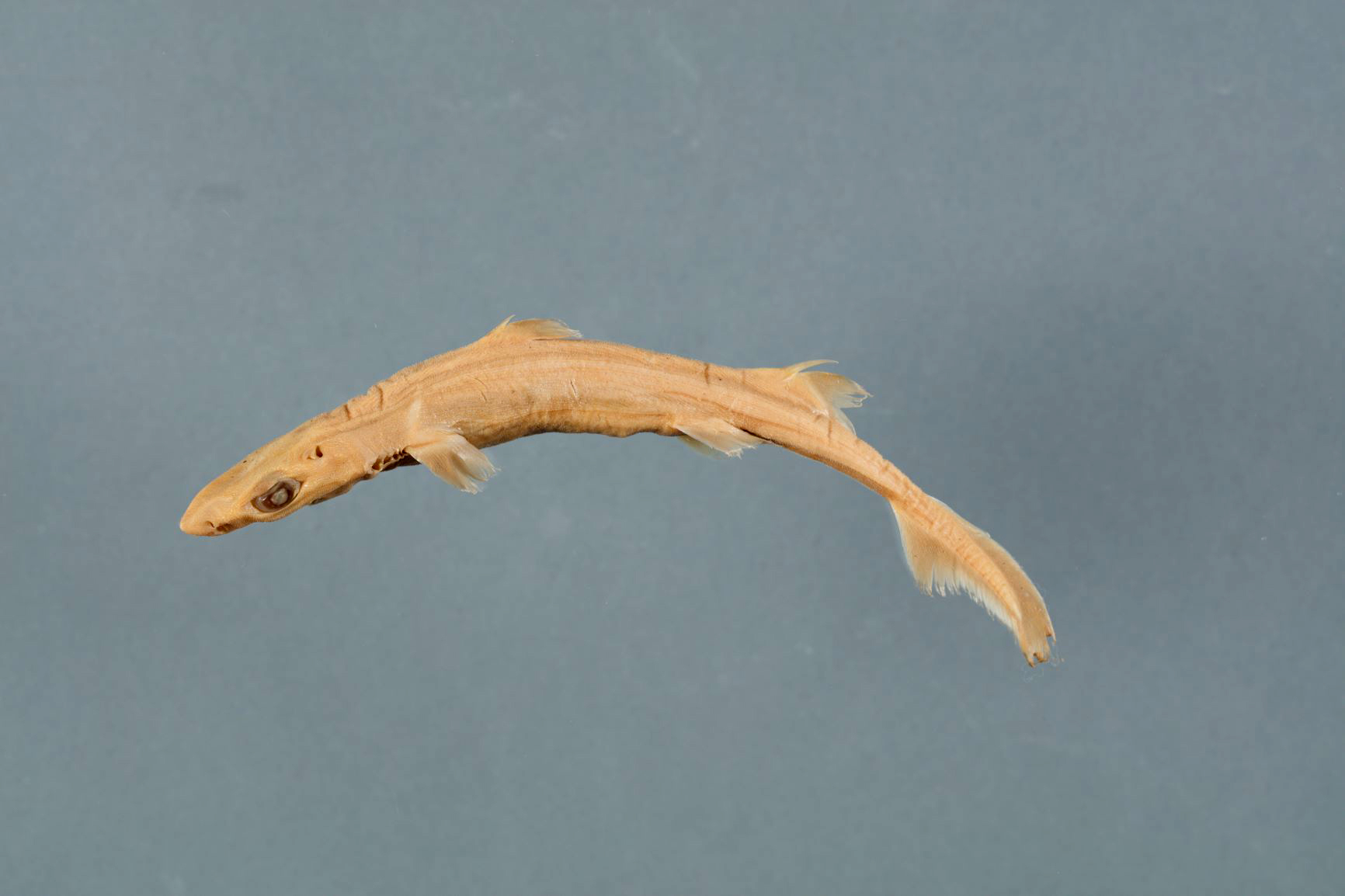
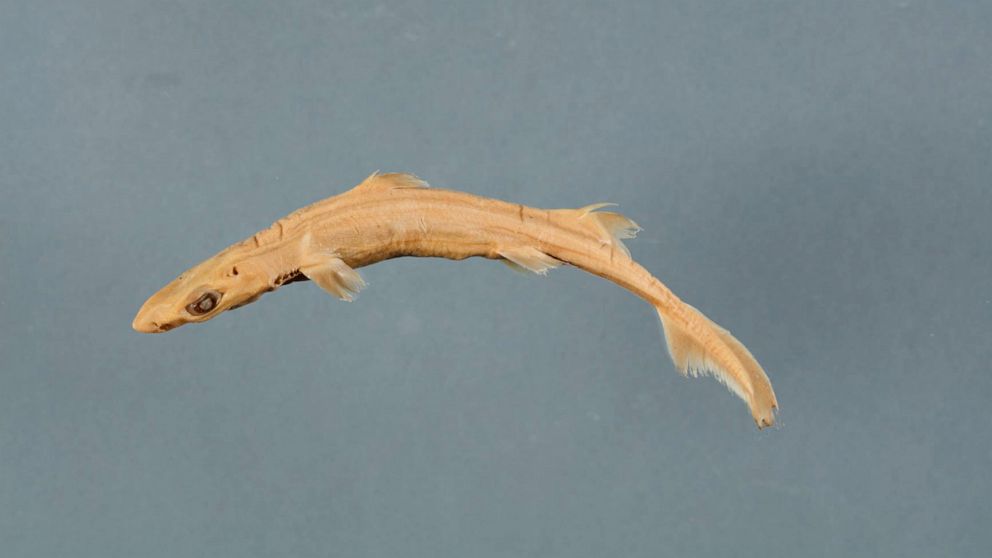
Brit Finucci, a fisheries scientist with the National Institute of Water and Atmospheric Research in New Zealand, recently described a specimen found in a collection at the Auckland War Memorial Museum in New Zealand, which has natural history collections as well as military history collections. In a paper published in March in the Journal of Fish Biology, she described the first record of albinism in lantern sharks, a group of deep-sea sharks, in a Lucifer's shark collected about 30 years ago.
"I saw this little lantern shark sitting there and was like, 'What the hell is that?" she said. "It had no pigmentation whatsoever."
Lantern sharks are known for their bioluminescence, hence their name. The species known as Lucifer's shark is normally dark in color. While the specimen Finucci found was pale, it still had photophore organs that produce light.
So little is known about the species in this group that Finucci said further research will likely reveal that there may be many more species than currently described. Researchers speculate that species may recognize and communicate with their own kind by species-specific photophore patterns.
"Because each lantern shark species has unique photophore patterns it's suspected that they use bioluminescence to communicate with each other," she said.
While the albino shark Finucci described still had photophores, she speculates that the lack of pigmentation may have made it difficult for other individuals to recognize the female as one of their own, therefore impacting its ability to mate.
In any case, the shark appeared otherwise healthy, giving no suggestion that its albinism was detrimental, Finucci said. "The animal had lived for some time, and probably would have kept living if it hadn't been pulled up by a research trawl back in the day."
Nonetheless, this specimen, like many albinos of various species that have been observed, had not yet reached adulthood.
"In a lot of cases, [albinos] generally don't make it very large because they get eaten," Ebert said. "They're vulnerable to predators."
Ocean depth typically affects the coloration of marine life along general patterns. Many creatures higher in the water column are darker on top so that from above they appear to blend in with deep water, and from below they blend in with the bright surface, said Jennifer Bigman, a biology doctoral candidate at Simon Fraser University in Vancouver, Canada. Albinism could affect this.
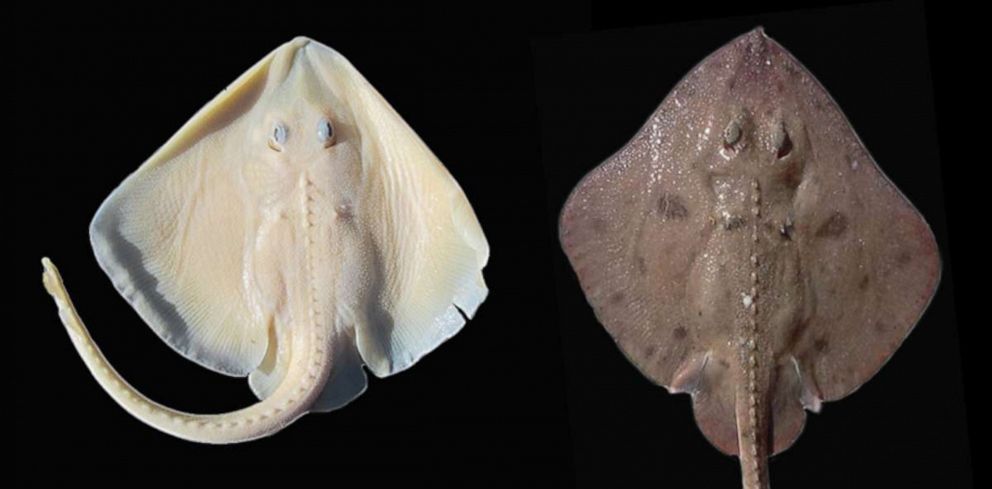
"If you're albino, whether that's complete or partial, you're going to be more visible than an individual of the same size that has normal pigmentation," said Bigman, who published a study in 2015 on the discovery of an albino Aleutian skate and a partial albino roughtail skate, both found in shallow and deep Pacific waters off the coast of the United States.
Ray-like skates, which are related to sharks and more distantly to ghost sharks, spend much of their time on the seafloor, camouflaged with the substrate. Roughtail skates are typically purplish while Aleutians are usually brown. Being albino -- even partially so -- could put them at a disadvantage to predators hovering around above them.
Furthermore, these individuals may not be able to sneak up on prey as easily.
"Being an albino species would result in lower fitness," Bigman said.
Researchers are unsure why some of these deep water species even have pigment in the first place. Some species down there are naturally white or translucent, making the effects of albinism at those depths even more of a mystery.
Despite the potentially negative impacts of lacking pigmentation, some albino sharks do survive -- just enough to ensure the occasional continuation of the rare albino genes.
"We're not seeing the true prevalence of albinism," Bigman said. "As marine biologists, we're mostly looking at dead individuals."
Ebert said that little is known anyway about deep-water sharks. Even less is known about the rare albino specimens that pop up, and how their lack of pigmentation may affect their survival, fitness, or ability to mate.
"The deep sea is horribly underexplored," he said.
Inside Science is an editorially independent nonprofit print, electronic and video journalism news service owned and operated by the American Institute of Physics.