Amid measles outbreak, NY lawmakers propose bill that would allow teens to get vaccinated without parental consent
New York lawmakers are pushing for the power of change to rest in the hands of teenagers.
A new bill currently moving through the state legislature would allow for any teens over 14 to receive certain vaccines without parental approval.
The measure comes as New York is dealing with two of six measles outbreaks that have occurred so far this year, according to the Centers for Disease Control and Prevention.
In 2018, there were 17 measles outbreaks across the country. The CDC reports that many of the outbreaks that took place in New York and New Jersey during that time "occurred primarily among unvaccinated people in Orthodox Jewish communities."
If the proposed bill is passed, New York will be the latest state to pass such a law, joining others like Oregon, Pennsylvania and South Carolina, which already have similar laws.
New York Assemblymember Patricia Fahy, one of the bill's lead sponsors, told ABC News that because of separate budget procedures "it's going to take a couple of weeks" to move forward in the process. She also warned that it might not be easy. "Because there has been such a strong anti-vaccination constituency, this will be an uphill battle," she said.
In a memo explaining their stance on the legislation, the New York chapters of the American Academy of Pediatrics said they "strongly" support it and that sometimes teens have an advantage over their parents with differentiating fact from fiction on the internet.
"In this instance, which is specific to immunization, young people are often more conscious about the misinformation on the internet and can in many cases disagree with parents who have bought into unfounded and dangerous anti-immunization diatribes and pseudo-science," the groups' memo reads. "These young people have a right to protect themselves from diseases that can easily be prevented by immunizations."
Part of the inspiration for the law appears to come from beyond state lines. Fahy told ABC News that 18-year-old Ethan Lindenberger of Ohio was "absolutely" a motivator in the proposal.
Lindenberger spoke in front of Congress on Tuesday, March 5, about how he defied his mother's wishes and got himself vaccinated.
"It was catching that [testimony that] drew our awareness to the issue," Fahy said.
Lindenberger told U.S. Senators that his mother, like many who are against vaccines, believed that the shots cause autism or brain damage, even though there has been substantial scientific evidence to the contrary.
"Over the course of my life, seeds of doubt were planted and questions arose because of the backlash that my mother would receive" when she spoke and posted online about her aversion to vaccinations.
He said that when he went into high school "and began to critically think for myself, I saw that the information in defense of vaccines outweighed the concerns heavily."
Lindenberger started getting his vaccines once he turned 18 because his home state of Ohio does not have a law allowing minors to be vaccinated without parental approval.
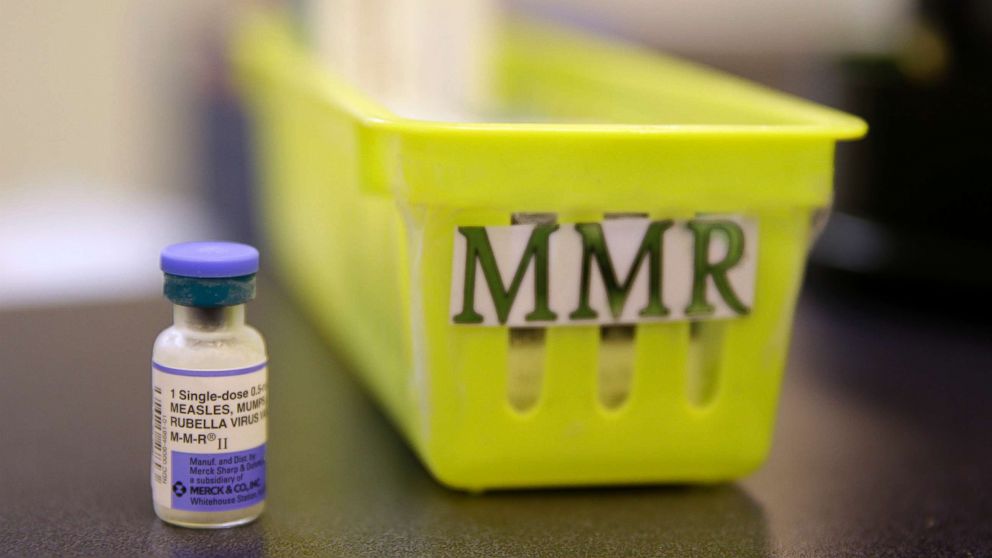
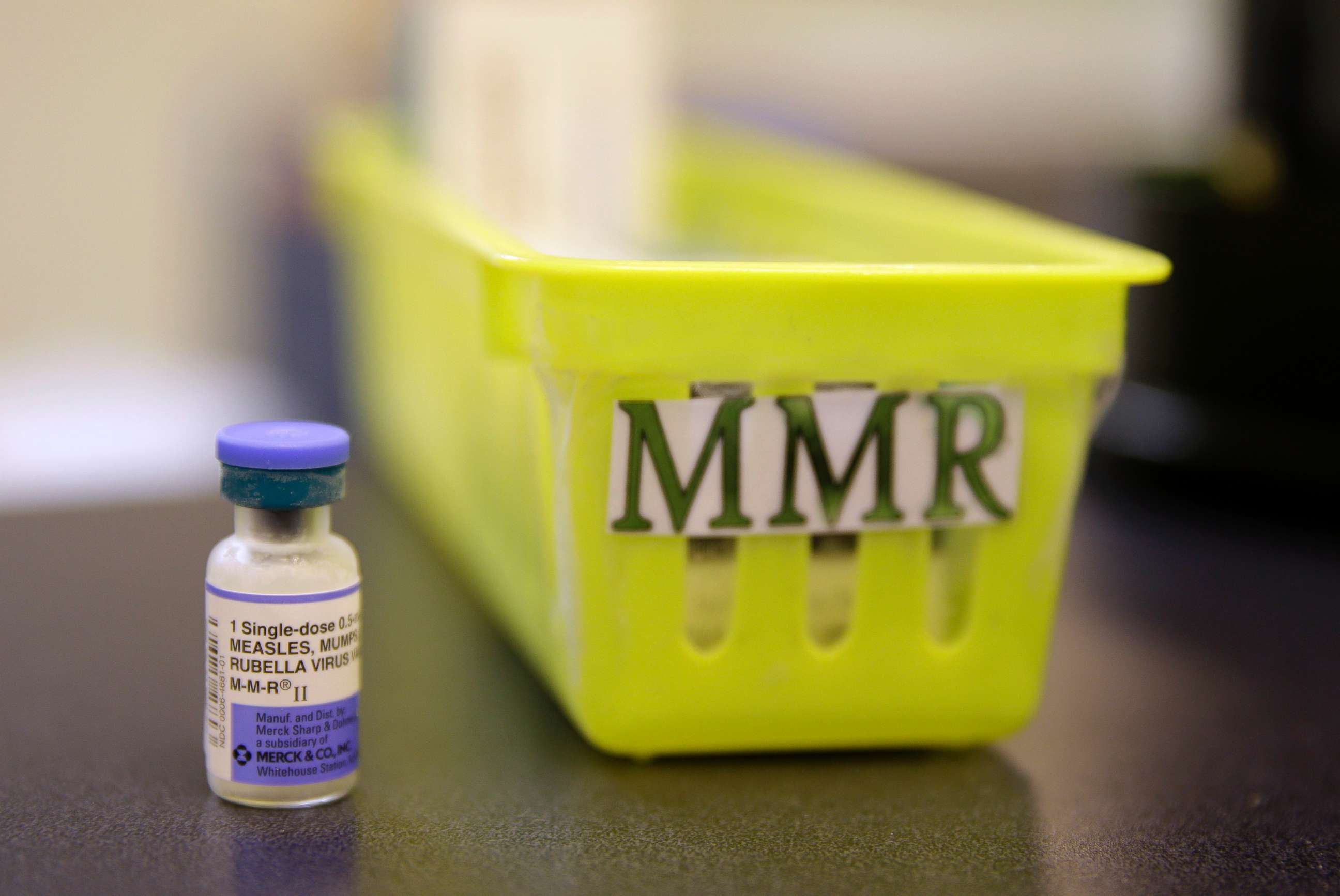
The 2019 guidelines put forth by the American Academy of Pediatrics state that the measles, mumps and rubella (MMR) vaccine should be given when a child is between 12 and 15 months old and then a second dose should be given later on, when they are between 4 and 6 years old. The guidelines also note that the MMR vaccine should be given any time after these ages if the person misses them.
Each person who gets vaccinated contributes to what's known as herd immunity, or the protection of a community from infectious diseases via mass vaccinations. It's a measure that makes vaccines more effective. For measles, herd immunity is achieved when 92 to 95 percent of the population is immunized.