Ancient flying reptiles, known as Pterosaurs, probably had feathers and fur
This is an Inside Science story.
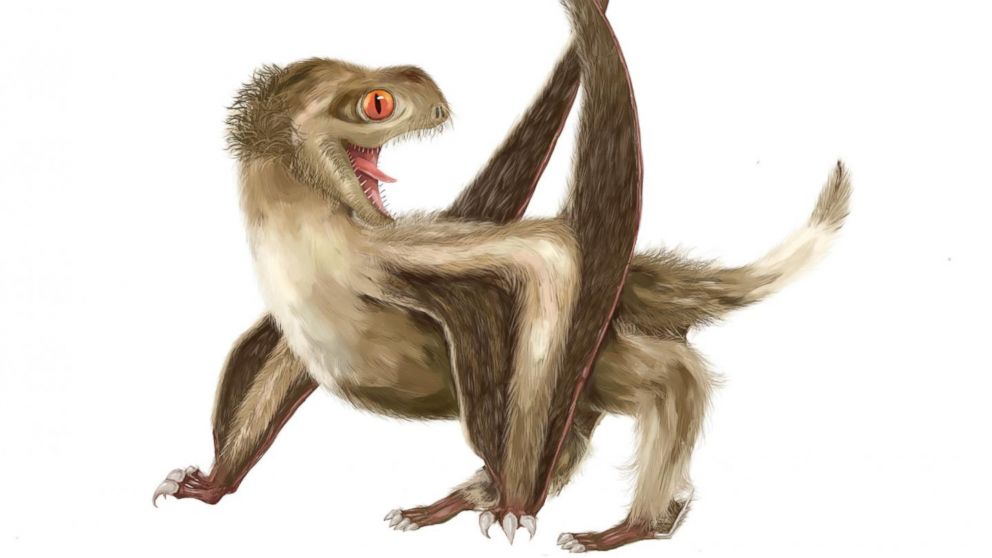
The extinct flying reptiles known as pterosaurs had plumage like both the feathers of birds and the fur of bats, a new study finds.
Pterosaurs, which lived during the age of dinosaurs, were the first vertebrates to possess true flight. However, given the absence of any living pterosaurs, much remains a mystery about them.
Previous research discovered that pterosaur skins were covered in hairlike filaments dubbed pycnofibers that are typically depicted as furlike in nature. Now scientists find the reptiles may have also had plumage resembling feathers.
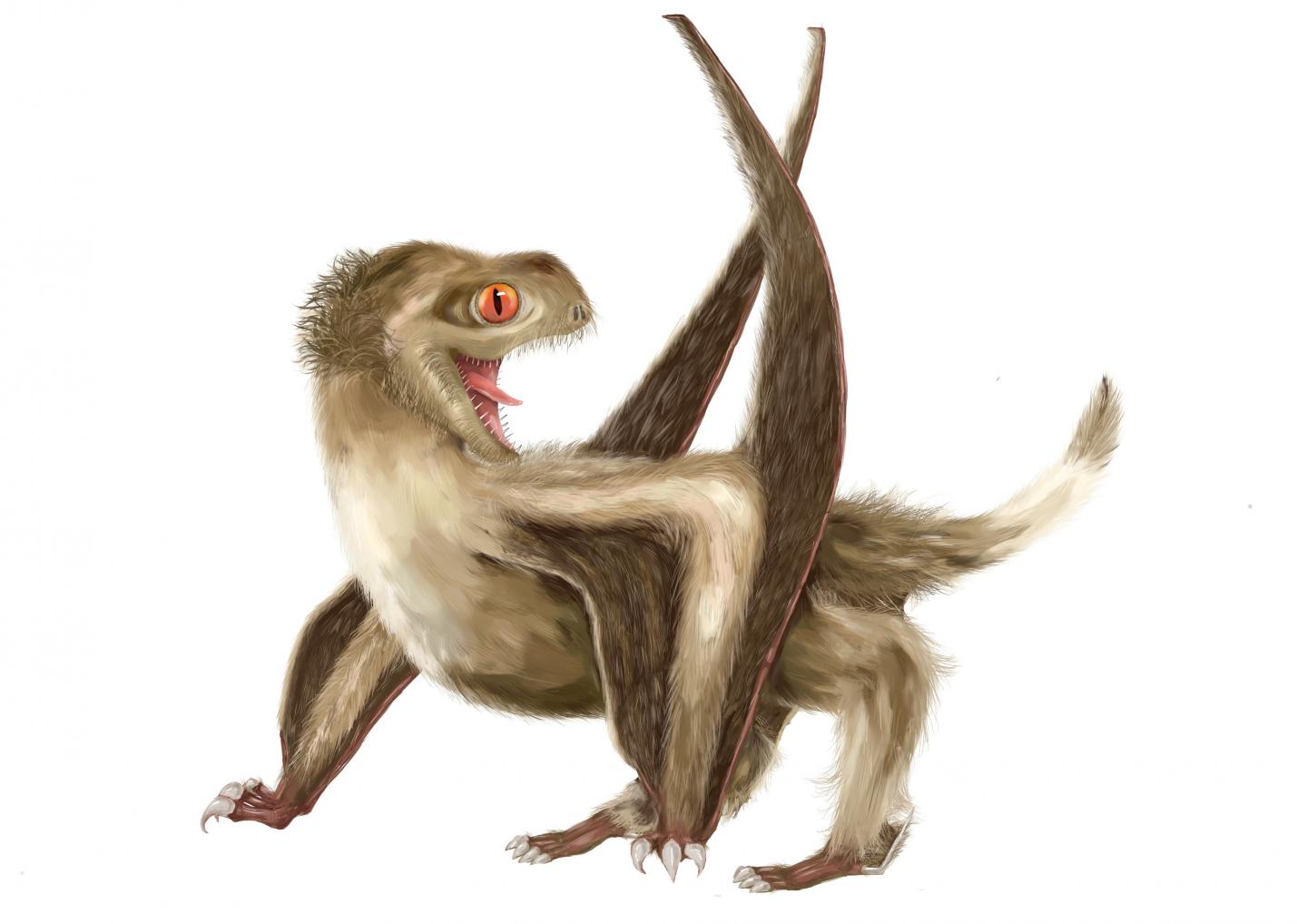
The researchers analyzed the fossils of two well-preserved, short-tailed pterosaurs that lived about 160 million to 165 million years ago in what is now China. They suggest the reptiles were covered in four different kinds of fibers.
One type pf pycnofiber consisted of fuzzy, hollow, furlike fibers on their heads, torsos, limbs and tails. The other three varieties included curved, threadlike fibers on their wings and heads that were branched like modern feathers.
Spectroscopy found that the chemical compositions of all of these pycnofibers were similar to modern feathers, while scanning electron microscopy revealed they contained packets of pigment and so were likely colorful. Possible roles for all these fibers may include thermal insulation, aerodynamic streamlining, coloration for camouflage or ornamentation, or use as tactile sensors much like whiskers.
Feathers are the most complex structures decorating vertebrates today, and were previously thought generally limited to birds and their dinosaur ancestors. However, the evolutionary origins of feathers remain controversial. These new findings may support the possibility that feathers evolved in the common ancestors of both pterosaurs and dinosaurs, although it remains plausible that feathery structures evolved independently in both lineages, the researchers said.
Advanced imaging techniques may soon reveal even more insights on the nature of these pterosaur structures. The scientists detailed their findings online in the journal Nature Ecology & Evolution.
Inside Science is an editorially-independent nonprofit print, electronic and video journalism news service owned and operated by the American Institute of Physics.