• Video
  • Shop
  • Culture
  • Family
  • Wellness
  • Food
  • Living
  • Style
  • Travel
  • News
  • Book Club
  • Newsletter
  • Privacy Policy
  • Your US State Privacy Rights
  • Children's Online Privacy Policy
  • Interest-Based Ads
  • Terms of Use
  • Do Not Sell My Info
  • Contact Us
  • © 2026 ABC News
  • News

Astronomers discover what may be a new type of planet
2:43
Hints of life found on distant planet
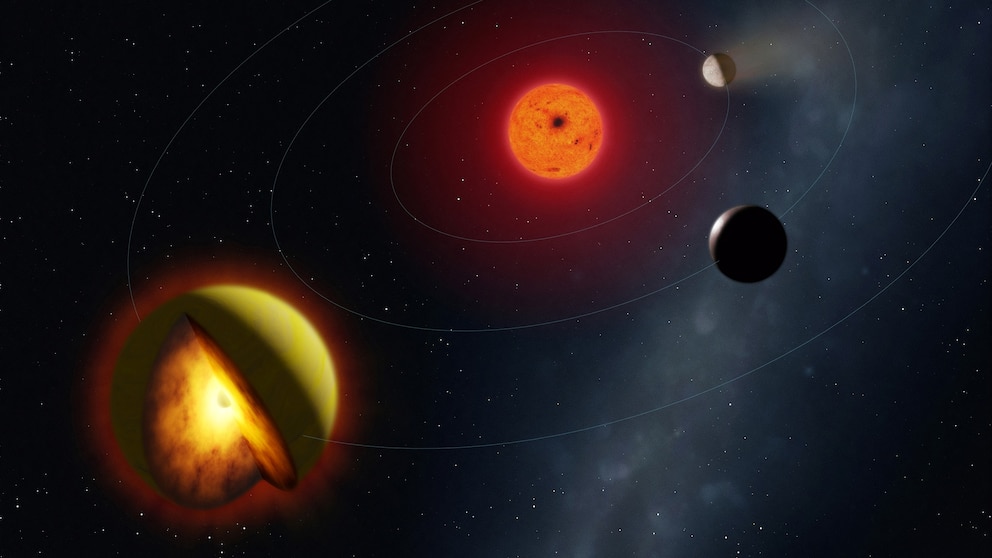
Mark A. Garlick via Reuters
ByJulia Jacobo
March 16, 2026, 7:27 PM

Astronomers may have discovered a new type of planet beyond our solar system, according to new research.

The exoplanet, named "L 98-59 d," was first identified in 2019, but further observations using high-powered telescopes have allowed scientists to get a better understanding of its climate.

Related Articles

MORE: NASA studying Earth-like planet that could contain water

Researchers now know that L 98-59 d has some unusual characteristics. It is covered in oceans made of magma and has an atmosphere made of sulfur, according to a paper published Monday in Nature Astronomy.

It is a rocky planet, with a radius about 1.63 times larger and mass about 1.64 times that of Earth's, according to NASA.
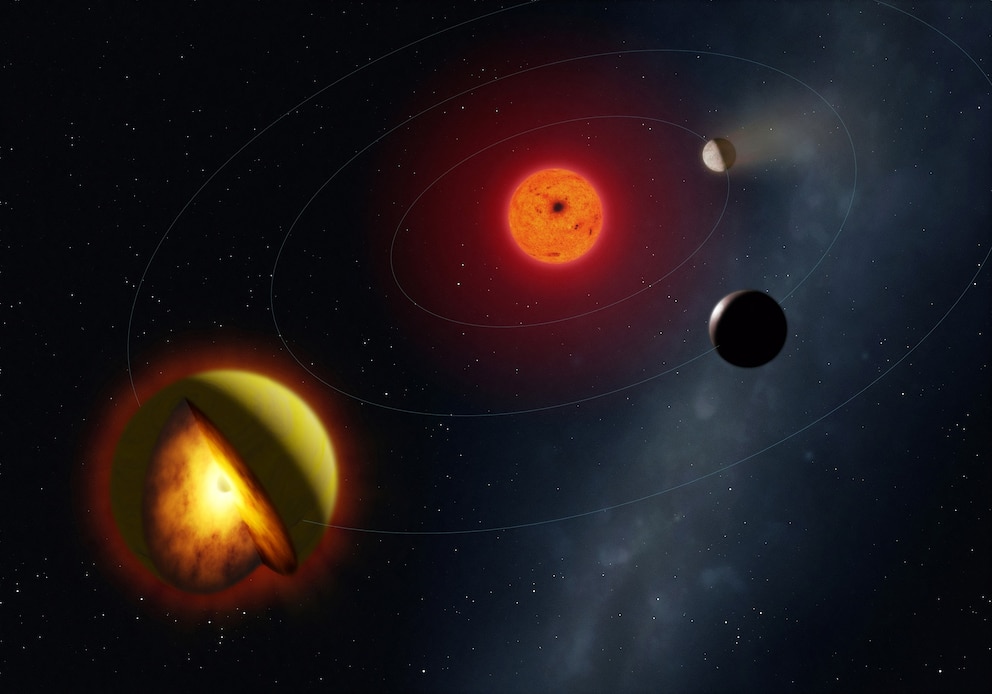
An artist's impression of the exoplanet named L 98-59 d, shown with a cutaway to reveal its interior, orbiting a red dwarf star, with two of its sibling planets, seen in this image released on March 16, 2026.
Mark A. Garlick via Reuters

L 98-59 d's makeup is inconsistent with origin scenarios astronomers have previously described for planets of its size. In a gas-dwarf scenario, planets are believed to form rock cores that accrete a small percentage of hydrogen-helium during the formation process. In the water-world scenario, the planets contain a significant amount of liquid or frozen water.

The new exoplanet displays neither. Its mantle is likely composed of molten silicate rock, and its atmospheric makeup is indicative of substantial early sulfur and hydrogen content, in which it has evolved to host a "volatile-rich atmosphere," according to the researchers.

Related Articles

MORE: NASA detects new planet with temperatures that suggest habitable conditions

This would make L 98-59 d, which is 35 light years away from Earth, an unlikely environment to sustain life.

The exoplanet's atmosphere contains gases like water, sulfur dioxide and hydrogen sulfide -- which can smell like rotten eggs, especially when burned.

Related Articles

MORE: Astronomers witness dawn of new solar system for 1st time

L 98-59 d was detected by the James Webb Telescope, the most powerful telescope ever put into space. Since 2021, the telescope has made several stunning discoveries as it orbits the sun, including several exoplanets that were previously not visible to astronomers.


Up Next in News—

New York Knicks fan no longer employed by former company, fined after taking Knicks-themed trash can

June 24, 2026

What to know about housing legislative package passed by Congress

June 24, 2026

LA school district approves new screen time limits for students

June 24, 2026

12-year-old American boy injured in shark encounter in Bahamas

June 24, 2026

Shop GMA Favorites

ABC will receive a commission for purchases made through these links.

Sponsored Content by Taboola

The latest lifestyle and entertainment news and inspiration for how to live your best life - all from Good Morning America.
  • Contests
  • Terms of Use
  • Privacy Policy
  • Do Not Sell My Info
  • Children’s Online Privacy Policy
  • Advertise with us
  • Your US State Privacy Rights
  • Interest-Based Ads
  • About Nielsen Measurement
  • Press
  • Feedback
  • Shop FAQs
  • ABC News
  • ABC
  • All Videos
  • All Topics
  • Sitemap

© 2026 ABC News
  • Privacy Policy— 
  • Your US State Privacy Rights— 
  • Children's Online Privacy Policy— 
  • Interest-Based Ads— 
  • Terms of Use— 
  • Do Not Sell My Info— 
  • Contact Us— 

© 2026 ABC News