• Video
  • Shop
  • Culture
  • Family
  • Wellness
  • Food
  • Living
  • Style
  • Travel
  • News
  • Book Club
  • Newsletter
  • Privacy Policy
  • Your US State Privacy Rights
  • Children's Online Privacy Policy
  • Interest-Based Ads
  • Terms of Use
  • Do Not Sell My Info
  • Contact Us
  • © 2026 ABC News
  • News

NASA detects new planet with temperatures that suggest habitable conditions

2:13
Hints of life found on a distant planet
NASA, ESA, CSA, Anne-Marie Lagrange (CNRS, UGA), Mahdi Zamani (ESA/Webb)
ByJulia Jacobo
July 02, 2025, 5:43 PM

The James Webb telescope has made another stunning discovery -- this time of a massive planet that could potentially sustain life, according to multiple space agencies.

Astronomers have captured "compelling evidence" of a planet with a mass about 100 times the size of Earth orbiting a young, red dwarf star 34 light-years away called TWA 7 or CE Antilae.

Related Articles

MORE: Rare exoplanet discovered in outskirts of the Milky Way

The planet, named TWA 7b, was detected by the James Webb Space Telescope, the most powerful telescope ever put into space, according to NASA.
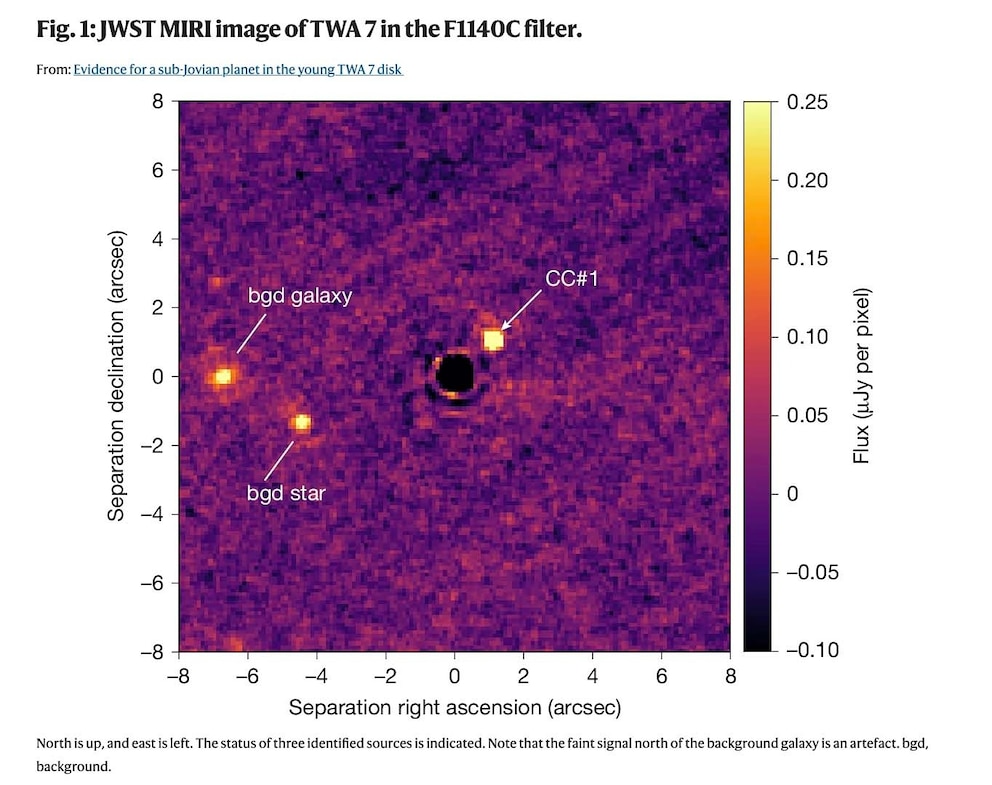
PHOTO: Evidence for a sub-Jovian planet in the young TWA 7 disk
Nature

An initial analysis suggests the object could be a young, cold planet with a temperature near 120 degrees Fahrenheit, NASA said. Life can grow and reproduce starting at about 5 degrees Fahrenheit and as high as 251 degrees Fahrenheit, scientists say.

Related Articles

MORE: Could our solar system have 9 planets after all? Astronomers may have confirmed possible existence.

An international team of astronomers noticed a faint infrared source in a disk of debris surrounding the star, a distance about 50 times the space between Earth and the Sun, NASA said. They then used the telescope's mid-infrared instrument to suppress the bright glare of the host star to reveal the faint objects nearby, a method called high-contrast imaging that allows astronomers to directly detect planets that would otherwise be lost in the "overwhelming" light.
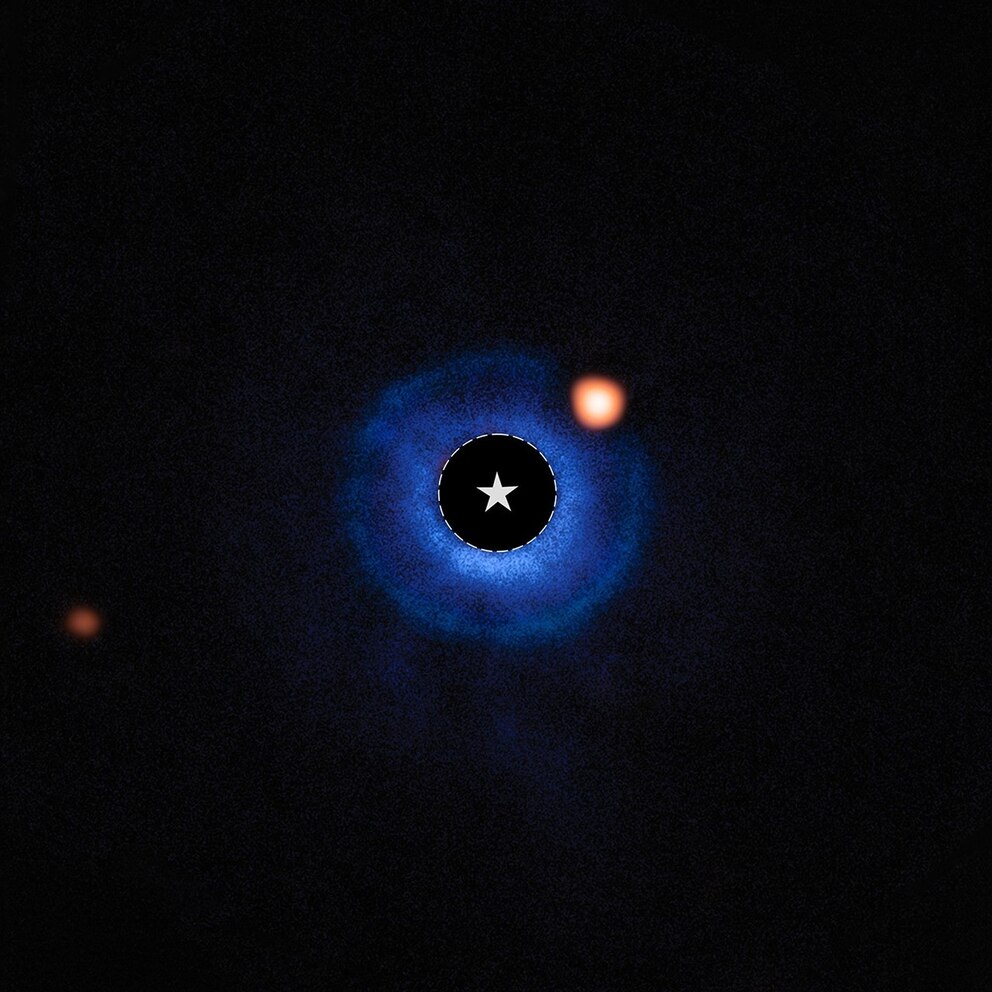
PHOTO: Astronomers using NASA’s James Webb Space Telescope have captured compelling evidence of a planet with a mass similar to Saturn orbiting the young nearby star TWA 7.
Astronomers using NASA’s James Webb Space Telescope have captured compelling evidence of a planet with a mass similar to Saturn orbiting the young nearby star TWA 7. In this image combining ground-based data from ESO’s Very Large Telescope (VLT) and data from Webb’s MIRI (Mid-Infrared Instrument), light from the star TWA 7 has been subtracted. The location of the star is marked with a circle and a star symbol at the center of the image. The blue color represents data from the VLT’s SPHERE instrument, which showcases the location of the disk surrounding the host star.
NASA, ESA, CSA, Anne-Marie Lagrange (CNRS, UGA), Mahdi Zamani (ESA/Webb)

If confirmed, this would be the first time the James Webb telescope captured a direct image that led to the discovery of a planet, rather than gravitational lensing -- a technique based on Albert Einstein's theory of general relativity, according to astronomers.

The detection would match the expected position of a planet and explain key features of planets seen in the debris disk, according to the space agency. The source of the infrared light is located within three dust rings observed surrounding TWA 7.

Related Articles

MORE: HExoplanet discovered in 2020 has the coldest temperatures ever measured, scientists say

The debris disk surrounding TWA 7 is one of the youngest debris disks known to date, according to a paper published last week in Nature.

"Our observations reveal a strong candidate for a planet shaping the structure of the TWA 7 debris disk, and its position is exactly where we expected to find a planet of this mass," Anne-Marie Lagrange, a researcher at the Observatoire de Paris-PSL and Université Grenoble Alpes in France and lead author of the paper, said in a statement.
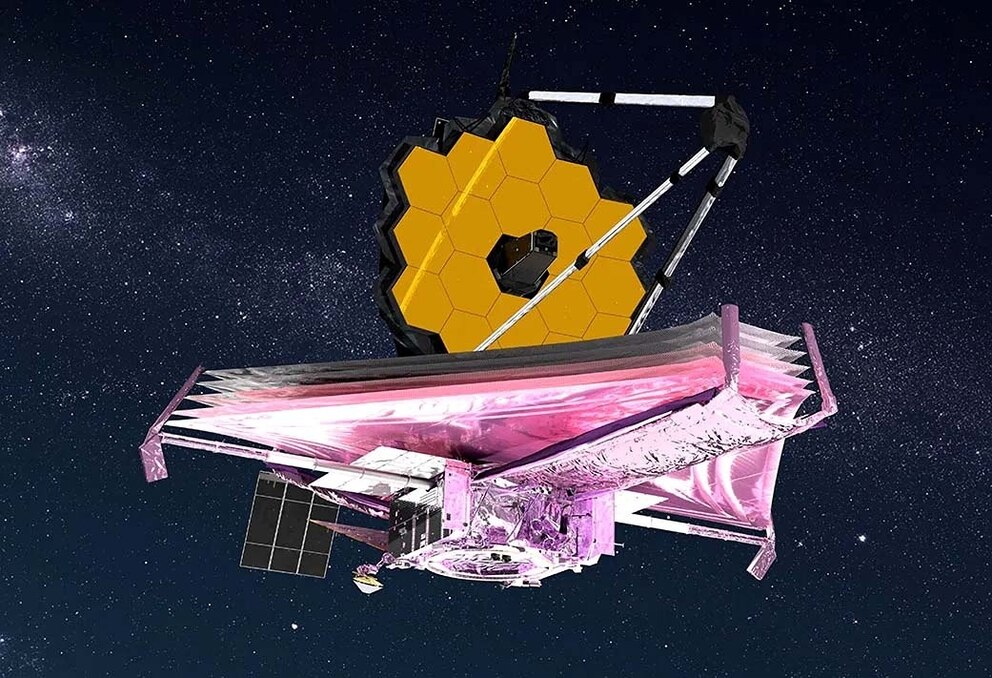
NASA's James Web Space Telescope is shown in this illustration.
NASA

The discovery is an "exciting step forward in our understanding of planetary systems," said co-author Mathilde Malin, an assistant research associate of Johns Hopkins University and the Space Telescope Science Institute in Baltimore, in a statement.

The finding highlights the Webb telescope's ability to explore previously unseen low-mass planets around nearby stars, according to NASA.


Up Next in News—

Gas station clerk speaks out after foiling alleged kidnapping

April 15, 2026

Oklahoma high school principal takes down would-be shooter, hailed as hero

April 15, 2026

Family seeks answers after influencer Ashlee Jenae is found dead on vacation in Tanzania

April 15, 2026

Couple shares warning after nearly losing down payment in mortgage fraud

April 10, 2026

Shop GMA Favorites

ABC will receive a commission for purchases made through these links.

Sponsored Content by Taboola

The latest lifestyle and entertainment news and inspiration for how to live your best life - all from Good Morning America.
  • Contests
  • Terms of Use
  • Privacy Policy
  • Do Not Sell My Info
  • Children’s Online Privacy Policy
  • Advertise with us
  • Your US State Privacy Rights
  • Interest-Based Ads
  • About Nielsen Measurement
  • Press
  • Feedback
  • Shop FAQs
  • ABC News
  • ABC
  • All Videos
  • All Topics
  • Sitemap

© 2026 ABC News
  • Privacy Policy— 
  • Your US State Privacy Rights— 
  • Children's Online Privacy Policy— 
  • Interest-Based Ads— 
  • Terms of Use— 
  • Do Not Sell My Info— 
  • Contact Us— 

© 2026 ABC News