6 months after George Floyd’s death, Minneapolis activists scramble to save Black Lives Matter art
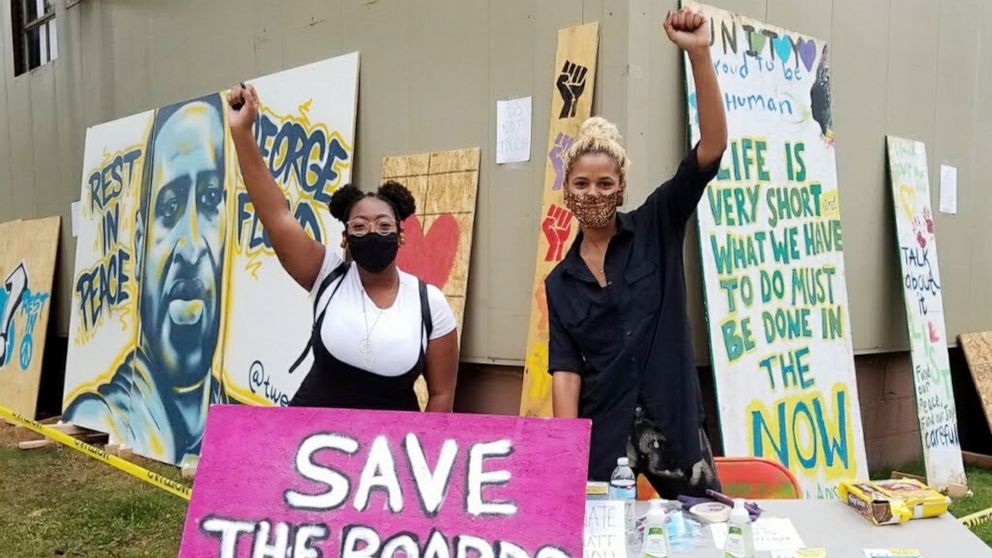
As protests over the police killing of George Floyd wound down this fall after reaching a fever pitch over the summer, Black Lives Matter murals, graffiti and art that popped up on thousands of boarded-up businesses amid the COVID-19 pandemic began disappearing.
But in Minneapolis, where Floyd was killed, a pair of activists had launched a monthslong effort to save the art in hopes of preserving the historic artifacts that tell a story of pain and resistance amid the largest civil rights movement in U.S. history.
Now, six months after Floyd's death, Kenda Zellner-Smith and Leesa Kelly have collected at least 593 plywood boards from around Minneapolis and St. Paul that could otherwise have been destroyed, disposed of or defaced.
Zellner-Smith and Kelly did not know each other initially, but each had started an individual effort to save the art over the summer. But after the two women were featured on "Nightline" in an August story about Minneapolis activists' efforts to save the art, they connected for the first time and ended up joining forces, according to Zellner-Smith.
What had started out as Zellner-Smith's "Save the Boards" and Kelly's "Memorialize the Movement" campaigns is now "Save the Board to Memorialize the Movement," and local activists, artists and organizations, like the Whittier Neighborhood Alliance, have taken notice and donated their own finds to the collection and resources to transport the art.
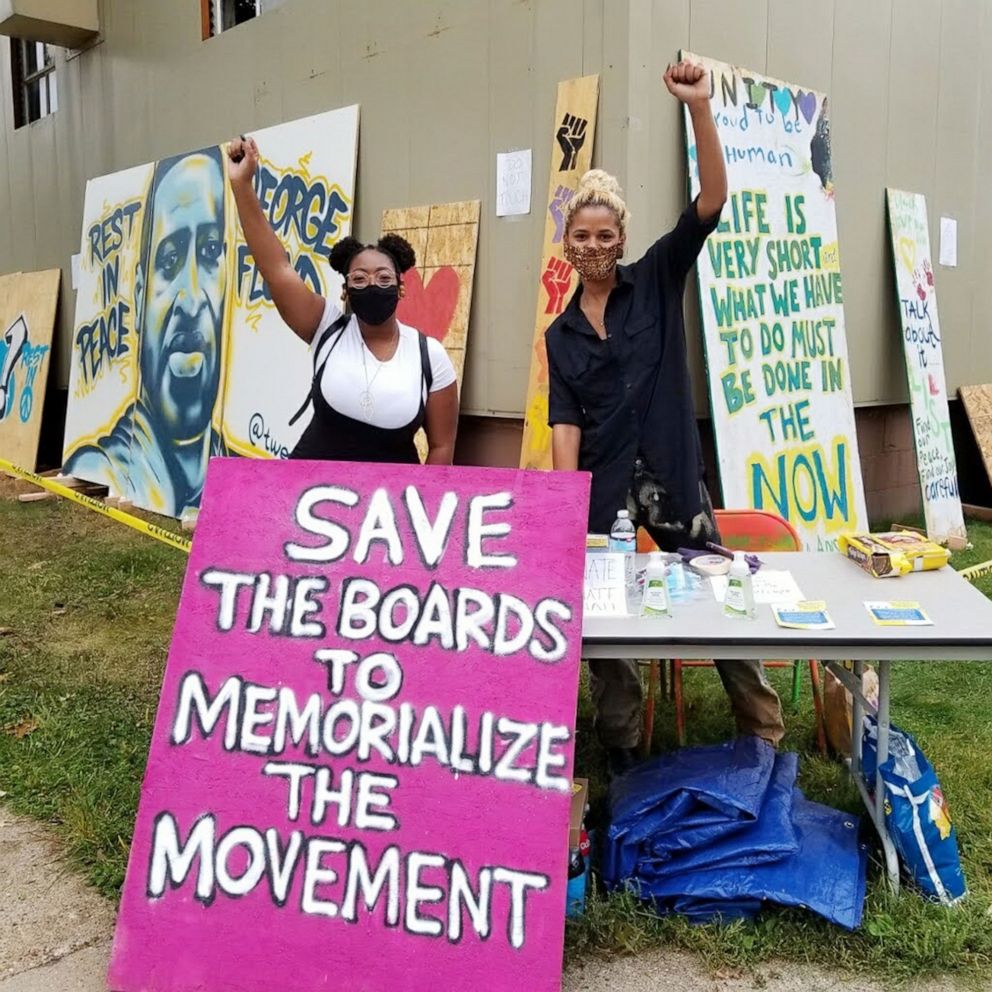
"My partnership with Leesa is amazing. You know, I'm a biracial Black woman, Leesa's a Black woman," Zellner-Smith told ABC News. "I look up to her so much and I take a lot of inspiration from her ... and together we're just kind of a dream team. Where I have weaknesses, that's where Leesa picks up with her strengths and vice versa."
"It was just a relief to find somebody who was also doing the same thing that I was doing, to find somebody who was as passionate about preserving this art and keeping it a part of Black history," added Kelly.
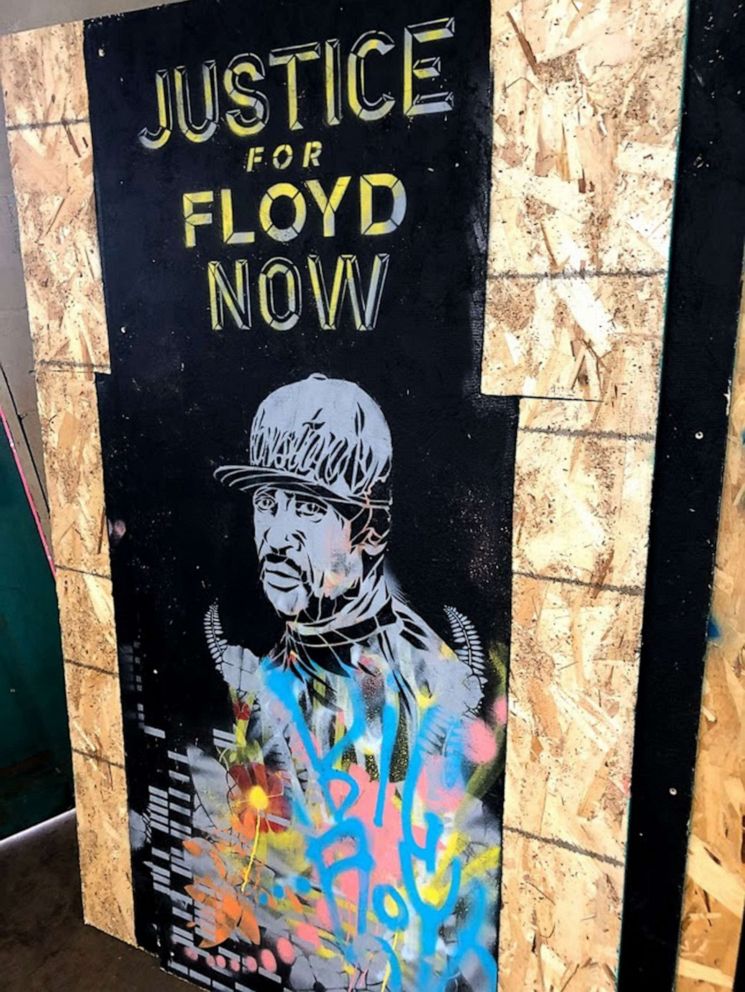
Kelly said that they've worked to save both the really elaborate, detailed and beautifully colored boards created by artists and the simpler, rougher, raw boards filled with messages of images created by protesters, because they are "equally as important" in telling the story.
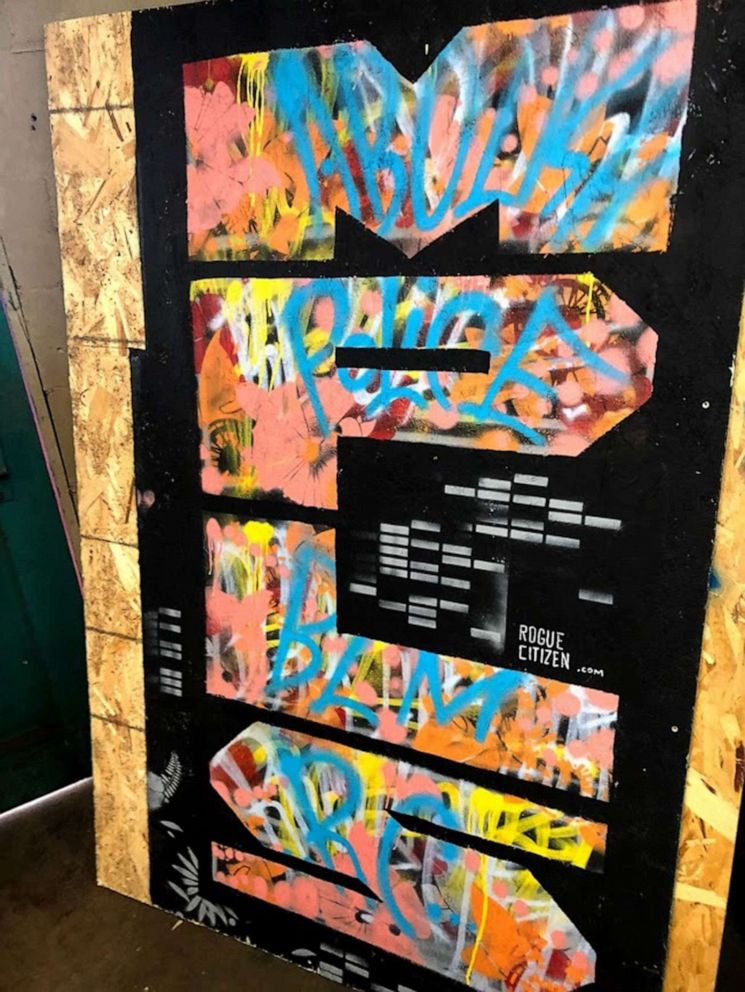
Some boards have messages, some have poems, some have portraits of Black men and women killed by police.
In September, they launched a GoFundMe page, which allowed them to gather enough funding to sign a one-year lease for a building in northeast Minneapolis to store the boards. For the first time, Kelly and Zellner-Smith were able to see, gathered under one roof, the extent of their tremendous collection.
"I wish you could see what it's like being in the storage space," Kelly said. "When you look around, you just get this whole message of pain, grief, solidarity, you know, anger, like a need for change, a want for a better future for us all. It's really, really powerful."
It was "super monumental and super exciting," Kelly said of finding the storage space.
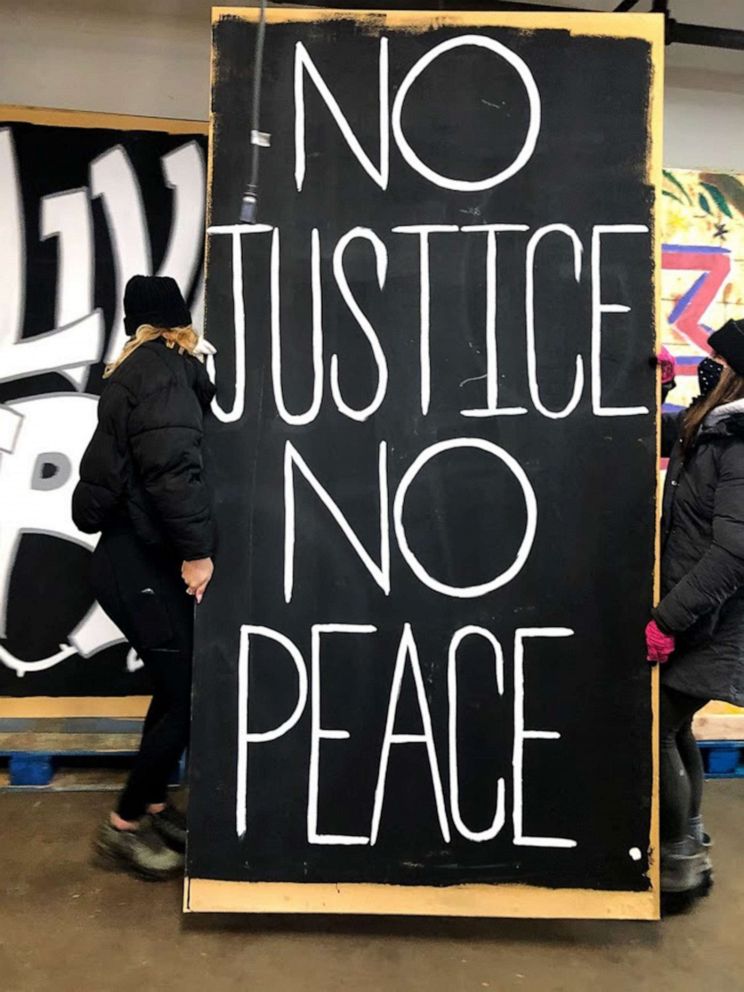
There are still some boards up around the city, but most businesses have taken them down, while others have been defaced or destroyed.
"It's a hard pill to swallow when you realize there are a big majority of people that have moved on. ... They've kind of forgotten about what the environment, what that energy was, in the summer with those boards present," Zellner-Smith said.
But as they work on finding a permanent home for the boards, the activists are coming up with plans to made the boards available for public viewing soon.
They started working on a project to digitally archive the art, which includes 3D scanning, so they can be accessible widely on various platforms.
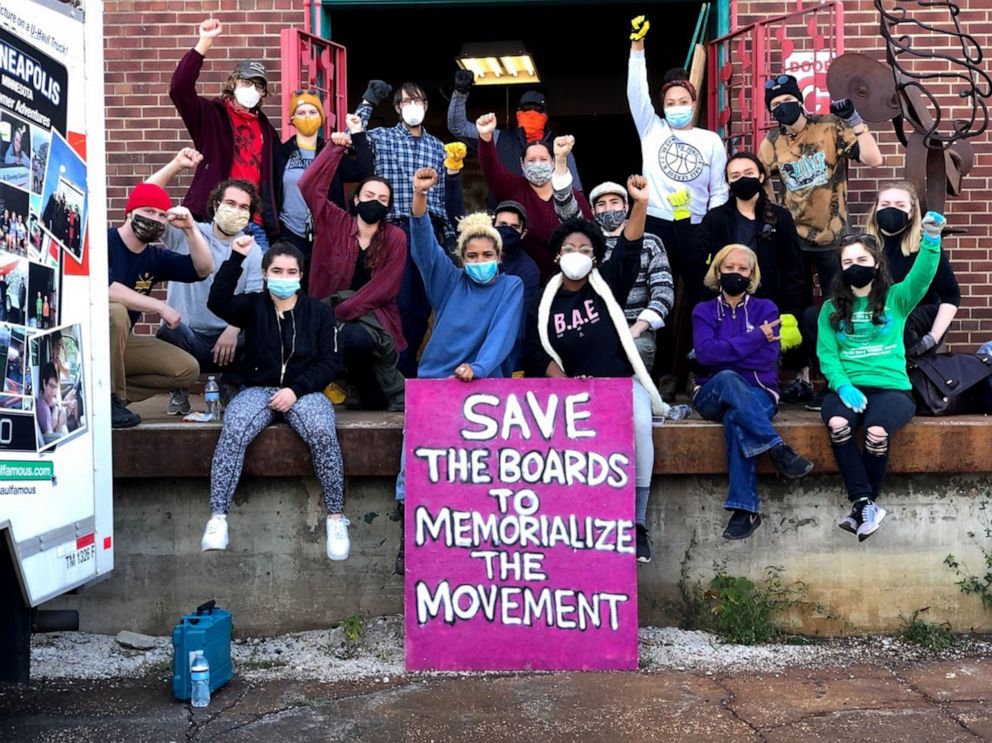
And next year, on the one-year anniversary of Floyd's killing -- May 25, 2021 -- Zellner-Smith and Kelly are planning an exhibit at Phelps Field Park in Minneapolis where all the boards will be displayed for public viewing for the first time.
Kelly and Zellner-Smith hope to find a permanent place for their collection, a venue that would be free and accessible to the public. They are reaching out to Black-owned arts organizations to discuss potential long-term plans.
Ideally, they would like a space located in a Black neighborhood in the Twin Cities "because we are the ones who are most affected by what happened," Kelly said.
"There has to be a space for Black people, by Black people, where this art can be available for healing and reflection, a reminder of what happened in a way to continue the movement," she added.