Bone Cancer Vaccine for Dogs Shows Promise for Breast Cancer
Nov. 21, 2013— -- Sasha Ruano was expected to die within months after losing her leg and undergoing chemotherapy for osteosarcoma, the same bone cancer that robbed Ted Kennedy Jr. of his leg in 1973 when he was 12.
But she has now doubled the medical odds and survived 606 days because of a clinical trial of an immunotherapy drug.
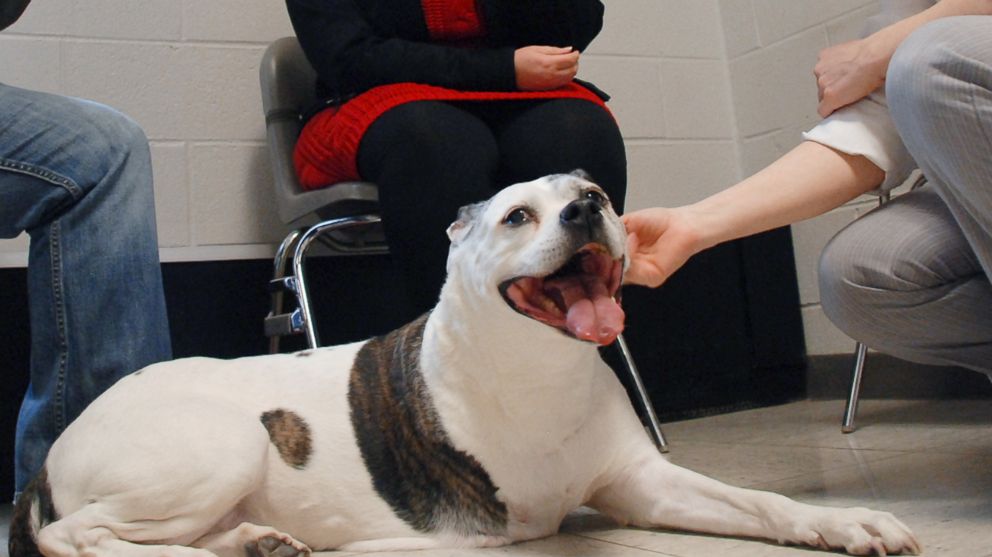
Sasha, by the way, is an adorable 13-year-old American bulldog, but the treatment she is getting at the Penn Vet Center in Philadelphia promises to help more than just animals. If it proves successful, people might benefit as well, and human trials might begin in a few years, researchers say.
READ: Dogs Might Give Clues for Humans With Breast Cancer
"Osteosarcoma is a very aggressive bone tumor and it occurs in both dogs and people," said Dr. Nicola Mason, assistant professor of medicine at University of Pennsylvania School of Veterinary Medicine. "There is a marked similarity in tumors between dogs and humans that makes this research even more exciting.
"If you go to gene expression at the molecular level, tumors in dogs and humans are almost identical," she said. "If you take a bone tumor from a dog and a child, you could not tell which is which."
Sasha's owners, Liliana and Carlos Ruano, have had her since she was 6 weeks old and drive 400 miles each way from Raleigh, N.C., so that she gets her free vaccine every three weeks.
READ: Dogs Sniff Out Cancer at Penn Working Dog Center
Like other owners with dogs with osteosarcoma, the Ruanos found out about the clinical trial online.
"She's done really well," said Carlos Ruano, 38. "Not only has she lived a longer life, but a good, happy life. She is strong and likes to go out to play and swim. She's doing great."
More than 10,000 dogs are diagnosed each year with osteosarcoma; in humans, the disease affects far fewer, only about 400 children and teens, according to the American Cancer Society.
In humans, the disease tends to occur in young people, before the first or second decade of life. In dogs, it affects primarily the large and giant breeds, such as racing greyhounds, Rottweilers and Great Danes.
In both species, the cancer most often affects the long bones in the limbs.
"Usually, the tumor is pretty painful," Mason said. "Not only does it affect the same bones in dogs as does in humans, the clinical symptoms are the same and the treatment options are similar."
In this clinical trial, a new immunotherapy vaccine is being administered to dogs that have already undergone standard treatment for osteosarcoma: limb amputation and chemotherapy. The aim of the vaccine is to prevent metastatic disease and prolong overall survival.
Typically, 60 percent of such dogs die within one year of diagnosis. But of the first five dogs vaccinated, four are still alive. Sasha has lived 607 days and the other dogs in the trial have survived between 500 and 590 days. Three are tumor free.
The results suggest that the vaccine stimulates an effective anti-tumor immune response that can kill microscopic metastatic cells and prevent cancer recurrence.
The implications for humans are "exciting," Mason said. Not only might the vaccine prolong survival rates in people with osteosarcoma, but it also has potential for treating breast cancer.
"The vaccine that we are trialing aims to stimulate the dog's immune system against the cancer," she said. "Ironically, [the research] started in breast cancer in women."
The vaccine, made by a New Jersey company, Advaxis, works by targeting the "her2/neu" molecule, a genetic marker that is commonly expressed in both breast cancer and osteosarcoma.