What does the closure of Saudi-Arabia's East-West pipeline mean for gas prices?
Global oil prices on Monday climbed to their highest level since May after Saudi Arabia shut down a key pipeline, choking worldwide crude supply and threatening to put upward pressure on U.S. gasoline prices.
Brent crude, a major benchmark of worldwide oil prices, topped $109 on Monday before retreating to about $107. That's a 50% increase since the start of the war.
Oil prices account for a large share of the price of gasoline. The average price of a gallon of gas in the U.S. currently registers at $4.31, according to AAA, marking a jump of about $1.30 above its pre-war level.
A large-scale U.S.-Israeli attack in the winter prompted Iran's near-closure of the Strait of Hormuz, which facilitates one-fifth of global crude supply. Alternative trade routes in the region, such as Saudi Arabia's East-West pipeline, helped ease the fallout from a historic oil supply shock.
The closure of the East-West pipeline will exacerbate an already dire shortfall of oil worldwide, some analysts told ABC News.
The price of gasoline may move higher over the coming days as the latest spike in oil costs filters its way through to the pump, Ramanan Krishnamoorti, a professor of petroleum engineering at the University of Houston, told ABC News.
The U.S. -- the world's largest oil producer -- imports a small amount of crude from the Middle East. Since oil and gas are sold on a global market, however, the shortage has sent prices rising for everyone, including U.S. drivers.
"Workarounds like the East-West pipeline have been crucial for keeping prices in check," Krishnamoorti said. "We'll see prices rise after this."
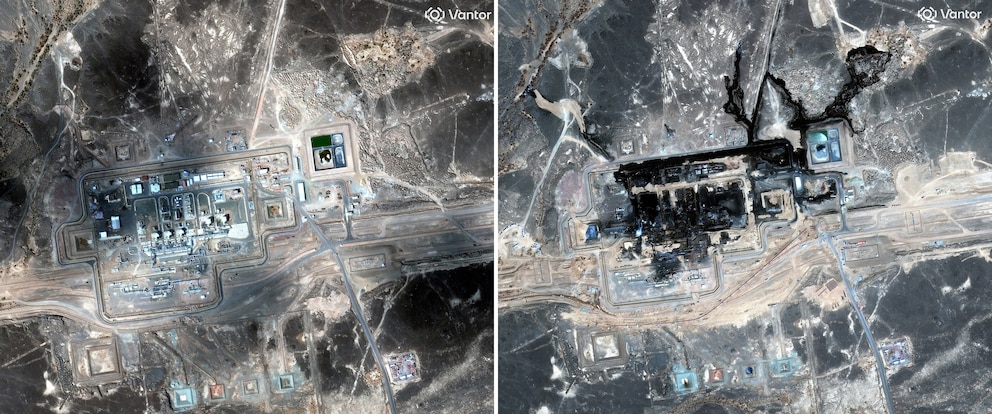
After the war began, Saudi Arabian oil giant Aramco came to depend on a pipeline that runs along the width of the country from the Persian Gulf to a port on the Red Sea. The pipeline carries as much as 7 million barrels of oil each day, about 5 million of which are exported, Aramco CEO Amin Nasser said in May.
Oil exports transported through the pipeline amounted to roughly 5% of global supply.
Last week, an attack prompted Saudia Arabia to close the pipeline as a precautionary measure, the Ministry of Energy said in a statement posted on X. Saudi Arabia faulted an Iran-aligned militia in Iraq of the attack.
The pipeline will be mostly out of service over a weeks-long period, The Associated Press reported on Monday, citing two officials in the region.
The average price of a gallon of gas could rise between 25 cents and 50 cents over the coming weeks as a result of the pipeline closure, Krishnamoorti said. If the pipeline remains closed for a matter of months, he added, U.S. gasoline prices could rise above $5 a gallon.
The rise in price may be far more muted than some analysts fear, Tom Seng, a professor of energy finance at Texas Christian University, told ABC News.
The disruption of the pipeline has already been factored into gasoline prices, Seng said, meaning an additional supply shock would be necessary to substantially increase prices at the pump.
Even more, gas prices typically enjoy some relief over the course of the fall as fuel use eases as people stay indoors. That downward pressure on prices may negate the impact of a supply shortage, Seng added.
"The high-demand season is behind us," Seng said.
Even so, Seng cautioned, the Iran war may escalate after a military offensive carried out by Iran-allied Houthi rebels in Yemen over recent weeks. The Houthis have improved their ability to attack tankers in the Bab el-Mandeb Strait, which feeds into the Red Sea, Seng said.
That would be the exact sea corridor used for the export of crude in the event of a fully repaired East-West pipeline.
"If oil starts flowing well, the question is whether Houthis will start firing on tankers," Seng said.
Tankers could avail themselves of a northern route from the Red Sea through the Mediterranean Sea, but it would bring added delay and cost, Seng added, underscoring the threat Houthis pose for global oil supply.
"This represents a new phase in the conflict," Seng said.