Some compare Democratic socialism to communism. Here's how the movements differ
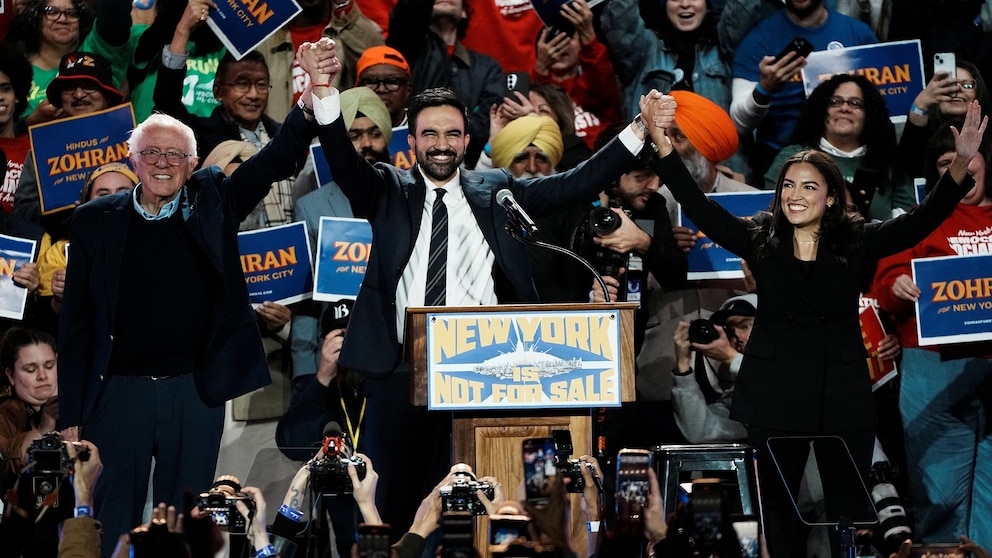
New York City Mayor-elect Zohran Mamdani's victory made history and drew ire among conservatives as the 34-year-old became the second member of the Democratic Socialists of America to lead the city.
Mamdani has not been shy to tout the political movement and has used it to promote his campaign policies centered around providing New Yorkers with support for childcare, housing and other services, and increasing taxes on the wealthiest, top 1% of residents.
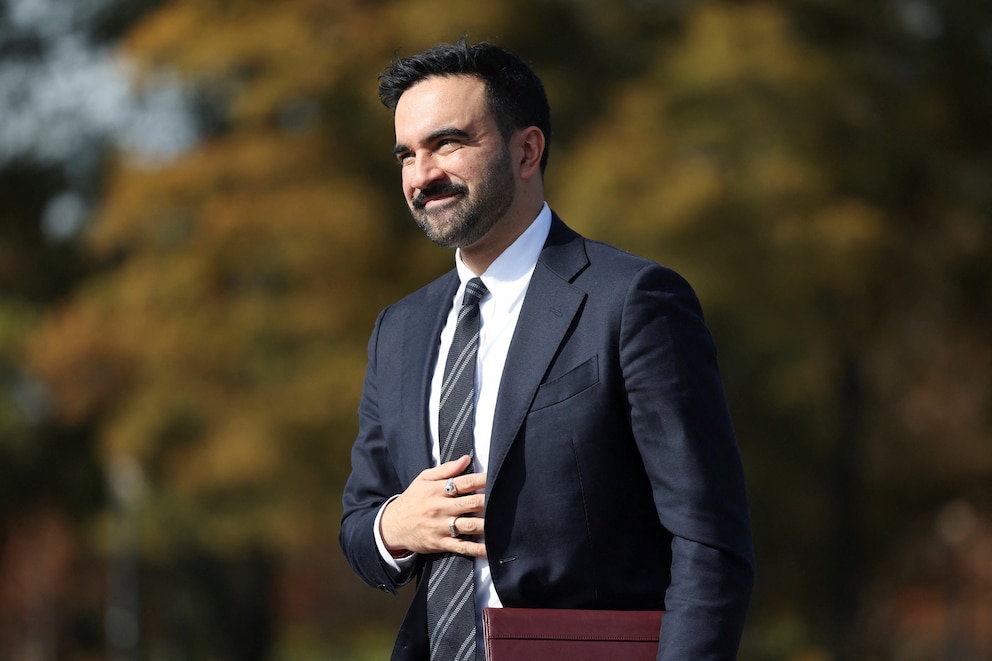
Since he gained national attention following his June primary upset victory over former New York Gov. Andrew Cuomo, Mamdani has received criticism from Republicans and even some moderate Democrats about his DSA ties, with President Donald Trump going as far as to label Mamdani a "communist."
"Now let's see how a communist does in New York. We're going to see how that works out," Trump told reporters earlier this month.
Experts, however, contend that the DSA's platform is far removed from the socialism seen in the Soviet Union or Cuba, and in fact, they argue it actually aims to build off America's Democratic principles.
"Communists want to do away with capitalism altogether. They don't want any private enterprise. They don't want any private means of production. And they want a whole world run by people like that," Michael Kazin, a history professor at Georgetown University, told ABC News. "Democratic socialists are willing to have themselves voted out of power. They believe that once you have a democratic socialist society, people will like that society, but if they don't want to keep it, then they can go back to a more capitalist society."

Kazin and others said that Mamdani's win has stemmed from a growing frustration felt by Americans who have struggled financially and has led to a greater acceptance of DSA beliefs. They said that the mayor-elect's term could shake up the political landscape.
Although socialism has been a political movement around the world for centuries, Democratic socialism started to emerge at the beginning of the 20th century in response to the violent Bolshevik revolution in Russia, according to Carlo Invernizzi Accetti, a professor of political science at the City University of New York.

Invernizzi Accetti said Democratic socialism "is an attempt to establish a rupture within the left wing movement against the experience of Soviet style communism, and invent a different way of doing socialism that doesn't necessarily involve authoritarianism."
"In America, socialism always had to work within a democratic system, and it began at the beginning of the 20th century," he said. "There is a large working class union movement that culminates in a relatively large Socialist Party that in 1912 famously runs a presidential campaign behind Eugene Debs that obtains 6% and 1 million votes."
Kazin noted that through the decades, Democratic socialism picked up steam among the public, and there were many public officials who ran and won with their ideals. Some historians say President Franklyn D. Roosevelt's New Deal was based on Democratic socialist values, even though the president never identified as a socialist.
New York City Mayor David Dinkins, who was a Democrat, was a DSA member.
Things really picked up following the Great Recession of the late 2000s, according to Kazin.
"A lot of people, especially young people, perceived that capitalism was failing, was failing them anyway. And that's when people began to talk about socialism," he said.
Vermont Sen. Bernie Sanders' 2016 presidential campaign also helped the DSA gain traction as he pushed for taxing higher earners to help low-income Americans, according to Kazin.
"That's when it showed that socialism was not just a marginal idea, that a figure who could come close to winning the nomination of a major political party called himself a socialist," Kazin said.
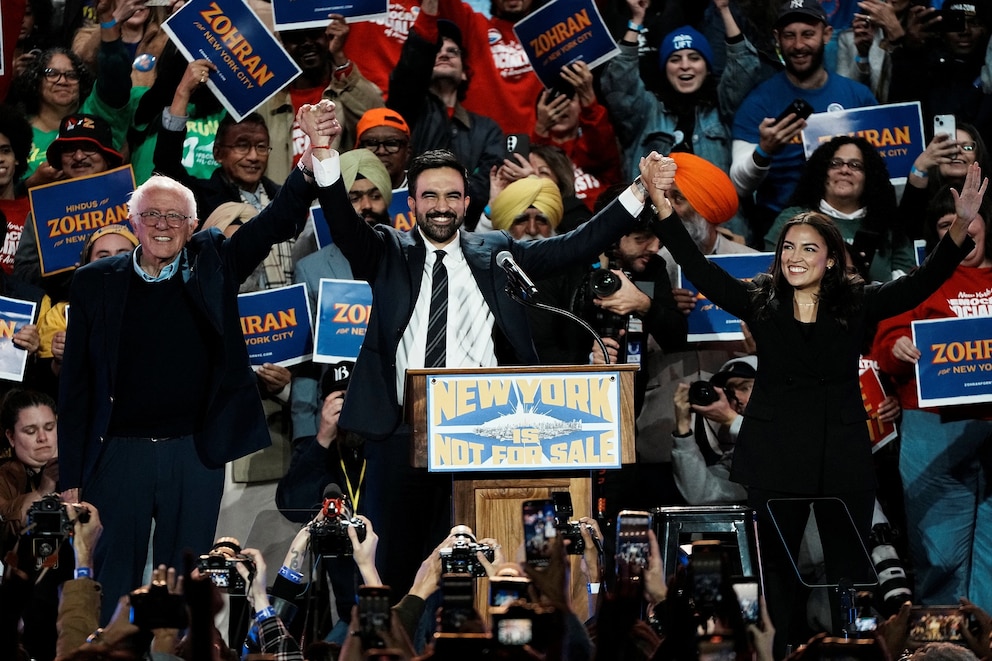
Mamdani has cited Sanders as one of his influences, and the senator has campaigned and endorsed the mayor-elect's plans.
Invernizzi Accetti said that Mamdani built his campaign and policies as a counter option to the neo-liberalism that dominated the Democratic Party from the 80s to the 2000s. Their premise was "that the market is the best way of establishing equal, fair or just outcomes for social distribution," according to Invernizzi Accetti.
"The keyword that [Mamdani] refers to over and over again whenever he's asked what democratic socialism is, is the concept of dignity," Invernizzi Accetti said. "We want to create a system that defends human dignity."
The professor said that conservatives' attempts to tie Mamdani and the DSA's ideas to communism, however, don't carry a lot of weight.
"It's the old classic Cold War argument: anything you do to help the workers, it ultimately leads to communism, that's authoritarianism and that's anti-American," he said. "[It's] a misunderstanding that the core of democratic socialism is precisely to distinguish itself from communism and establish and try to make the values of freedom, equality and fraternity compatible with democracy."
Kazin said that Mamdani's mayoralty will be a real test for the movement and could have ripple effects across the country.
"Whether as a socialist or not, if he governs successfully, if he remains popular … [and] people perceive him as making people better off in New York City, then that will help Democrat socialists try to do similar things in other cities and maybe other states," he said.
"As always, political forces, social forces gain or decline because of what's going on in the larger society, in the larger world. They don't make it or fail on their own. They have to make it in a context which is favorable to them or unfavorable to them," Kazin added.