Comparing’s Trump and Obama’s Iran deals, what we know: ANALYSIS
After President Donald Trump signed a memorandum of understanding (MOU) with Iran, there has been an urge to compare it to the deal Trump tore up during his first term: President Obama’s 2015 Iran nuclear deal, known as the Joint Comprehensive Plan of Action (JCPOA).
Here goes:
One is a nuclear deal, the other is not
The first thing to note is the JCPOA was a finalized agreement to limit Iran’s nuclear program in exchange for sanctions relief, organized between Iran, the U.S., China, Russia, France, the United Kingdom, Germany, and the European Union.
Trump does not yet have a final nuclear agreement with Iran. He struck the MOU to end the current war, commit to future nuclear negotiations, and for Iran to reopen the Strait of Hormuz in exchange for some immediate sanctions relief and the lifting of the U.S. naval blockade.
It’s more of a cease-fire agreement than a nuclear agreement. The future nuclear program is left to be negotiated in a 60-day period. Iran does commit not to acquire a nuclear weapon (just as it did in the JCPOA), but no enforcement mechanism is yet decided.
Diplomacy vs. war
Perhaps the biggest difference is how each administration got to their agreements. The Obama administration engaged in a tedious, 20-month long diplomatic negotiation.
The Trump administration tried for months on a diplomatic path but ultimately decided the threat from Iran was too acute.
In July 2025, Trump bombed Iran’s nuclear facilities in dramatic fashion, setting its program back by as many as two years, according to experts.
Months later, in coordination with Israel, the U.S. launched Operation Epic Fury, aimed at further destroying nuclear sites and degrading Iran’s military capability.
Iran responded by choking off the critical oil passage in the Strait of Hormuz and launching counterattacks aimed at U.S. bases and Gulf nations. In the meantime, Israel was engaged in a war with Iranian proxy forces in Lebanon.
Thirteen American service members were killed in Epic Fury and the war is estimated to have cost the American taxpayer well over $25 billion to date.
Sanctions relief
Both deals provided significant financial relief for Iran. But the biggest difference between the deals is what the world got in exchange for that relief.
The JCPOA unfroze tens of billions of Iranian monies held overseas and lifted crippling economic sanctions imposed by the U.S., the European Union and the United Nations. It freed Iran's central bank to operate in the global economy and lifted restrictions on Iranian oil exports. And, yes, it included cash transfers of previously seized assets amounting to $1.7 billion. All combined, it was an economic windfall for Iran.
In exchange Iran agreed to reduce its nuclear centrifuges by two-thirds, committed not to build new enrichment facilities for 15 years, significantly reduced its stockpile of enriched uranium, disabled a major heavy-water reactor and agreed to IAEA inspections. Critics said at the time the inspections were not intrusive enough, and that the agreement was time-limited, rather than a permanent solution.
The Trump MOU, on the other hand, also lifted oil restrictions, promised to help create a $300 billion reconstruction fund in Iran with regional partners, and dangled the promise of sweeping sanctions relief if the two sides could reach a broader nuclear deal. But most of the sanctions relief is contingent on future negotiations that haven't yet materialized.
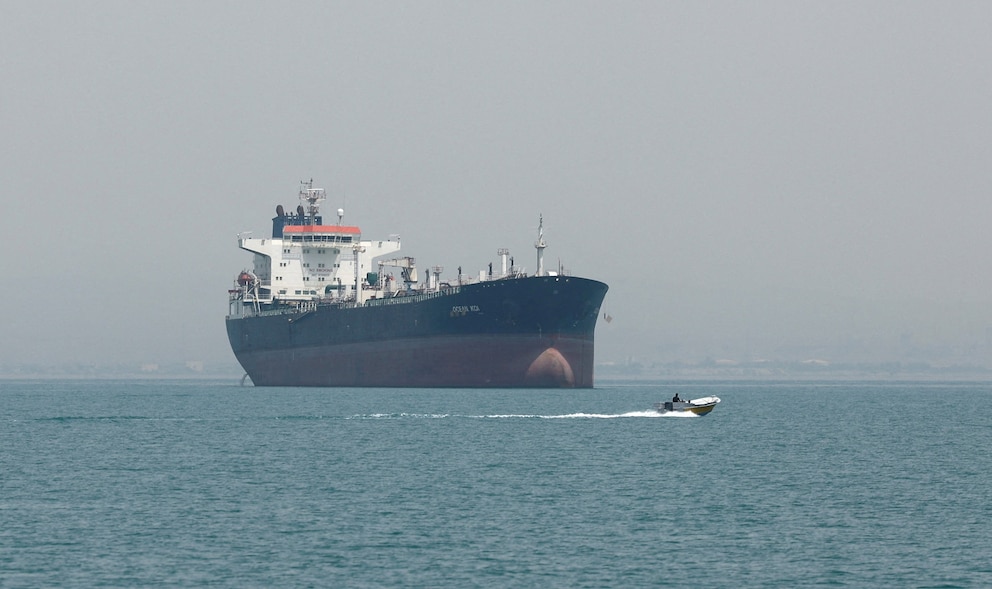
In exchange for these things, along with the lifting of the naval blockade, the U.S. got Iran to agree to open the Strait of Hormuz. But that is simply a return to pre-war status quo. In fact, the status quo might never be achieved in that critical economic waterway, through which 20% of the world’s oil passes.
Point 5 of the 14-point MOU states the strait will be toll-free for 60 days, but after that Iran will work with neighboring Oman to “define future administration and maritime services” in the strait. That means tolls are not ruled out down the road.
Selling the deal
When Obama announced the JCPOA 11 years ago, he called it the “strongest non-proliferation agreement ever negotiated.” He acknowledged concerns of critics and noted that Iran would get billions in sanctions. He also acknowledged that some preferred war or surgical strikes over his deal. He argued his deal wasn't perfect, but was the best option.
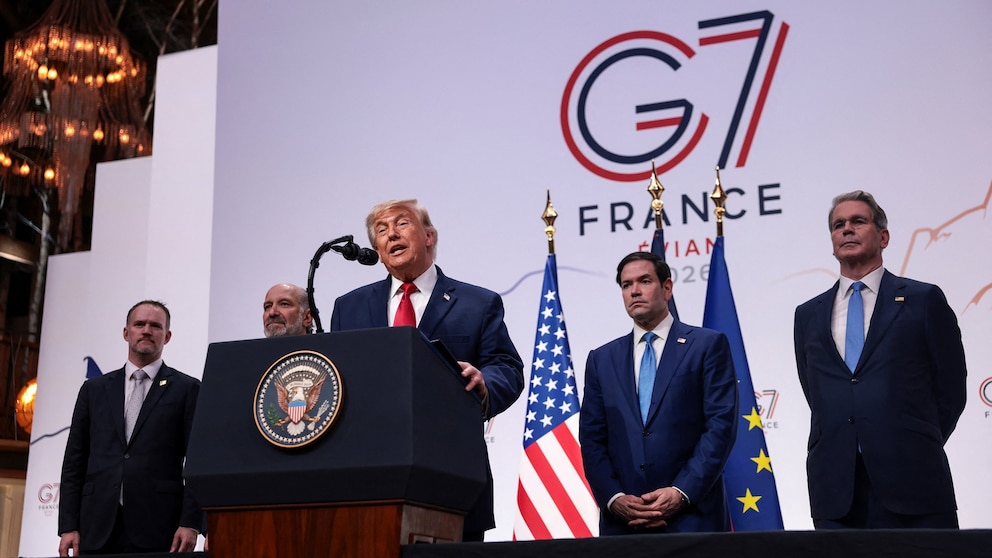
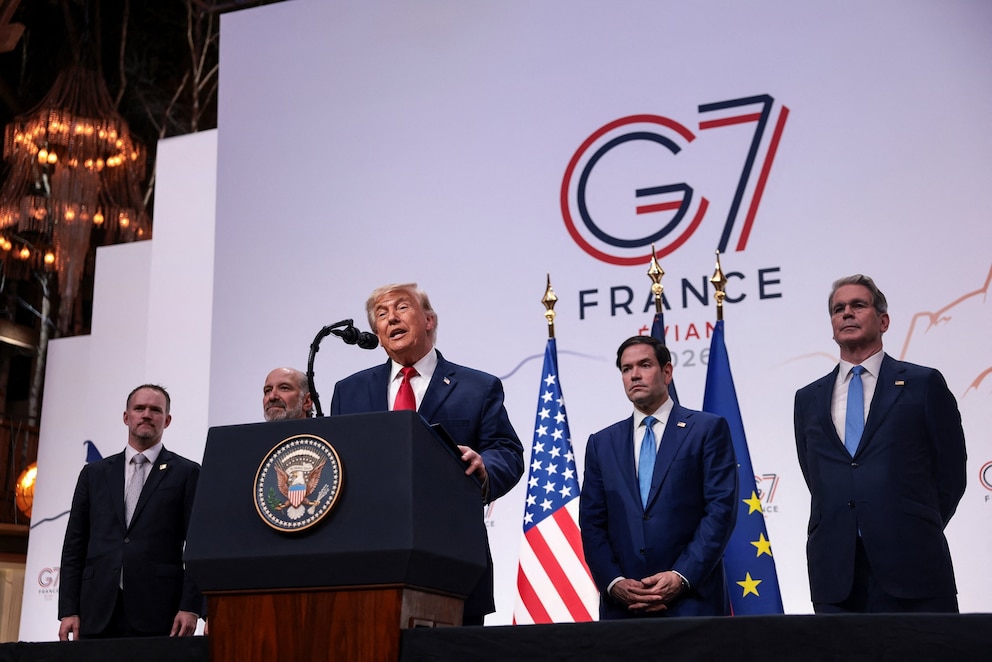
Speaking after the G7 summit in France on Wednesday, Trump also praised his own deal, saying it achieved “everything we set out to accomplish and more.”
But he also admitted he needed to make the deal to avoid “economic catastrophe.” After claiming for months that Iran had “no cards” to play, he conceded that the economic pain resulting from the oil crisis was too risky.
“I didn't want to see economic catastrophe," Trump said. "If you kept this going, that could have happened. But all I know is, every time we talked about the possibility of peace, the stock market shot up like a rocket ship.”
He went on to say he feared sending the country into a “depression” and that he could one day be compared to Herbert Hoover, the 31st president who is often blamed for the Great Depression.