What to know about COP30 as the international climate conference gets underway in Brazil
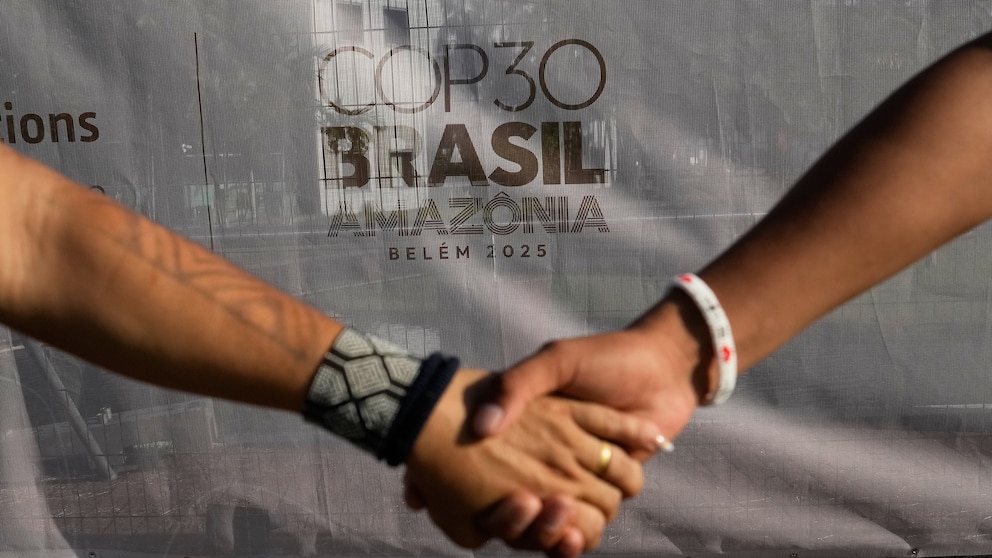
World leaders are gathering in the home of the Amazon rainforest for the start of the COP30 climate conference.
Climate action -- including implementing and adapting solutions to significantly reduce greenhouse gas emissions -- is among the top goals of this year's conference.
Brazil will be hosting the conference, which is set to begin on Monday.
What is COP30?
COP30 is short for the 30th Conference of the Parties to the United Nations Framework Convention on Climate Change (UNFCCC). The COPs are annual meetings where countries, non-governmental organizations and other interested parties discuss global efforts to combat human-induced climate change and negotiate agreements on topics, such as mitigation, financing and adaptation. The UNFCCC is one of the largest multilateral bodies in the U.N. system.
This year’s conference is being held in Belém, Brazil, known as the "gateway" to the Amazon rainforest, and is taking place 10 years after the landmark Paris Agreement was adopted by 195 countries during COP21 in December 2015.
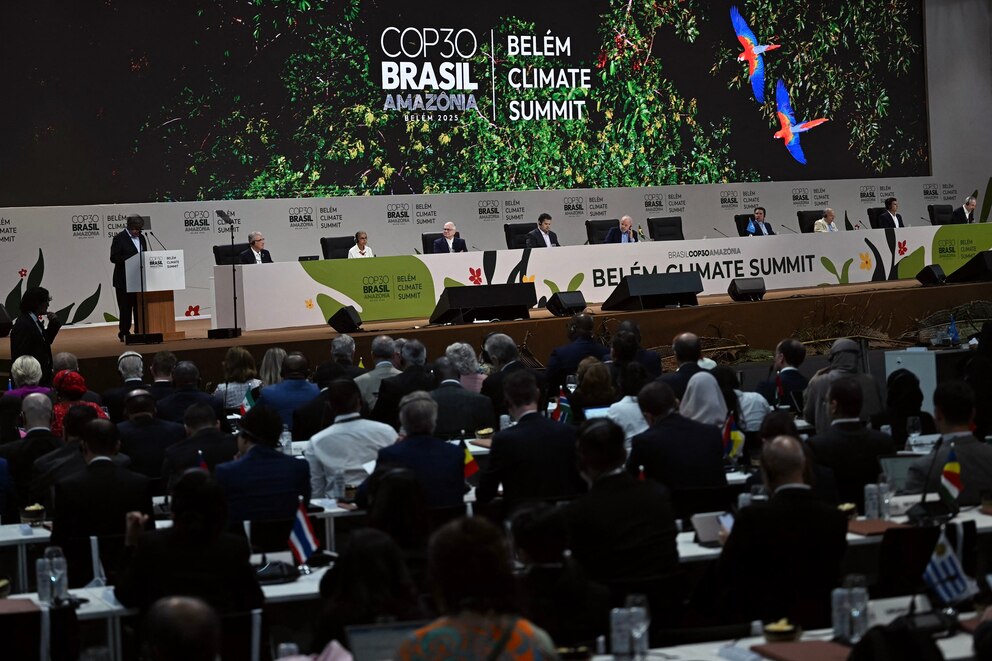
The conference is being led by COP30 president André Corrêa do Lago, Brazil’s vice minister for climate, energy and environment at the Ministry of Foreign Affairs. Among those scheduled to attend are government leaders and ministers, diplomats, U.N. representatives, scientists, business leaders and non-governmental organizations across the globe.
COP30 leadership is calling the conference a "Global Mutirão for Sustainability," meaning a "collective effort" with shared outcomes guided by cooperation.
When will COP30 take place?
COP30 is scheduled to begin on Monday, Nov. 10, and conclude on Friday, Nov. 21. However, as previous conferences have shown, final negotiations can sometimes extend beyond the official schedule.
Who will be attending COP30?
Nearly 200 countries participate in the UNFCCC, and most attend the COP annually. However, this year an official U.S. delegation will not be present, according to the White House.
"The U.S. is not sending any high level representatives to COP30," a White House official told ABC News. "The president is directly engaging with leaders around the world on energy issues, which you can see from the historic trade deals and peace deals that all have a significant focus on energy partnerships."
On the first day of his second term, President Trump signed an executive order announcing that the U.S. would withdraw from the Paris Agreement for the second time. The withdrawal will become official on Jan. 27, 2026.
The ongoing U.S. government shutdown is also preventing federal lawmakers from attending the conference. While federal U.S. representation will be absent from COP30, state and local leaders from across the country will be attending.
A U.S. delegation of more than 100 leaders will participate in COP30, including U.S. governors, mayors and other top city and state officials.
The delegation includes Wisconsin Gov. Tony Evers, New Mexico Gov. Michelle Lujan Grisham and Phoenix Mayor Kate Gallego.
What is on the agenda for COP30?
COP30 leadership says this year’s conference must be remembered as "the COP of implementation and adaptation," and organizers are urging countries to commit to more ambitious climate action plans to advance the goals of the Paris Agreement. The conference will focus on the goals of limiting the global temperature rise to 1.5 degrees Celsius and advancing climate finance commitments.
Recent reports from the U.N. and independent organizations reveal a substantial gap between countries' pledges on emissions reductions and clean energy expansion, and what is required to meet the Paris Agreement’s target of keeping global warming at or below the 1.5 degrees Celsius goal.
"Thirty years into the COP process, we’ve seen undeniable progress, global emissions are now trending lower than once projected before the Paris Agreement, but we remain off course from meeting our climate goals. That’s why an emphasis on implementation and accountability will be so critical at COP30," Dr. Alexis Abramson, dean of Columbia Climate School, told ABC News.
The main challenges include aligning climate finance commitments between developed and developing countries, addressing the socio-economic impacts of climate change on vulnerable populations and ensuring that emission reduction targets are consistent with the latest climate science.
Advancing climate finance, particularly for adaptation, is a central priority of COP30. However, in order to provide funding, delegates must first agree on a way to measure progress toward its "global goal on adaptation" (GGA), something that has still not been accomplished nearly 10 years since the Paris Agreement was adopted.
Negotiators are set to finalize a list of indicators that can be used to measure progress toward the GGA. This would be one of the most significant negotiated outcomes of COP30 should they succeed.
"Our ability to implement the adaptation provisions of the UNFCCC and the Paris Agreement through strengthened international cooperation will determine whether we evolve not only to survive but to become the best version of humanity, anchored in dignity, justice, and solidarity," Corrêa do Lago said in a letter to delegates.
Climate goals are off target
Delegates to COP30 are facing a world that, by many climate measures, is going in the wrong direction.
2025 is on track to become either the second or third warmest year on record globally, according to a new report from the World Meteorological Organization (WMO).
This comes as 2024 was that ranked as the planet’s warmest on record, fueled by human-amplified climate change and an El Niño event in equatorial eastern Pacific Ocean.
A short-term drop in global temperatures was expected due to the La Niña event which ended in April. This climate pattern typically causes a temporary dip in average global temperatures. According to the National Oceanic and Atmospheric Administration (NOAA), La Niña conditions have reemerged and are likely to last into early 2026.
The long-term outlook looks grim. According to the United Nations Environment Programme's annual Emissions Gap Report, the planet is on track to officially breach the Paris Agreement's 1.5 degree Celsius warming threshold within the next decade. The report warns that the average global temperature rise over multiple decades is likely to exceed the Paris Agreement threshold within the next decade.
Atmospheric CO2 emissions also continue to climb, reaching record highs. In 2024, CO2 levels rose by 3.5 parts per million (ppm), the most significant annual increase since modern measurements began in 1957, according to the WMO.
"While national climate plans have delivered some progress, it is nowhere near fast enough, which is why we still need unprecedented emissions cuts in an increasingly tight window, with an increasingly challenging geopolitical backdrop," said Inger Andersen, executive director of UNEP.
Anderson added, "Proven solutions already exist. From the rapid growth in cheap renewable energy to tackling methane emissions, we know what needs to be done. Now is the time for countries to go all in and invest in their future with ambitious climate action."