Double-Amputee Cat 'Paw Stands' Down Stairs
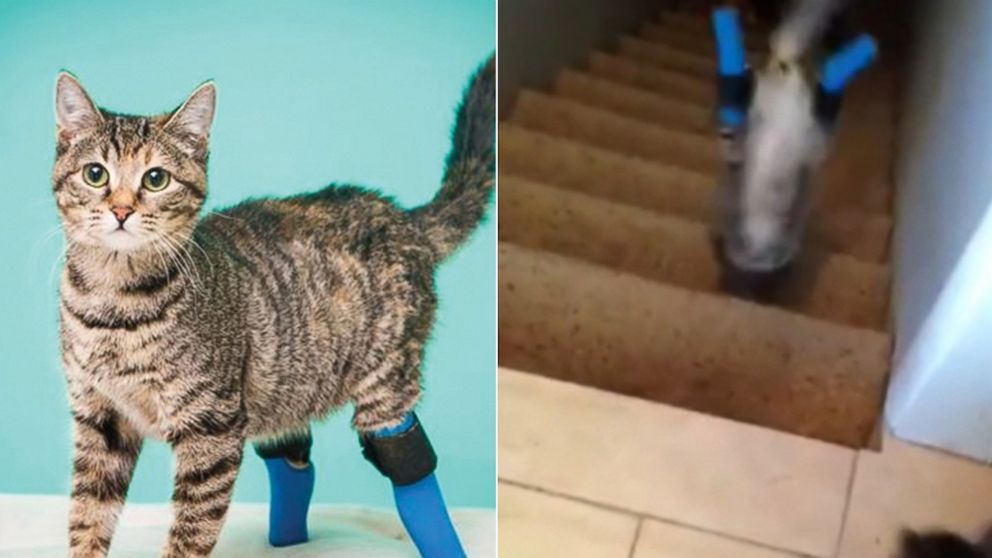
June 4, 2014— -- Boots the cat is still getting used to her prosthetic hind limbs. But she's found another way to get down stairs: on her front paws.
A new video shows Boots careening down stairs in what looks like a handstand -- a paw stand, if you will.
"I did not believe my boyfriend, Jon, when he had first told me he saw her do this," said the 1-year-old cat’s foster mom, Megan Brocato. "But as soon as I saw her do it once, I knew I had to get some video!"
Boots was dropped off at a Denver animal shelter when she was 10 days old, according to Brocato. Her back paws had been cut off, so the Denver-based animal welfare group Life Is Better Rescue teamed up with prosthetic maker OrthoPets to get her a set of temporary prosthetics called “house slippers.”
“When she first got her house slippers, she could hardly stand in them, let alone walk,” said Brocato. “It was definitely an adjustment.”
Boots learned to walk with her house slippers in about a week, according to Brocato. But six months later, stairs are still a challenge – hence the paw stand.
Boots will eventually be fitted with permanent artificial limbs. She'll also need physical therapy to stay healthy, but Brocato said she has no doubt the fearless feline will adapt to whatever comes her way.
Learn more about Boots and how to help other rescued animals.
Cats aren't the only creatures to thrive after being fitted with artificial limbs. Experts say more and more of our animal friends are benefiting from replacement parts that help them get back on their paws, feet or fins in no time.
“When we started building prosthetics for animals back in 2002, we would do maybe one or two a month,” said Martin Kaufmann, co-founder of Orthopets. “Now we make eight to ten a week.”
Woman Builds ‘LegoLeg’ Prosthetic

The main reason animals are receiving prosthetic limbs more often than in the past, Kaufmann believes, is because we humans have come to look upon ourselves as the guardians of our four-legged friends rather than the owners of disposable possessions.
“Once you see yourself as a guardian, you can look at animals through a different lens,” he said. “Your mindset is not to euthanize or chop off a leg, but to help them get back to normal function.”
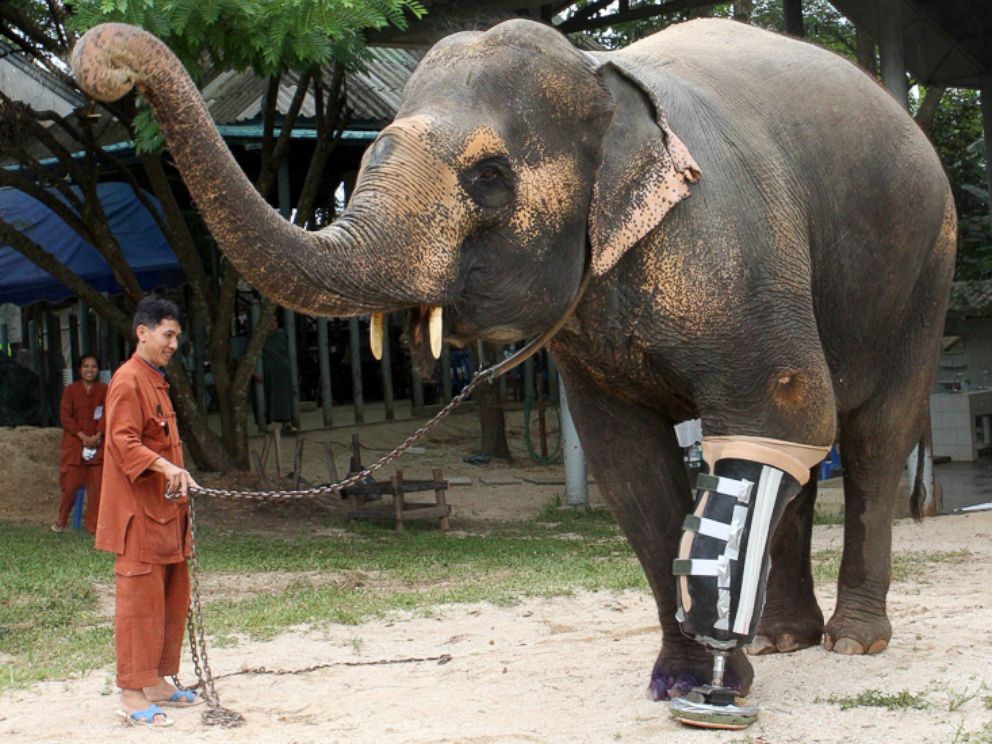
The most common site of prosthetic limb replacement on an animal is the paw or foot, Kaufmann said. When a four-legged animal has an amputation of the front leg, it’s usually high up near the shoulder. In a back leg amputation, only the lower portion of the leg typically gets removed.
Socket prostheses are the most common type of replacement limb used in animals. They slip over the limb stump and then strap or buckle into place. Newer, integrated prostheses involve implanting one part of the device into the bone and then anchoring another removable part into it with a screw. Either kind provides long-lasting limb support and more natural movement, Kaufmann said.
Donated Prosthetic Limbs Get a Second Life

A typical dog prosthetis paw costs between $1,200 and $1,500 dollars, Kaufmann said. Cat replacement limbs are smaller and less expensive. Prosthetic limbs made for larger beasts like llamas, cows or horses are more expensive.
Most animals are first fitted with a temporary teaching prosthetic. Then once they get the hang of it – typically in about two weeks – they’re switched over to permanent hardware, Kaufmann said, adding that all animals have that eureka moment when they figure out how to use their new limb.
“It’s the most exciting thing in the world to watch,” he said.