Earth isn't currently in danger of an asteroid impact, but scientists are coming up with ways to prevent them
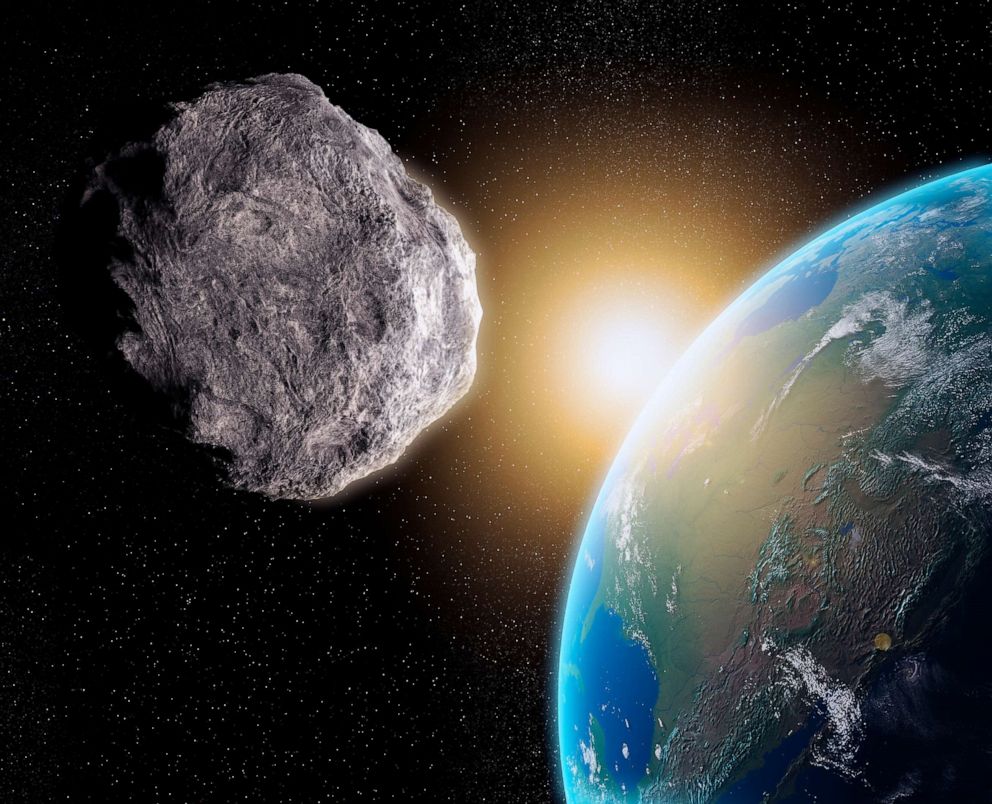
Residents of planet Earth fret not -- a 1,000-foot asteroid whizzing by our precious planet this weekend won't even come close to making impact.
In fact, while asteroid 2006 QQ23 is considered to be a "potentially hazardous asteroid," its passage will be about 5 million miles away from Earth, "just barely into the zone that we start to keep closer track of these objects," NASA Planetary Defense Officer Lindley Johnson told ABC News.
Johnson added that "there isn't much significant" about the upcoming asteroid. Scientists have been aware of its existence since 2006, Paul Chodas, director of NASA's Center for Near Earth Object Studies, told ABC News.
"There's nothing really special about this," Johnson said. 'We have objects, asteroids of this size that pass within 5 million miles of the earth six, seven times out of the year," he said.
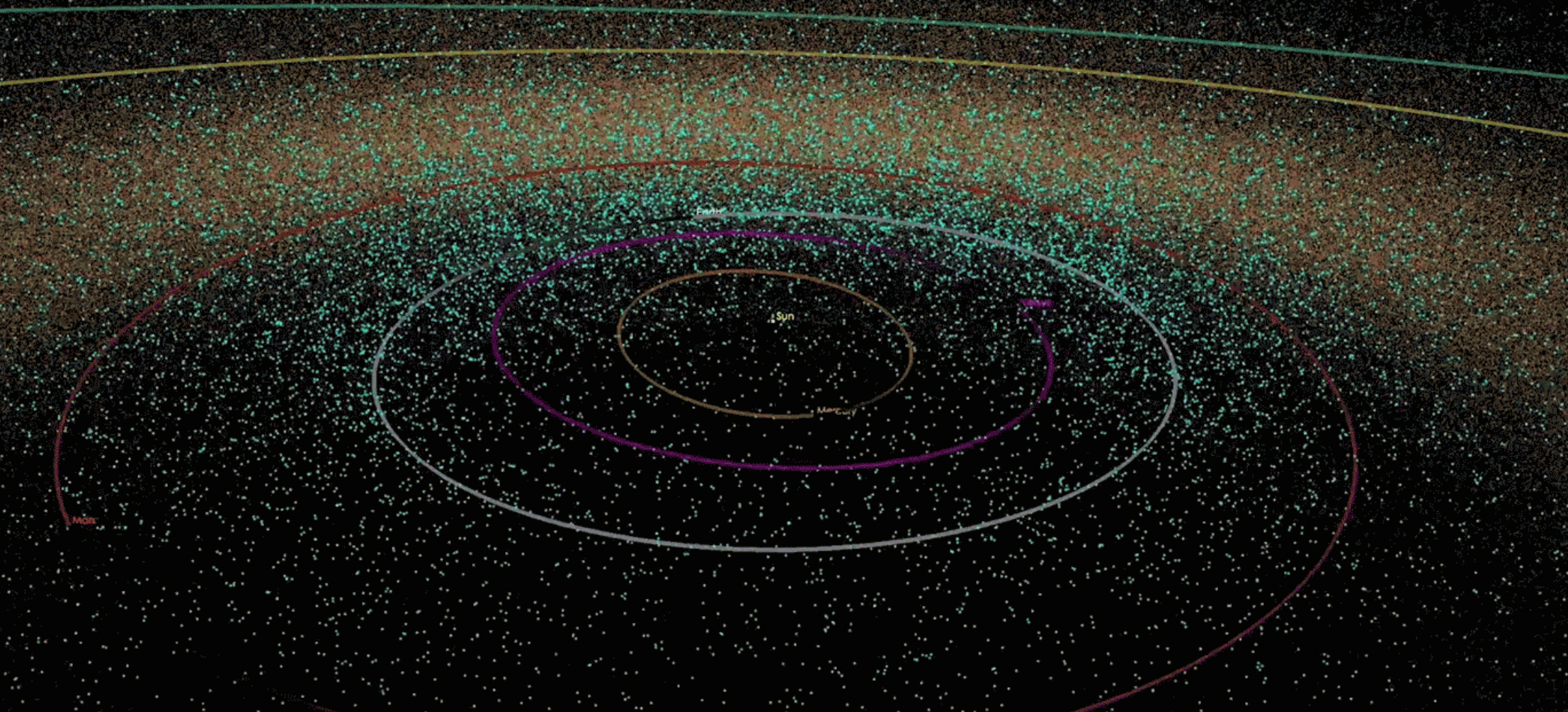
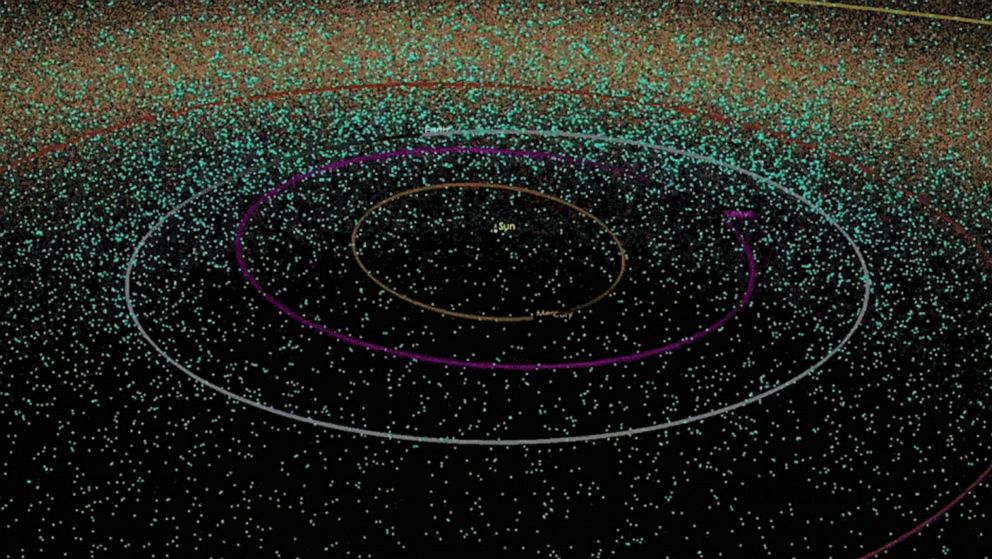
About 25 asteroids are expected to fly within 5 million miles of the earth in the next 60 days, and smaller asteroids pass even closer "all the time," Johnson said.
"The bottom line is this happens all the time, which people don't realize," he said.
A larger object, asteroid 2000 QW7 is expected to pass even closer to the earth -- at about 3.5 million miles away -- on Sept. 14. The largest that asteroid could be is about 1,700 feet across -- about the length of five football fields -- but Johnson said he still considers it "not that large." Asteroids can often be up to "several miles" in size.
Asteroids do not pose any danger to the Earth unless it is on track to hit it directly, Johnson said.
Scientists, using ground-based telescopes, can detect the asteroids as they near the planet, but the distance in which they are able to detect them depends on the size and brightness of the object.
"A large, dark asteroid would have to be a lot closer to us than an asteroid of the same size that is brighter," Johnson said. "A bright one would be found sooner than a dark one."
In addition, it's difficult for astronomers to model an exact track due to forces like solar wind, aviation pressure and the uncertainty of the exact shape of the object," Pete Worden, adviser on space resources to the Grand Duchy of Luxembourg, told ABC News. Once the asteroid gets closer, the better scientists can track it, he added.
Ground-based telescopes have their limitations, so scientists are hoping to eventually utilize a space-based system to detect asteroids as far in advance as possible. Worden also expects a better telescope system to obtain "much better data from the ground" within two to four years.
Still, "we're not gonna be surprised" by an asteroid, Johnson said. The better technology will simply allow experts to narrow in on all the asteroids that "would potentially hit the earth" and consider the means on how to remove them, Wordon said.
"We'll figure out where they are, and if humanity decides that this is a big enough threat, we'll go move them," he said.
Scientists are currently devising ways to detract any asteroid that could potentially impact the earth.
In the summer of 2021, NASA's DART mission, which stands for Double Asteroid Redirection Test, will demonstrate a kinetic impactor technique on a double asteroid -- essentially bumping the smaller asteroid -- to see how much they can move it.
"The thing is, if you move something years in advance, you don't have to move it very much," Wordon said. "This is a rock that's the size of a skyscraper. You would then hit it with a spacecraft kind of the size of a small car, and by impacting it, it impacts energy and momentum and will move it slightly off its orbit."
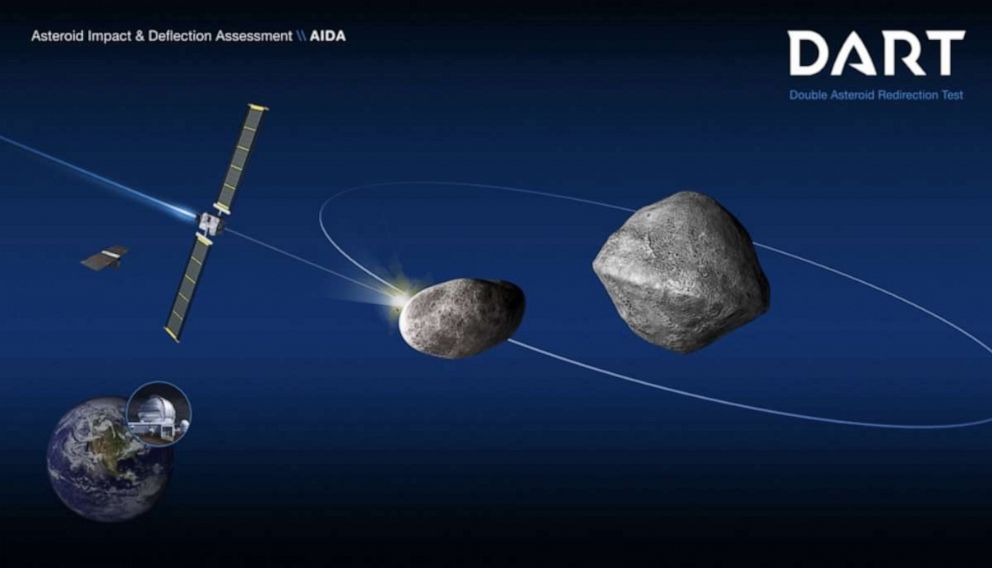
The theory is that an asteroid that was expected to come within 2,000 miles of Earth will eventually miss it by hundreds of thousands of miles just from one bump, Wordon said.
Scientists are also considering essentially spray painting one side of an asteroid, which would cause it to be heated by the sun differently, Wordon said. As it heats, it emits radiation, which, over time, will push it off course a little, Wordon said.
Researchers have also considered building a "giant laser" to slightly push an asteroid out of the way, Wordon said.
Another idea would involve not even touching an asteroid but instead taking a "modest sized spacecraft" to use solar electric repulsion to move it over the course of years, Wordon said. The method involves the asteroid's gravity attracting the spacecraft, situated about a mile or so away, which would hypothetically move it over time."
It's just a matter of time before another asteroid is poised to hit the Earth, "so we need to be vigilant to detect and detract these objects," Johnson said.
"Someday the earth will be impacted again," he said. "The question is when, and we want to be prepared for that."