Explaining why coronavirus death toll predictions are improving
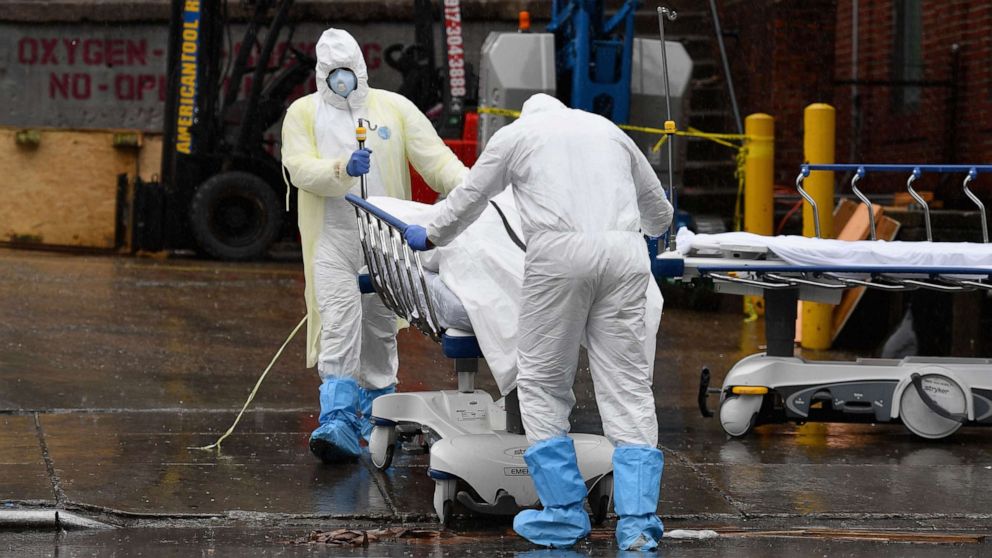
Throughout the COVID-19 pandemic, the nation's political leaders have leaned on grim death toll predictions to guide policies, but the numbers keep shifting, raising questions about their utility and reliability.
The White House announced on March 31 that officials expect up to 100,000 to 240,000 total American deaths from COVID-19, even with social distancing policies. At around the same time, a prediction model from the University of Washington's Institute for Health Metrics Evaluation (IHME) was estimating far fewer total American deaths, totaling approximately 84,000.
Now - only one week later -- the IHME figure has dropped even further, estimating 60,000 deaths by August. Still, other models have predicted different death tolls. So what happened? Why are these numbers different?
These models are mathematical equations created by public health experts to help us anticipate what's next. The equations, which are processed by computers, crunch currently available data to deliver a result - in this case, projected deaths.
Tune into ABC at 1 p.m. ET and ABC News Live at 4 p.m. ET every weekday for special coverage of the novel coronavirus with the full ABC News team, including the latest news, context and analysis.
The statistical models are constantly evolving and inputting new information, which means the predicted death tolls will change too, according to Dr. Gregory Roth, a physician and one of IHME's lead faculty.
Dr. Caitlin Rivers, an expert in computational epidemiology at Johns Hopkins Bloomberg School of Public Health, explains that the fluctuating predictions are par for the course. It took decades to develop accurate weather forecasts, and while models are refined annually for seasonal influenza, she emphasizes that the current COVID-19 pandemic is new territory for modern-day scientists. "We've never faced a situation like this, we've never had social distancing at this scale," she said.
IHME's prediction models have been accounting for social distancing all along.
"Our model makes the assumption that social distancing is going to be implemented everywhere in the country within a week, and is going to be maintained all the way through the end of May," Roth states. In other words, IHME's death toll prediction dropped in just one week because researchers changed the way they processed and computed the information.
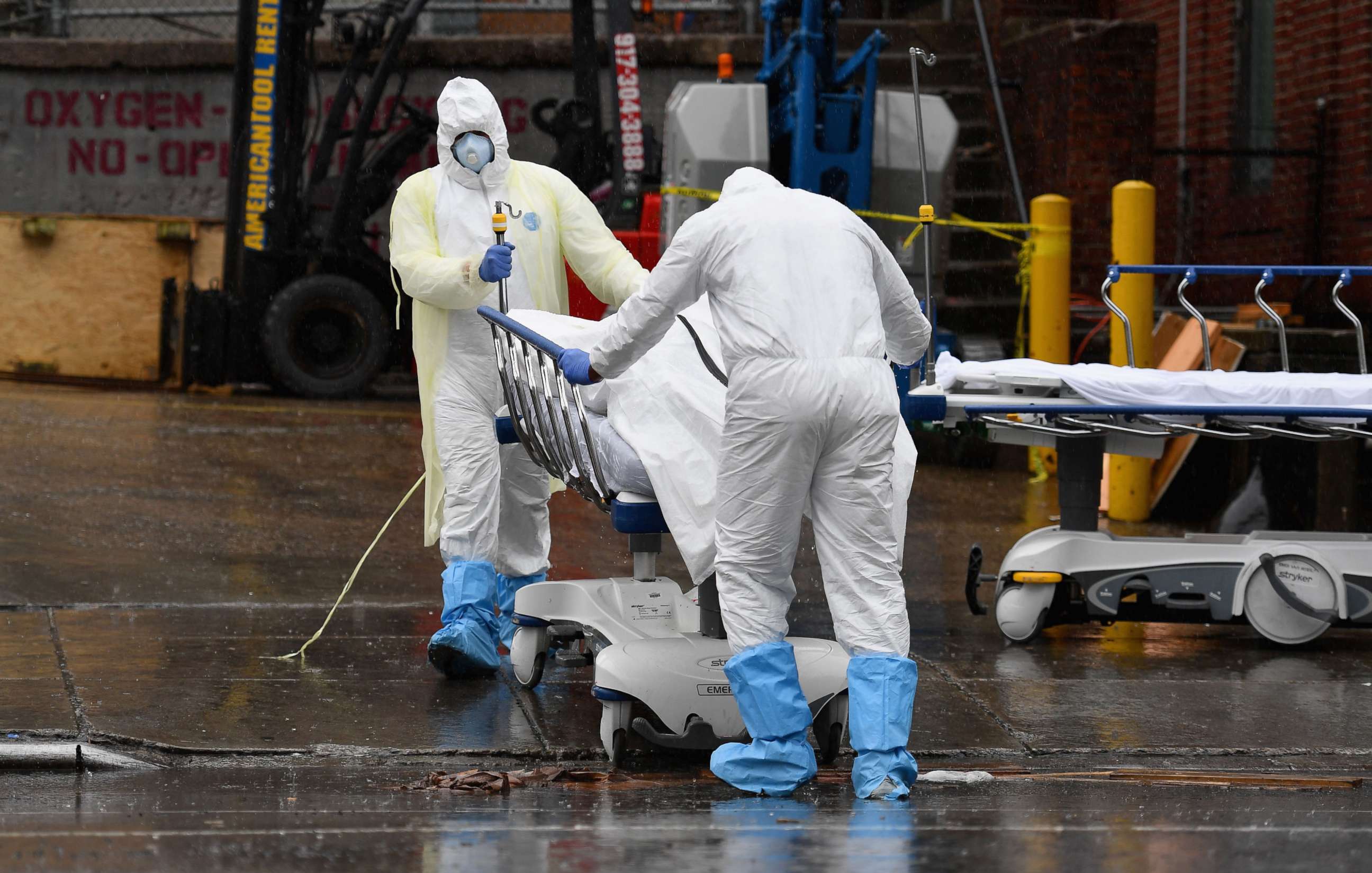
As to why the White House numbers and IHME's numbers differ, it's unclear where the White House's estimates came from. According to Dr. Deborah Birx, coronavirus response coordinator for the White House, their 100,000 to 240,000 death toll prediction came from multiple sources, including a report by the Imperial College London and other private reports by major U.S. academic institutions.
For now, not enough people have recovered from COVID-19 to affect these numbers dramatically. For immunity to benefit us all, it would require 50-70% of the population to have been infected and recovered, according to Rivers, who notes that we aren't there yet.
While changes in prediction data can be confusing and frustrating, the IHME argues that they are signs of a healthy and dynamic model that is adapting. As an institute independent from policymakers, Roth emphasizes that the IHME is staffed by physicians and scientists whose goal above all is to alleviate suffering. Their team is continually growing and their mathematical modeling methods remain transparent.
As to whether or not these numbers mean we can stop distancing – not yet. Rivers emphasizes that "social distancing is the right thing to be doing now and we should continue doing that." But she does offer some hope that we will indeed reach a point where strict distancing can end. In the future, when there are fewer COVID-19 cases, she hopes that we can transition to tracking just those who are sick.
What to know about coronavirus:
- How it started and how to protect yourself: Coronavirus explained
- What to do if you have symptoms: Coronavirus symptoms
- Tracking the spread in the U.S. and worldwide: Coronavirus map
Heather J. Kagan, M.D., is an internal medicine resident at The Johns Hopkins Hospital and is a contributor to the ABC News Medical Unit.