With face coverings and social distancing, COVID-19 ushers in new age of air travel
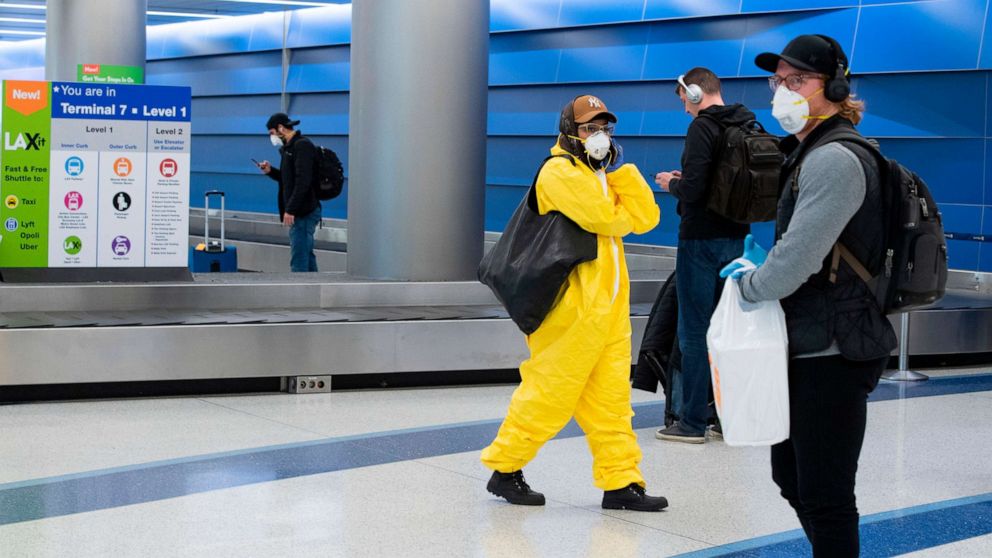
As the aviation industry struggles to weather an unprecedented financial hit due to COVID-19, one thing is certain: Air travel will not look the same for the foreseeable future.
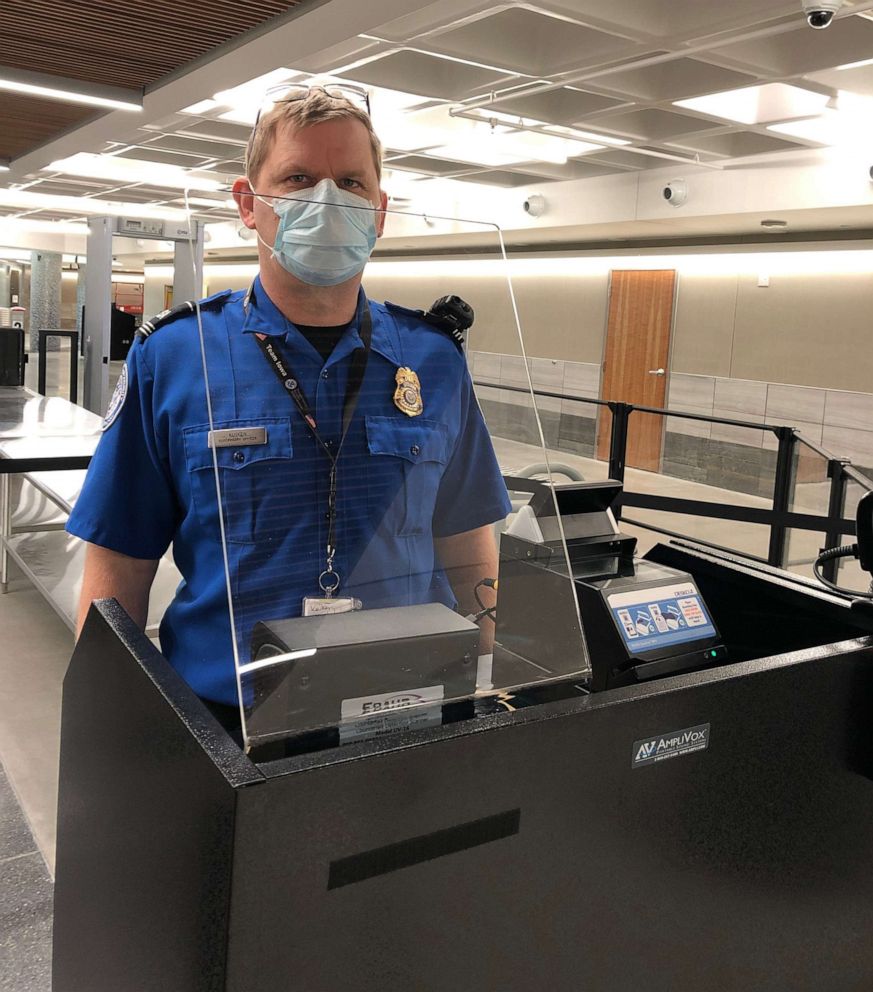
Travelers boarding most U.S. planes must now wear a face covering, Transportation Security Administration (TSA) officers at some airports sit behind plexiglass, and more than 3,000 planes have been taken from the skies to storage.
The front lines
American Airlines pilot Capt. Dennis Tajer has been flying commercial planes for more than 30 years.
"Three decades of this and this is my first time I'm packing things like masks, wipes and sanitizers," Tajer, who is also a spokesperson for the Allied Pilots Association, told ABC News as he was packing to pilot his first flight in more than a month from Miami to Houston.
He said all of his flights kept getting canceled in April, and that he's never seen an impact to the industry this "long and deep."
"I was working on 9/11," Tajer said. "I was in New York. That was shocking on many levels and a horror that many of us had never imagined. This is a different shock."
U.S. flight attendants have led the calls for more protection for front-line aviation workers. Before the airlines adopted new policies, Sara Nelson and the Association of Flight Attendants-CWA, AFL-CIO, called on the Department of Transportation and the Department of Health and Human Services to mandate masks for crew and passengers.
"When we ask people to come back to the skies we need to make sure we have policies in place so that we're not inadvertently continuing the spread of the virus," Nelson said.
The cost to business
All major U.S. airlines have slashed flight schedules considerably in response to the record low demand for air travel. The number of passengers at U.S. airports is down more than 93% compared to last year, according to the TSA.
American, United, Southwest and Delta have already reported a collective loss of $4 billion in the first three months of 2020. The International Air Transport Association (IATA) has warned that the global aviation industry could take a hit of more than $300 billion due to COVID-19.
In an effort to prevent layoffs, the U.S. government agreed to a $25 billion bailout for the major passenger U.S. airlines through the Payroll Support Program under the CARES Act. In receiving this money, which is comprised of grants and loans, airlines must refrain from laying off employees through the end of September, and must temporarily eliminate stock buybacks and reduce executive compensation.
"The assistance that we received from the federal government was basically intended to cover our labor, our payroll expenses for the next six months," United Airlines Chief Communications Officer Josh Earnest told ABC News' Transportation Correspondent Gio Benitez. "And the truth is, it only covers part of those labor costs, even including the amount that we have to pay back to the federal government."
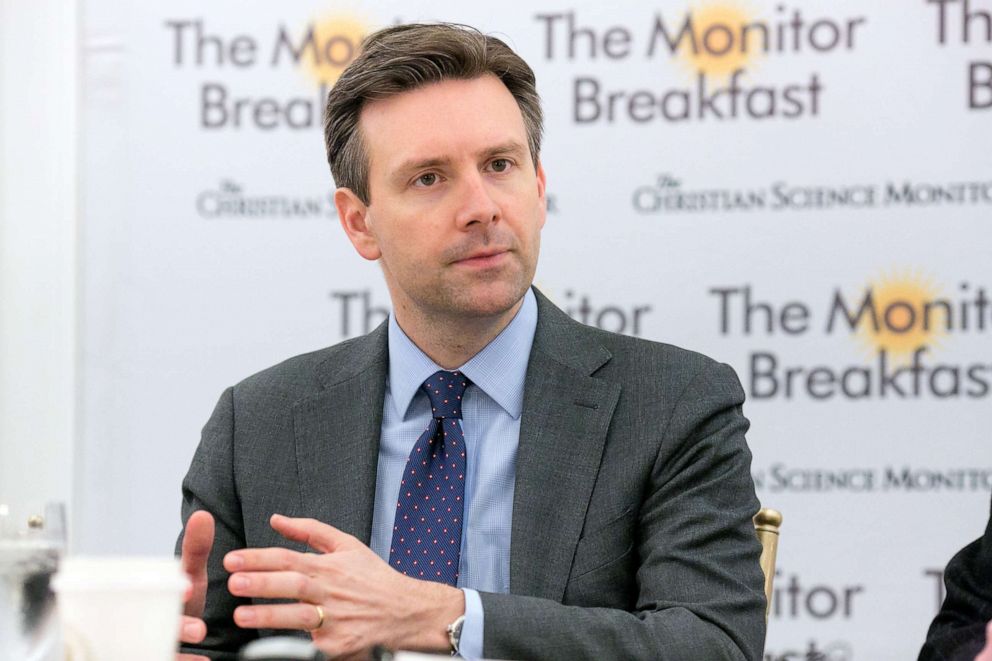
United and other major U.S. airlines have applied for more federal loans through the CARES Act, in addition to the government assistance they have already received.
"There is no downplaying the severity of this crisis," Earnest said. "This is the biggest financial crisis the commercial aviation industry has ever faced."
The future of air travel
Major U.S. airlines have already mandated that both passengers and crew must wear face coverings, and have enhanced their cleaning procedures and implemented policies aimed at encouraging social distancing by reducing the number of seats available and blocking some or all middle seats.
New ideas for how to make air travel safer during the pandemic continue to emerge.

In the U.S., at Paine Field Airport in Washington state, thermal cameras test passengers for fevers before they go through the TSA checkpoint. Airlines then can determine whether passengers flagged with a high temperature can fly.
Overseas, Emirates became the first airline in the world to conduct a rapid COVID-19 test for passengers in Dubai. It's a blood test that reportedly returns results in ten minutes.
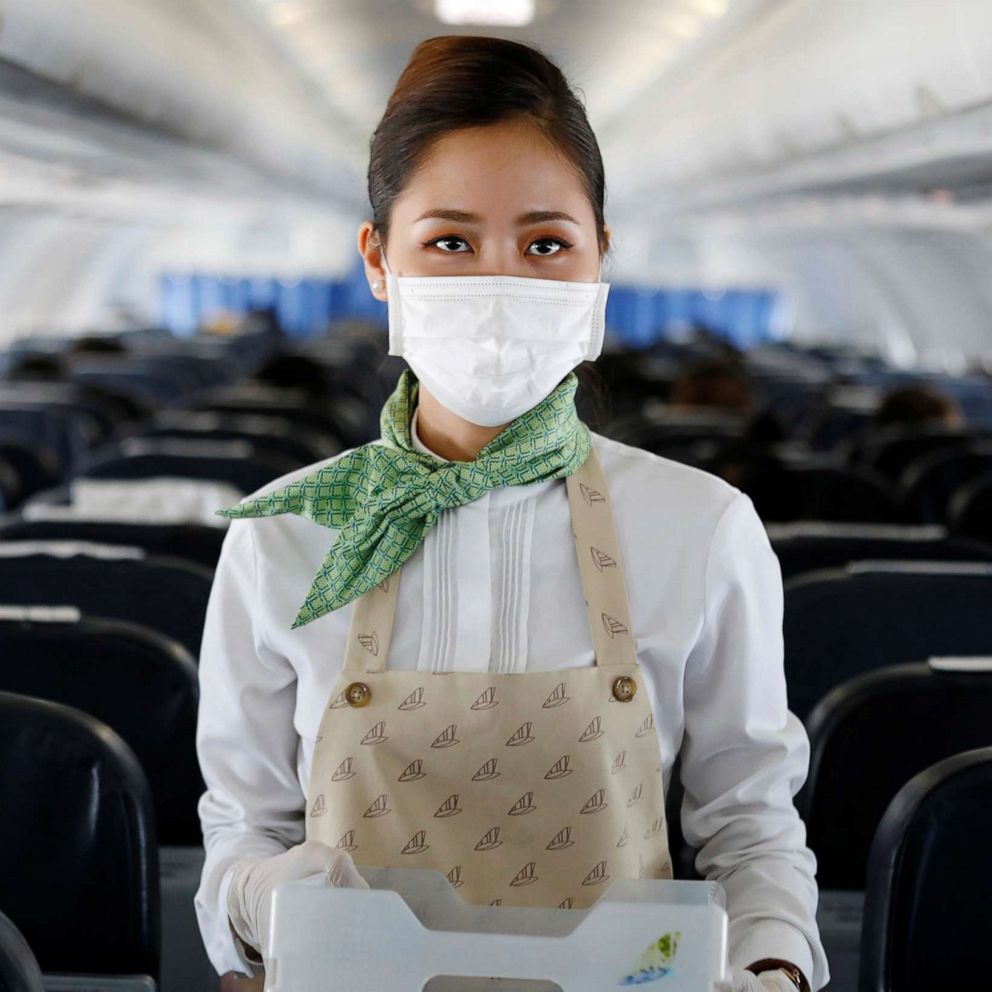
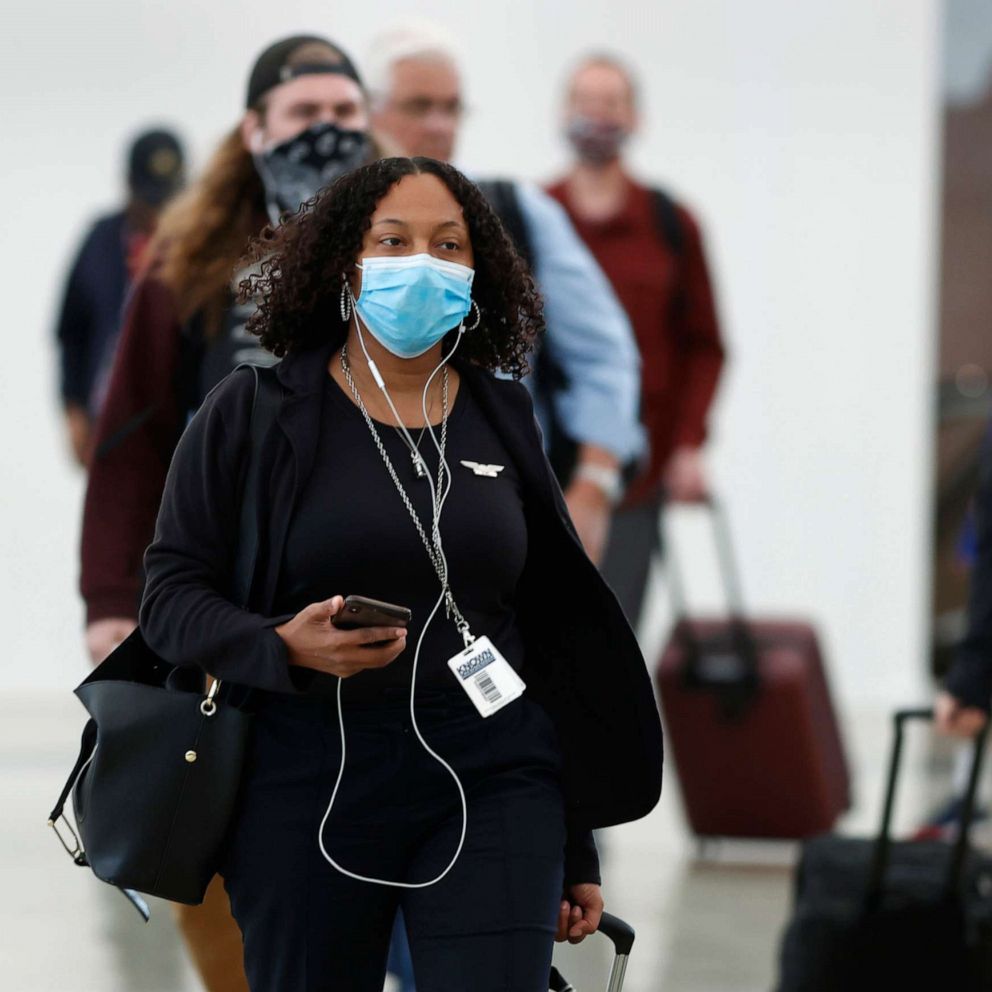
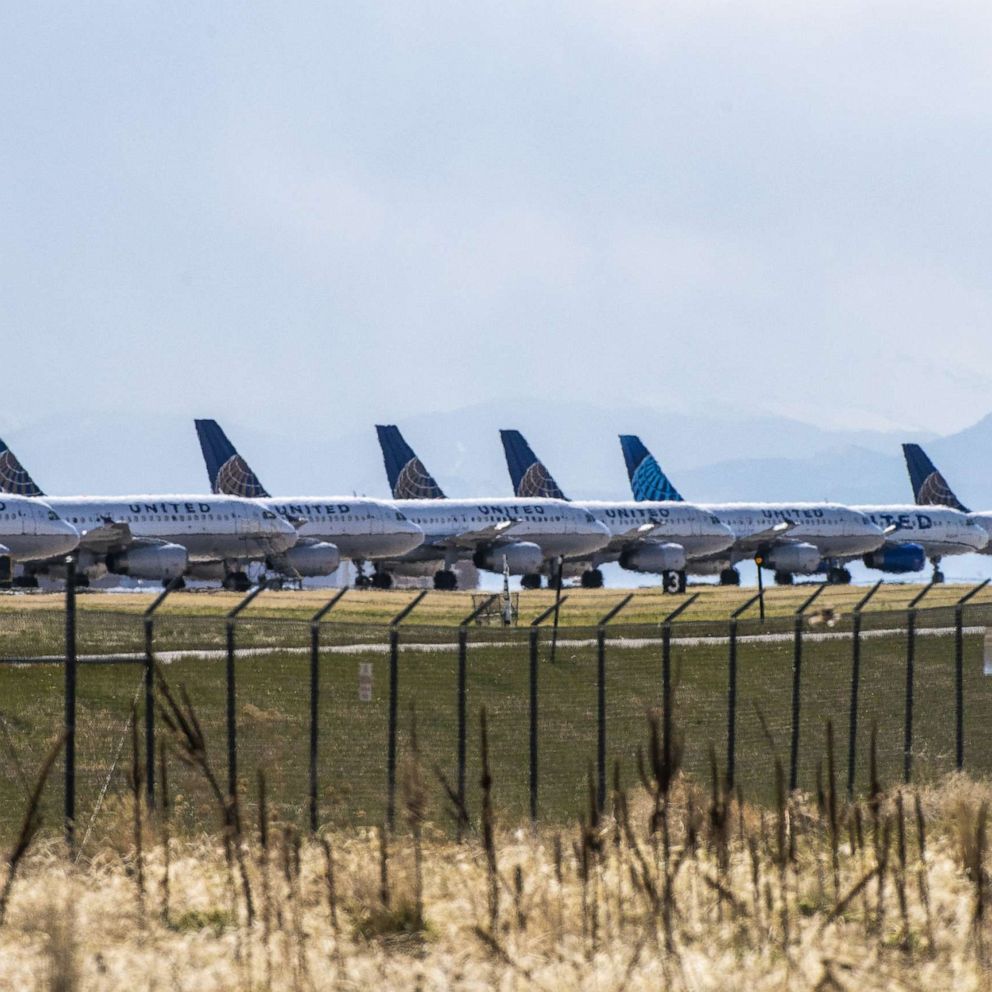
U.S. airlines are still preparing for when demand picks back up. Carriers' maintenance teams are spending countless hours to ensure their planes are ready to take to the skies.
United Airlines has parked 70 aircraft alone at Dulles International Airport, one of the airline's hubs.
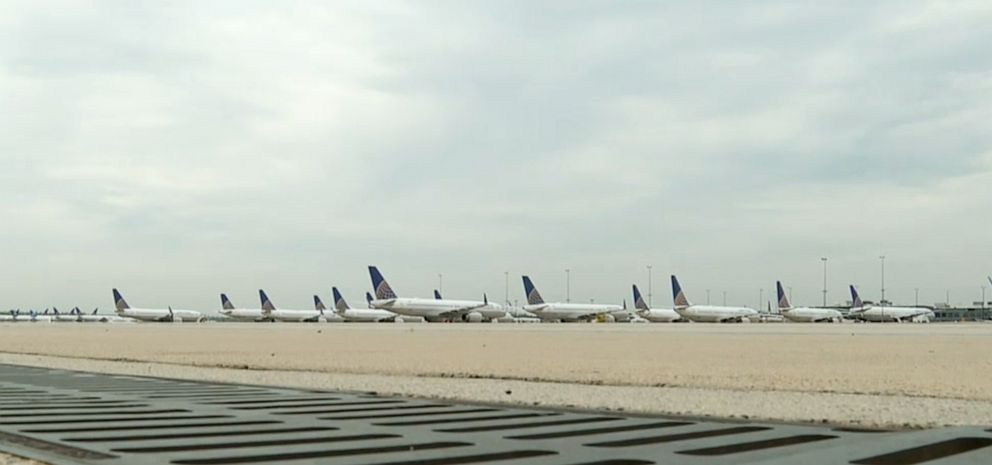
"There's a huge level of pride involved to know that when demand increases and they come out of the storage program, these aircraft will be ready to go to the gate and be ready to fly passengers safely and efficiently," Travis Allee, a Tech Ops Supervisor for the carrier, told ABC News.
But when the demand for travel does return, experts think it will come back slowly.
"We're in a recession now," ABC News aviation expert Col. Steve Ganyard said. "And after most recessions, it's taken five years for airline travel to resume, to get back to where it was before that recession."
What to know about the coronavirus:
- How it started and how to protect yourself: Coronavirus explained
- What to do if you have symptoms: Coronavirus symptoms
- Tracking the spread in the U.S. and worldwide: Coronavirus map
Tune into ABC at 1 p.m. ET and ABC News Live at 4 p.m. ET every weekday for special coverage of the novel coronavirus with the full ABC News team, including the latest news, context and analysis.