Florida snake hunters deploy robotic rabbits to capture invasive Burmese pythons
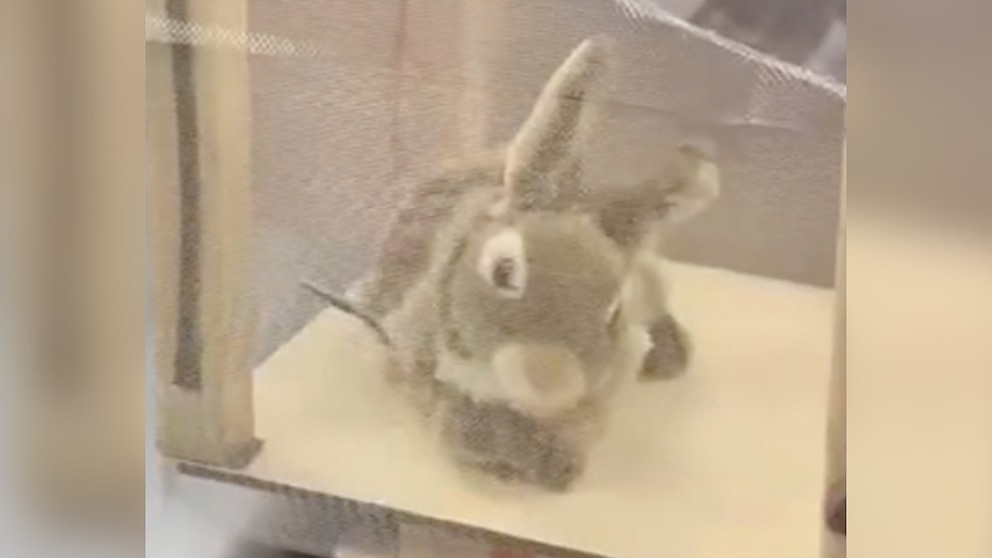
A team dedicated to controlling populations of invasive Burmese pythons in South Florida has deployed another unique method to find the elusive predators: robotic rabbits.
The robots are remote-controlled, solar-powered and designed to look like marsh rabbits, a preferred choice of prey for the pythons, according to the South Florida Water Management District, which is funding the project as part of its Python Elimination Program.
Researchers designed the devices to produce a heat signature and emit a smell designed to attract the pythons, according to the utility company. They are also equipped with cameras to monitor for the pythons' movements and alert officials when one is detected -- who can then send out a snake wrangler to detect and euthanize the animals.
The robots were strategically placed throughout South Florida, according to the utility company.
"We want to capture all of the processes that an actual rabbit would give off," said Robert McCleery, a wildlife ecologist at the University of Florida, told the Palm Beach Post.
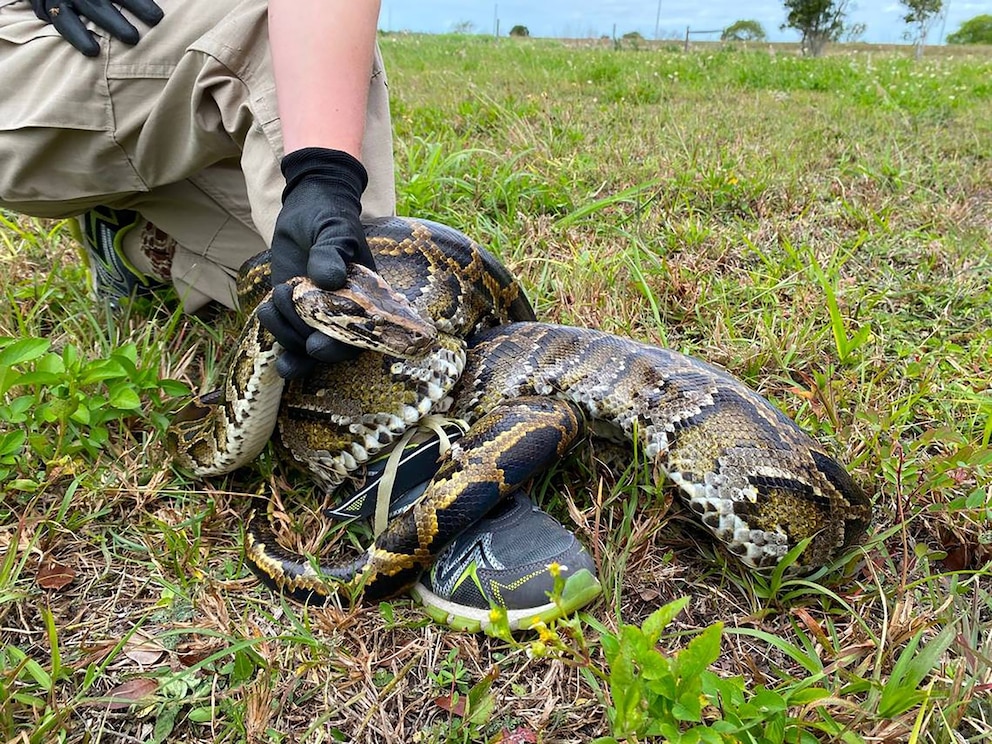
Scientists at the University of Florida conducted the research, which was partly funded by the FWC. The South Florida Water Management District is funding the experiment.
"Our partners have allowed us to trial these things that may sound a little crazy," McCleery said. "Working in the Everglades for ten years, you get tired of documenting the problem. You want to address it."
The researchers replaced the stuffing in 40 toy rabbits with electrical components powered by solar energy and waterproofed them to withstand the rain and humidity, according to the Post.
This isn't the first time snake hunters have used creative means to capture their prey. In 2020, the FWC deployed python-sniffing detector dogs to track pythons in South Florida.
In 2022, University of Florida researchers put live rabbits in cages in the Everglades to lure the snakes. Over 90 days, nine rabbit pens lured 22 pythons, leading the snakes to stay in the area for more than an hour on average, according to a state report.
Trackers have been placed on dozens of preferred python prey, such as rabbits, raccoons and opossums, which lead snake hunters to the pythons after they've swallowed the prey.
Officials around the state pay bounty hunters to help control Burmese python populations and have attached tracking devices to male snakes, which leads them to egg-laying females.
The introduction of Burmese pythons has decimated the local ecosystem in South Florida as they breed rapidly and compete with native wildlife for food, according to the U.S. Geological Survey.
An estimated 180,000 were brought into the country between 1975 and 2018, according to the U.S. Geological Survey. Many entered the ecosystem through accidental or intentional release.
As of 2000, the species had established a self-sustaining breeding population in the South Florida ecosystem, according to the USGS. The species is now distributed across more than 1,000 square miles of South Florida, including all of the Everglades National Park and across the southern coast to Rookery Bay National Estuarine Research Reserve, according to the USGS.
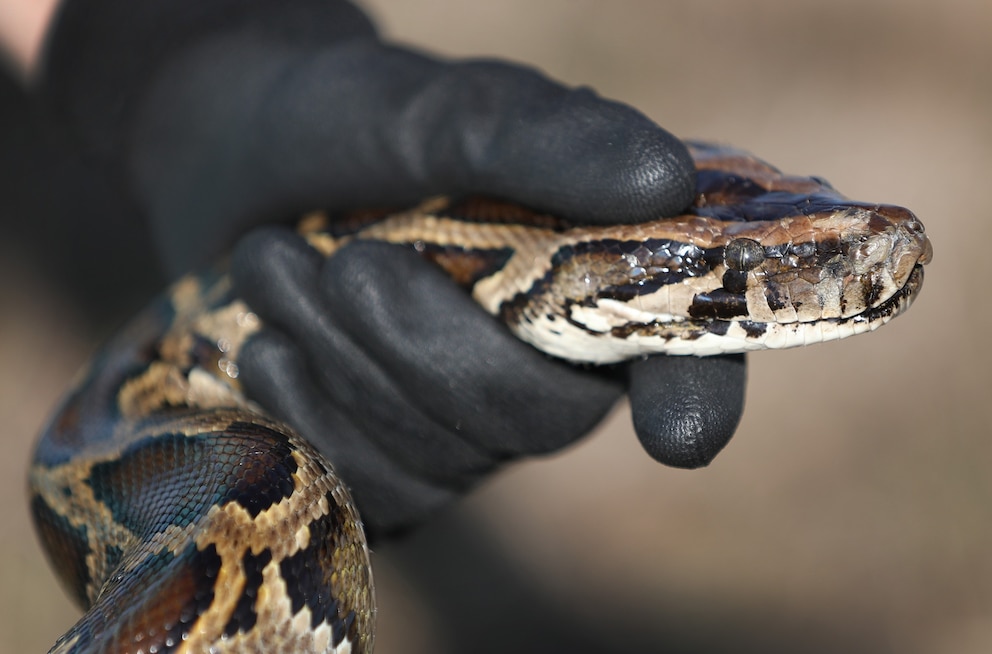
But Burmese pythons are notoriously difficult to detect and capture, experts say.
Detectability of Burmese pythons is an estimated 1% to 3%, meaning out of 100 snakes in a survey area, there could be a chance of spotting between one and three individuals, research has shown. At Everglades National Park, the frequency of Burmese python detection is about one python per eight hours of searching, according to the U.S. Fish and Wildlife Service.
The U.S. banned the import of Burmese pythons in 2012. But chances of eradication are likely low at this point, according to the USGS.
At least 76 prey species have been found in the guts of Burmese pythons over the past several decades, including mammals, birds, iguanas and alligators, according to USGS scientists.
A 2012 study found that raccoon populations in the state had declined 99.3% since 1997, while opossums saw a decline of 98.9% and bobcats an 87.5% decline. Marsh rabbits, cottontail rabbits and foxes have effectively disappeared, a 2015 study found.
In December 2022, a group of biologists stumbled upon a nearly 15-foot Burmese python in the midst of devouring an adult white-tailed deer.
Black rats seem to be the only species of mammal resistant to the pythons. Also an invasive species, they arrived centuries ago aboard ships from Europe. They reproduce quickly and can scavenge carcasses as well as eat plants, insects and scraps from humans -- allowing them to thrive, according to the USGS.
But native predators may be starting to fight back, according to researchers who have documented cases of alligators, cottonmouth snakes and bobcats killing Burmese pythons.