How flushing contact lenses down the toilet threatens the environment
This is an Inside Science story.
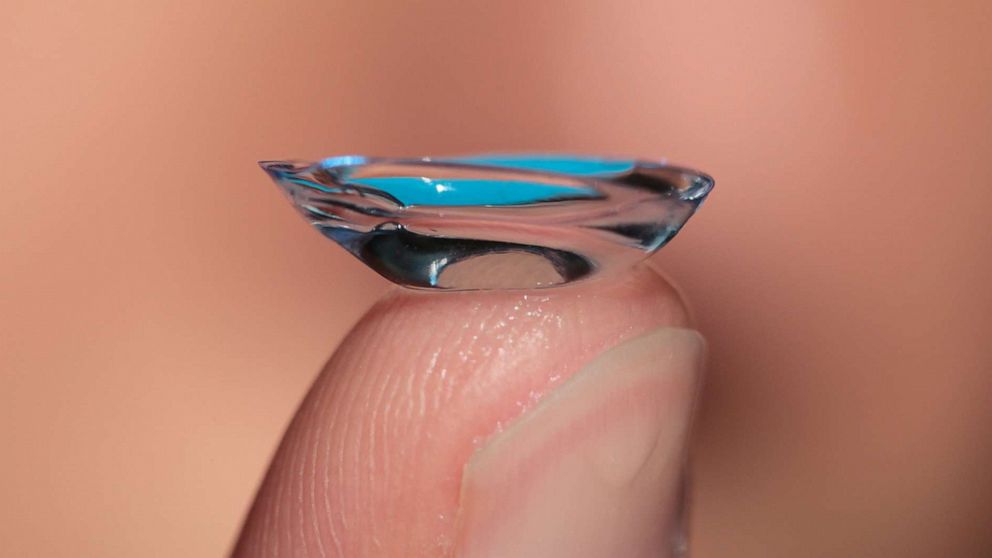
(Inside Science) – About 20% of people who use contact lenses flush them down the toilet or sink. But when those contact lenses interact with wastewater treatment plants, they form microplastics that become ocean pollution. "The overall trend in America is that we’re going towards contact lens use and away from glasses. And then within the contact lens market, it’s a lot of daily disposables being used,” said Charles Rolsky, a researcher at Arizona State University.
"We thought it would be interesting to see how people dispose of their contact lenses because there’s no instructions on the box. And so we conducted kind of a brief survey. And we found around 20% of contact lens users that we surveyed were flushing them down the sink or toilet,” said Rolsky. "The problem is that contact lenses are going down the drain and interacting with wastewater treatment plants. And we’ve known for awhile now that plastic and wastewater don’t really interact very well. Basically, the interaction between contact lenses being flushed and a wastewater treatment plant creates microplastics,” said Rolsky.
“Microplastics pose a threat to the environment. These small plastic pieces are able to move quite freely throughout the ecosystem. It kinda depends on where they’re deposited. But sometimes the end result of wastewater goes to something like a wetland or stream or a river, and if these soil properties are carrying plastics then absolutely it has a chance to reach the ocean or any other delicate ecosystem nearby,” said Rolsky.
"So there has been research shown that a lot of animals that feed on the bottom of the ocean or in the sand accidentally take up plastic particles, so if you’re distributing these fragmented contacted lenses to these ecosystems, and we know research has shown animals like crabs and shrimp have taken in these plastics by accident, there’s a good chance that they could do the same with a contact lens fragment," said Rolsky.
"I want people to know that what goes down the sink or toilet is potentially dangerous to the environment and we need to be aware of what we’re putting down there, especially as it pertains to contact lenses. And I really want people to know that there are options for recycling these things instead of just tossing them, even in the trash can. Through recycling programs we’re able to repackage those and rework them into the system, which is great, they don’t end up in the environment. And really also be aware of what types of plastics are necessary, like our contact lenses, and what types of plastic are avoidable, like plastic bags, utensils, straws, so on and so forth,” concluded Rolsky.
Inside Science is an editorially-independent nonprofit print, electronic and video journalism news service owned and operated by the American Institute of Physics.