• Video
  • Shop
  • Culture
  • Family
  • Wellness
  • Food
  • Living
  • Style
  • Travel
  • News
  • Book Club
  • Newsletter
  • Privacy Policy
  • Your US State Privacy Rights
  • Children's Online Privacy Policy
  • Interest-Based Ads
  • Terms of Use
  • Do Not Sell My Info
  • Contact Us
  • Recalls and Product Safety Alerts
  • © 2026 ABC News
  • News

Geminid meteor shower could be the year's best, scientists say
0:58
.
What is a meteor shower?
Wally Pacholka/Barcroft Media via Getty Images, FILE
ByMORGAN WINSOR
December 13, 2017, 4:12 PM

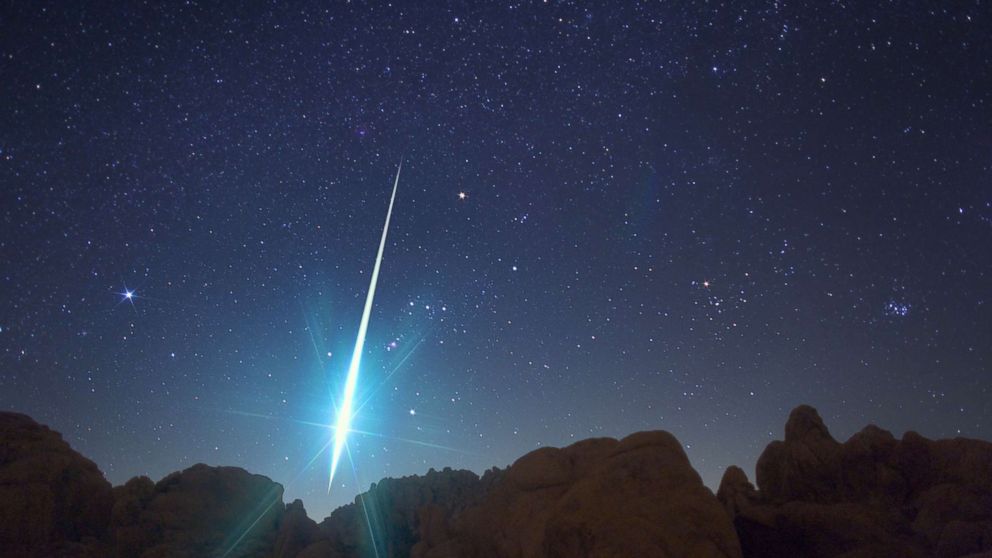
— -- Skywatchers are in for a dazzling show tonight. The annual Geminid meteor shower that will streak across the night sky will be one of the best of the year, scientists say.

The Geminid meteors are expected to peak overnight. With good weather conditions, the cosmic display can be seen between 7:30 p.m. and dawn local time. The largest number of meteors will be visible between midnight and 4 a.m. local time, according to NASA.

"With August's Perseids obscured by bright moonlight, the Geminids will be the best shower this year," said Bill Cooke with NASA's Meteoroid Environment Office. "The thin, waning crescent Moon won't spoil the show."
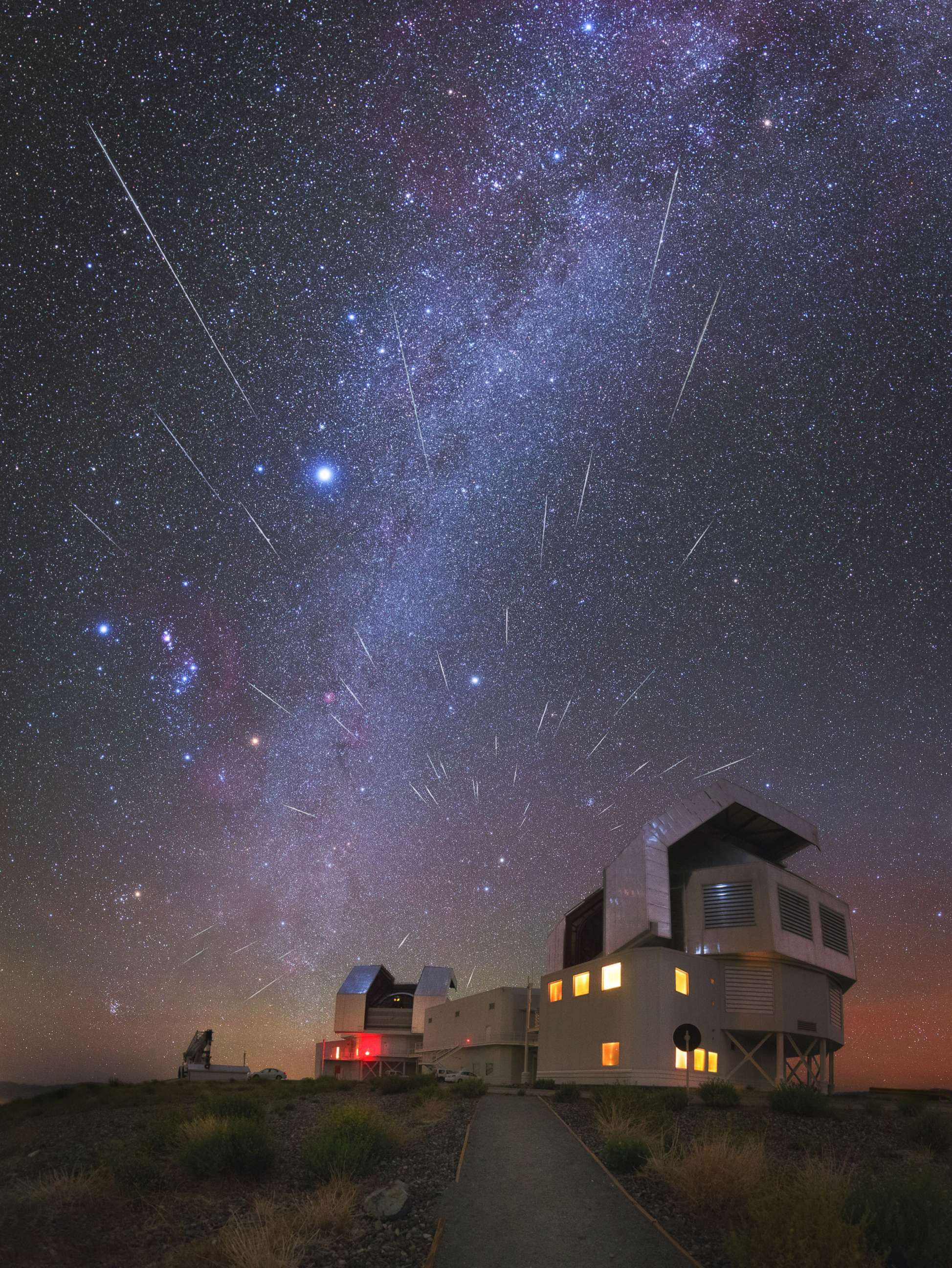
PHOTO: The radiant Geminid meteor shower over the Carnegie Las Campanas observatory, near the Atacama desert in Chile, Dec. 14, 2015. The Milky Way and bright stars, Rigel in Orion constellation, and Sirius in Canis Major constellation, shine brightly.
Yuri Beletsky/Las Campanas Observatory/Carnegie Institution

Related Articles

Total solar eclipse wows crowds across the US

Related Articles

Total solar eclipse 2017: Best photos from around the US

Considered one of the year's most reliable meteor showers, the Geminids occur every December when Earth passes through a vast trail of dusty debris shed by a rocky object named 3200 Phaethon. The debris burns up when it runs into the Earth's atmosphere in a spate of "shooting stars," Cooke said.

The Geminid meteors are named for the constellation Gemini, from which they appear to come. They are typically bright and easy to spot without telescopes or binoculars; these meteors can be seen with the naked eye under clear, dark skies over most of the world. Though the best view is from the Northern Hemisphere, according to NASA.
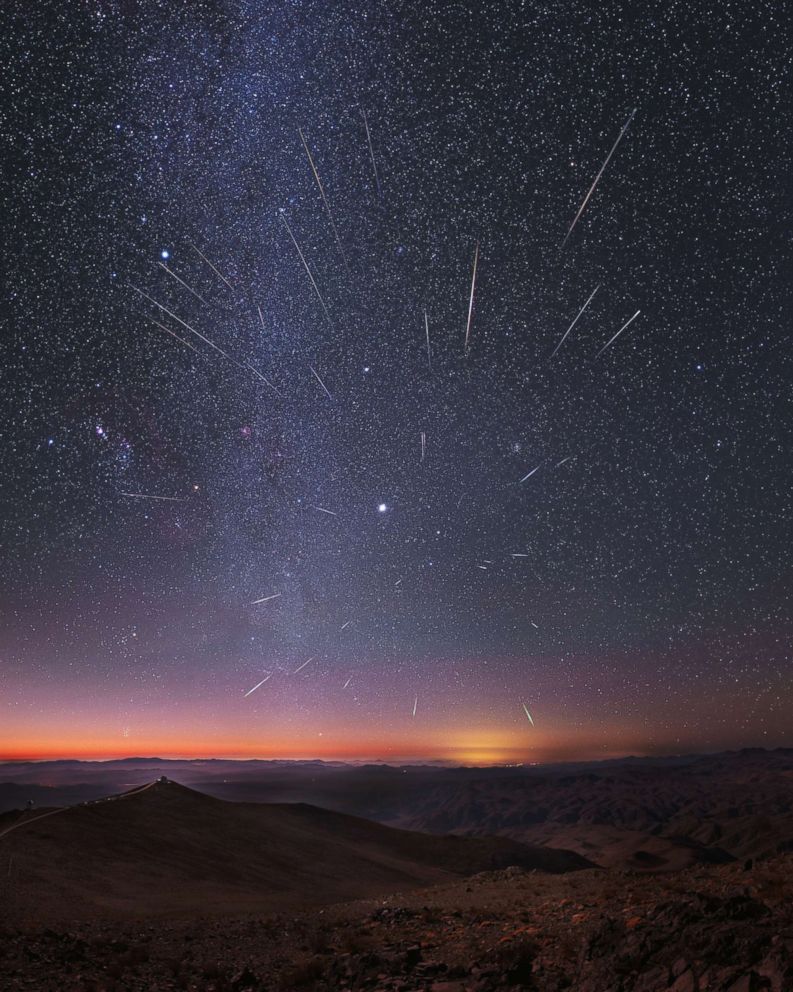
PHOTO: The radiant Geminid meteor shower over the Carnegie Las Campanas observatory, south of Atacama desert, Chile. Dec. 14, 2013, taken using a long exposure. The brightest object close to center is Jupiter and Milky Way is at left.
The radiant Geminid meteor shower over the Carnegie Las Campanas observatory, south of Atacama desert, Chile. Dec. 14, 2013, taken using a long exposure. The brightest object close to center is Jupiter and Milky Way can be seen running vertically at left.
Yuri Beletsky/Las Campanas Obser

Not all of the meteors visible during the same time will belong to the Geminid shower. Some might be from weaker, active showers such as the Monocerotids, Sigma Hydrids and the Comae Berenicids, Cooke said.

"When you see a meteor, try to trace it backwards," he said. "If you end up in the constellation Gemini, there's a good chance you've seen a Geminid."
Up Next in News—

French lawmakers adopt social media ban for kids under 15

July 21, 2026

Trial begins for mom accused of killing her 3 children

July 20, 2026

Officer speaks out after rescuing driver trapped in burning car

July 20, 2026

Taylor Farms recalls lettuce in 27 states amid cyclosporiasis outbreak: What to know

July 20, 2026

Shop GMA Favorites

ABC will receive a commission for purchases made through these links.

Sponsored Content by Taboola

The latest lifestyle and entertainment news and inspiration for how to live your best life - all from Good Morning America.
  • Contests
  • Terms of Use
  • Privacy Policy
  • Do Not Sell My Info
  • Children’s Online Privacy Policy
  • Advertise with us
  • Your US State Privacy Rights
  • Interest-Based Ads
  • About Nielsen Measurement
  • Press
  • Feedback
  • Shop FAQs
  • ABC News
  • ABC
  • All Videos
  • All Topics
  • Sitemap
  • Recalls and Product Safety Alerts

© 2026 ABC News
  • Privacy Policy— 
  • Your US State Privacy Rights— 
  • Children's Online Privacy Policy— 
  • Interest-Based Ads— 
  • Terms of Use— 
  • Do Not Sell My Info— 
  • Contact Us— 
  • Recalls and Product Safety Alerts— 

© 2026 ABC News