Global leaders call for new pandemic treaty and WW2-style collaboration for future global health emergencies
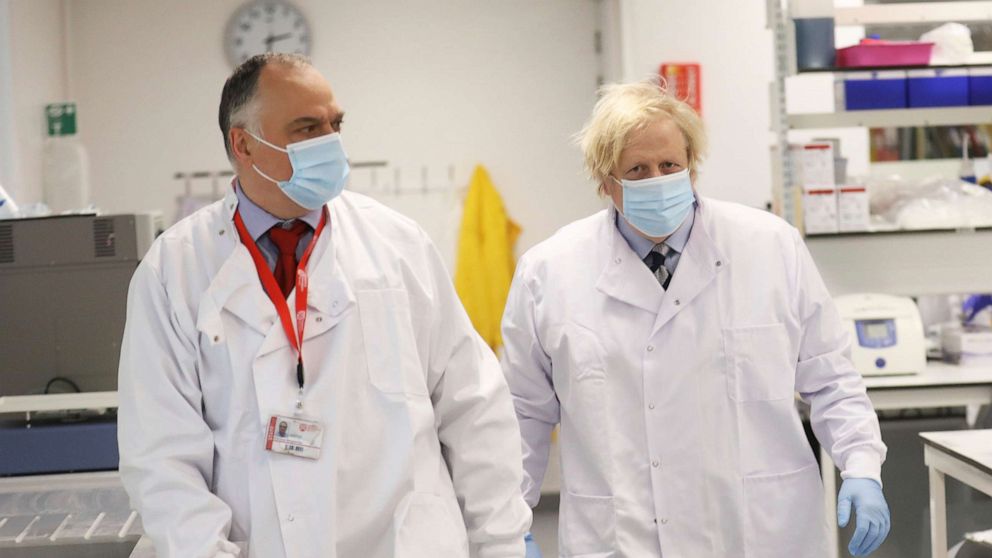
LONDON -- World leaders from countries in Europe, South America, Africa and Asia have called for a World War II-style treaty to “dispel the temptations of isolationism and nationalism” in order to shore up the response to future pandemics in an open letter published in several newspapers on Tuesday.
The proposed treaty would be grounded in the constitution of the WHO and seek to improve pandemic preparedness on an international scale, according to the letter with the matter of the next global health emergency a question of “not if, but when.”
The letter was written by 24 leaders, as well as the president of the European Council and WHO Director-General Dr Tedros Adhanom Ghebreyesus, and published in the U.K.’s Daily Telegraph, Spain’s El Pais and France’s Le Monde newspapers.
U.K. Prime Minister Boris Johnson, French President Emmanuel Macron and German Chancellor Angela Merkel are among the signatories to the letter calling for greater international cooperation in distributing vaccines and medical treatments, even as the EU and U.K. are embroiled in a current dispute over vaccine exports from the continent.
The world leaders describe the COVID-19 pandemic as the “biggest challenge to the global community since the 1940s.”
“At that time, following the devastation of two world wars, political leaders came together to forge the multilateral system,” they wrote. “The aims were clear – to bring countries together, to dispel the temptations of isolationism and nationalism and to address the challenges that could only be achieved together in the spirit of solidarity and co-operation, namely peace, prosperity, health and security.”
With vaccination rates varying widely across the globe, and richer countries having been accused of vaccine hoarding, the signatories said the pandemic “has been a stark and painful reminder that nobody is safe until everyone is safe.”
Earlier this year, the WHO’s Ghebreyesus said the world was on the “brink of a catastrophic moral failure” which would be “paid for with lives and livelihoods in the world’s poorest countries” because of global vaccine inequality.
The COVAX program, the global scheme to provide vaccines to lower-income countries as part of the Access to COVID-19 Tools (ACT) Accelerator, aims to distribute up to two billion doses of vaccines around the world by the end of this year, especially to countries that ordinarily would not be able to afford them on the market.
The U.S. has pledged $4 billion to the program, but the ONE Campaign, a global anti-poverty movement, has called for the Biden administration to send excess vaccine doses abroad to countries in need.
To date, richer countries in the West have advanced much further along their vaccination programs than their poorer counterparts in South America, Asia and Africa.
Whereas the U.S. has administered 42.9 vaccine doses per 100 people, the global rate is only 7.08 per 100, according to Our World in Data and the rate of vaccination has been particularly slow in Africa with only 0.74 doses administered per 100 people, according to the same data.