Great Salt Lake dry-up causing dangerous climate ripple effect, ecologists say
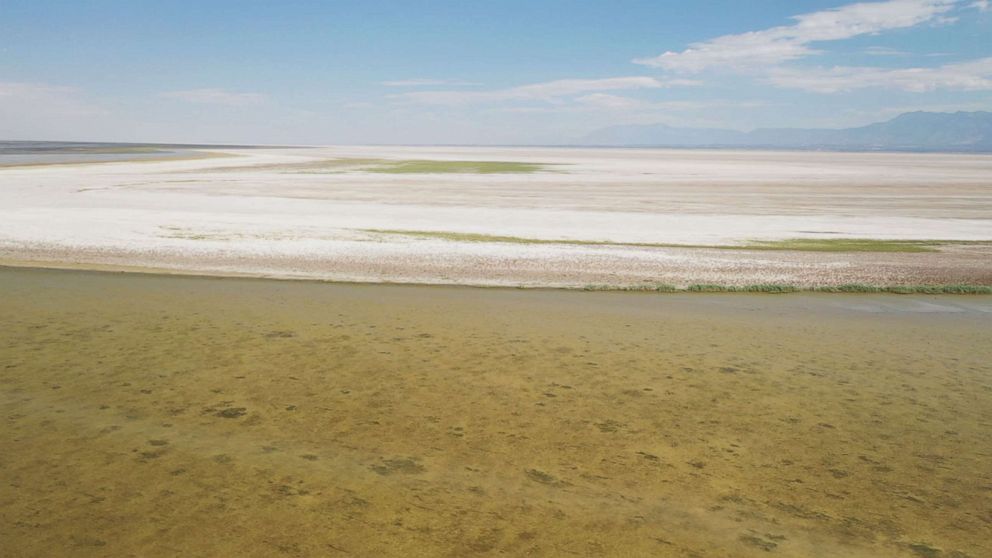
The Great Salt Lake has lost two-thirds of its size due to rising temperatures and scientists say this is already causing a dangerous ecological ripple effect throughout Utah.
The water body, which is approximately 75 miles long and 30 miles wide, is known to be the largest saltwater lake in the Western Hemisphere and feeds into nearby rivers, but it's now one-third its usual size and still shrinking.
Ecologists who have been watching this climate change-induced trend told ABC News that the dry-up is already affecting Utah's fauna, flora and human populations, and the problem is only going to get worse without outside help.
"I don't know how much time we have," Joel Ferry, the director of Utah's Department of Natural Resources, told ABC News.
More than 800 square miles of the river have been exposed due to the dry-up, according to experts. Ferry, a fifth-generation rancher and state representative, said he has personally been affected by the drought.
Ferry's land is on the Bear River, which is the largest tributary to the Great Salt Lake, and normally the river flows enough water to rise lake levels up to 3 feet during the peak of the season.
This year the water only went up 1 foot, which is problematic because the water levels usually drop 2 feet during the end of the season, according to Ferry.
"The problem is a shallow lake. There are not many more feet to go," he said.
Kyle Stone, a wildlife biologist for the state of Utah, told ABC News that animals and plants near the lake are already bearing the burden of the dry-up.
As the water goes down, its salinity goes up which kills algae, a food source for brine shrimp, he said. The shrimp is food to more than 10 million birds that depend on the lake during migrations, according to Stone.
"They've got to get from central Canada to central Argentina or southern Mexico without a stopover point," Stone told ABC News. "You just can't do it. You've gotta refuel somewhere."
Birds that do stop in the area are now prone to attacks from coyotes or other predators who have more land to traverse, according to Stone.
Robert Gillies, a climatologist from Utah State University, told ABC News that the dry-up also affects people, even those who don't live near the water.
When the lake dries up harmful particulates that are at the bottom of the lake, both ones that occur naturally and ones that formed from decades of mining in the area, are exposed and kicked up in the wind, according to the state's Department of Natural Resources.
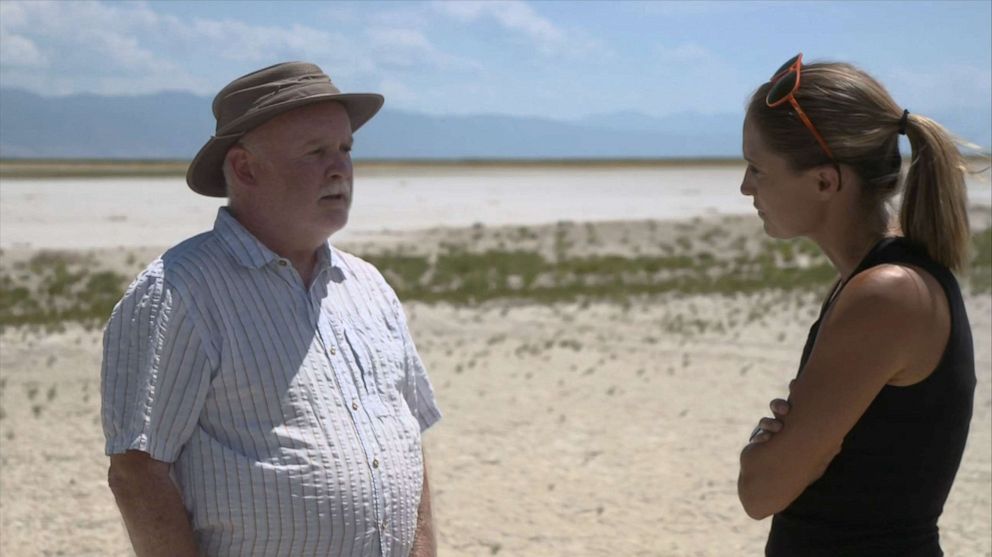
Gillies said arsenic is the most troubling particulate that gets airborne, particularly in the wintertime. During colder weather, particles are trapped in an inversion and, during winter storms, they are released into the air, he said.
Gillies warned that this can be harmful to people's cardiovascular and respiratory systems.
"If you have been compromised on any of those fronts, it's just going to be worse," he said.
Some Utah residents are taking some efforts to mitigate the damage.
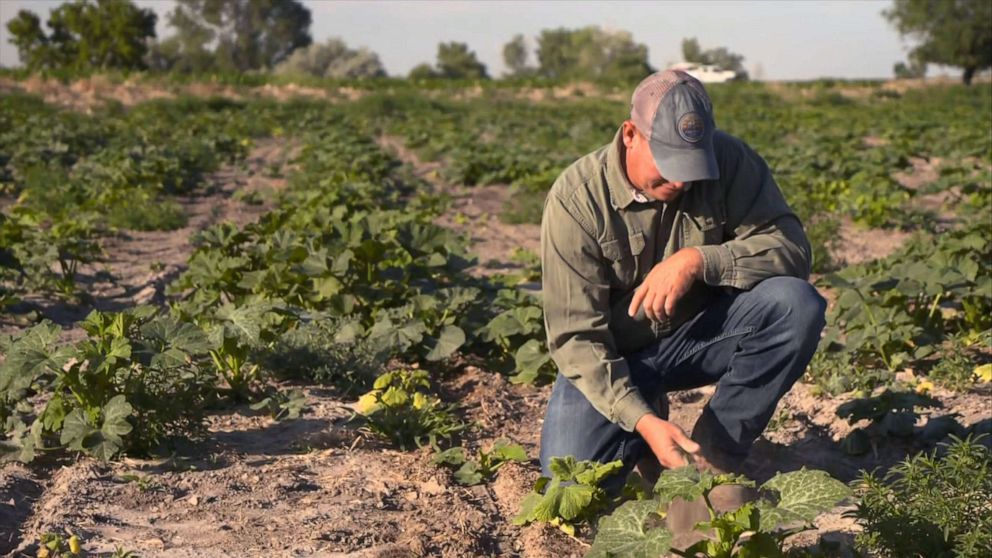
Ferry has guided farmers to install drip irrigation systems into their soil. The system pushes water in a small row directly to the plants, he said.
"So it's a really good practice for things like lettuce and tomatoes, pumpkins, those kinds of plants," he said.
The Utah state legislature also passed a $40 million plan earlier this year to create a water trust to maintain and improve waterflow to the lake and U.S. Sen. Mitt Romney, R-UT, introduced the Great Salt Lake Recovery Act, which would "study historic drought conditions and protect the long-term health."
Ferry said more work needs to be done and said the federal and state governments need to make more years of investments to prevent the problem from getting worse.
"Without managing our water appropriately, life in the West doesn't exist," he said.