What grievances turned a US-China photo op into verbal combat
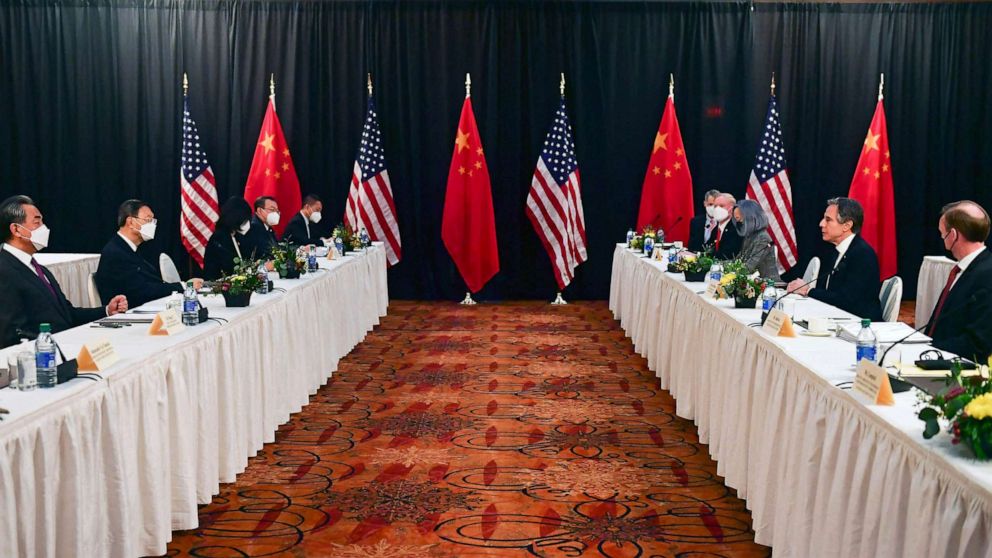
The scenes of U.S. and Chinese officials debating across hotel conference room tables in Anchorage, Alaska, were remarkable -- not just because of the palpable tension between the world's two greatest powers, but also because of how publicly the feud unfolded, live before the press.
But both sides were expected to come to the table with a long list of grievances amid one of the lowest moments in what's perhaps the most important relationship between two countries in the 21st century.
The question is what was it that turned brief opening statements into an hour-long fight.
"This was always about the Biden team setting a new baseline. Raising a range of concerns. Dispelling hope there would be a reset. Wasn't a way to make it pretty. But had to happen, in person," according to Eric Sayers, an Asia-Pacific defense policy expert at the American Enterprise Institute, a Washington-based think tank.
In the hours since the spat, each side has accused the other of starting it by violating protocol. A senior U.S. administration official said in a statement that China's top diplomat spoke too long in remarks "focused on public theatrics and dramatics over substance," while Chinese officials said the U.S. "accused China of unreasonable attacks on China's domestic and foreign policies and provoked disputes," according to Xinhua state news agency.
While both sides had to posture for domestic audiences, particularly the rising nationalist fervor of Xi Jinping, China's increasingly authoritarian leader, the grievances at the heart of the dispute are longstanding.
What set China's top diplomat off?
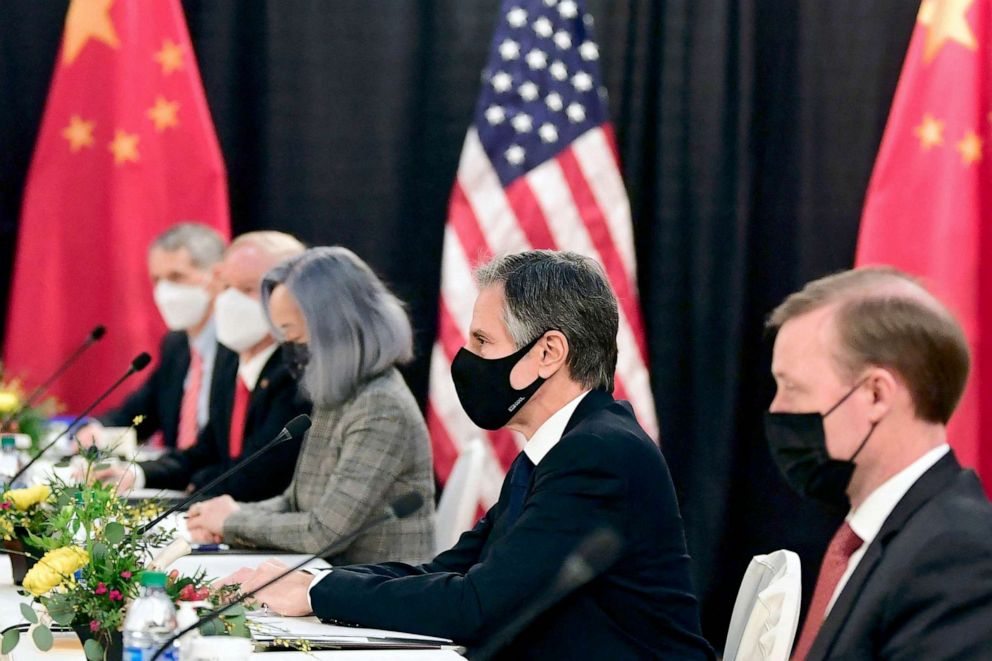
Seated next to National Security Adviser Jake Sullivan, Secretary of State Antony Blinken opened the meeting by welcoming State Councilor Wang Yi, China's foreign minister, and Yang Jiechi, the Chinese Communist Party's foreign affairs chief and effectively China's top diplomat.
He noted America's "deep concerns with actions by China," including its alleged abuses of Muslim ethnic minorities in Xinjiang, its end to democratic self-rule in Hong Kong, its economic coercion against U.S. allies and partners, and its aggressive activities toward Taiwan. Each of those, he said, "threaten the rules-based order that maintains global stability."
"We do not seek conflict, but we welcome stiff competition, and we will always stand up for our principles, for our people and for our friends," Sullivan added.
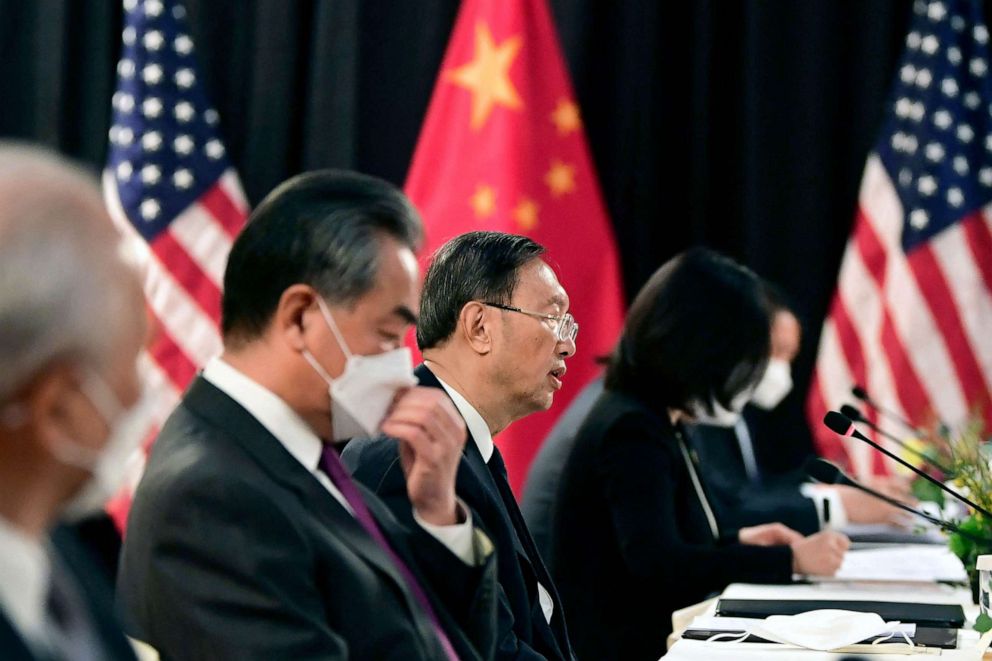
But their comments sparked a verbal conflict. Speaking largely without notes, Yang Jiechi fought back in a 20-minute speech, taking on several of the issues Blinken raised and going further to challenge the U.S.
"The problem is that the United States has exercised long-arm jurisdiction and suppression and overstretched the national security through the use of force or financial hegemony," said Yang.