Do heat waves damage the economy? Experts explain

A heat wave blanketed a vast swathe of the United States over the 4th of July weekend, threatening the health of tens of millions of people and the power supply for thousands of homes.
A lesser-known risk of extreme heat, meanwhile, may hammer pocketbooks.
Heat waves threaten an array of costs for the economy, sapping the productivity of outdoor workers, shutting some shoppers inside their homes and driving up utility payments, some analysts told ABC News. All in all, they added, those effects could shrink output and hike some costs in areas impacted by heat waves.
"Extreme heat has economic consequences," Justin Mankin, a professor of geography at Dartmouth College, told ABC News. "The consequences seem to be negative just about everywhere."
Heat waves are becoming more frequent, more intense and longer lasting due to human-amplified climate change, according to the federal government's Fifth National Climate Assessment. The average number of heat waves in major U.S. cities each year has doubled since the 1980s, that report said.
Extreme heat is considered the deadliest weather-related hazard in the U.S., according to the National Weather Service. About 2,000 Americans die each year on average from extreme heat, the Centers for Disease Control and Prevention noted.
A body of research indicates that heat waves also risk damage for the economy.
A study issued last year by researchers at the University of Florida, the European Stability Mechanism and the International Monetary Fund -- which examined 203 countries over a 40-year period -- found that an increased frequency of high temperatures and harsh droughts resulted in a 0.2% decline in gross domestic product (GDP).
Another report found total heat-related economic losses in the trillions of dollars. Taken together, economic damage from human-caused extreme heat likely cost as much as $50 trillion worldwide over a recent 30-year period, according to a 2022 study from Dartmouth College researchers.
"These things are costly and they're getting worse because of climate change," said Mankin, a co-author of the study.
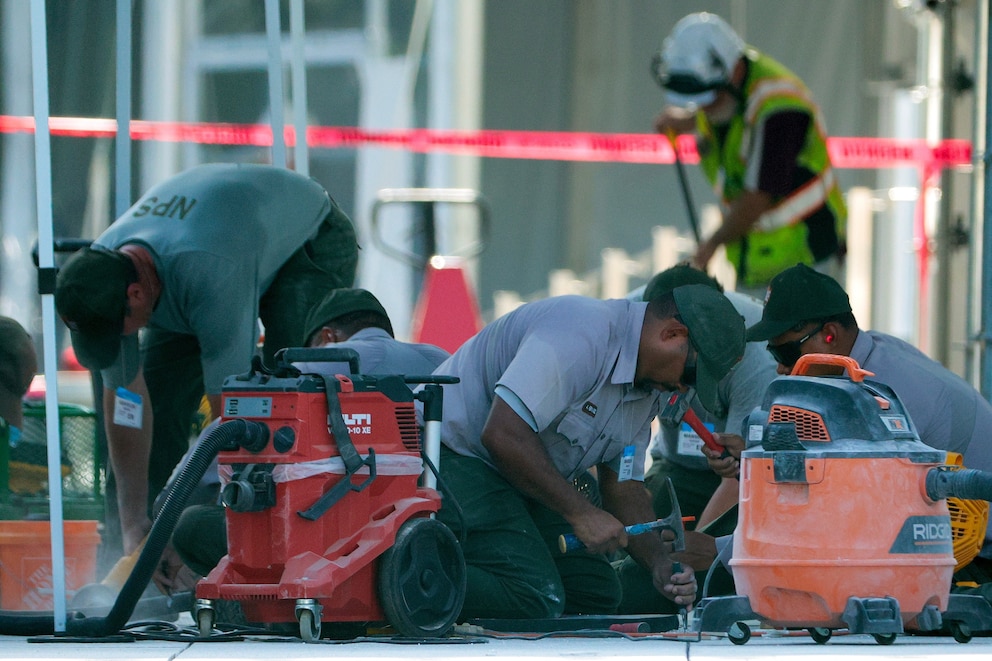
The reasons for the economic impact range from diminished employee productivity to heightened utility costs to lost agricultural output, some analysts said.
Berkay Akyapi, a professor of business at the University of Florida and a co-author of the study on lost GDP, pointed to the crop damage caused by a heightened number of heat waves.
Nighttime temperature spikes are especially damaging, Akyapi said, since they deny crops a respite during a time period typically reserved for cooler temperatures. Fewer crops, in turn, threaten to elevate prices as the same number of dollars chase after a smaller supply of goods, he added.
A decline in domestic crop output can also force a given country to increase imports, putting further upward pressure on prices, Akyapi noted.
"If you can't produce something, you have to import it and that of course raises prices," he said.
Heat waves also cause higher prices for utilities as demand grows for air conditioning and other power-driven solutions, some analysts said.
The budget woes, in turn, cause a chain reaction, squeezing funds left over for other products and sapping consumer-driven economic activity. Steven Brown, a director of insights and evidence at the Aspen Institute Financial Security Program, told ABC News.
"It results in higher bills for households that are already financially tight or strained," Brown said. "It causes a spillover in their ability to pay for other things like groceries or rent."
In 2023, a report issued by a U.S. Senate committee found the negative economic effects from extreme heat are most pronounced in heat-exposed sectors such as agriculture, mining, construction, manufacturing and transportation. The risk owes primarily to lost productivity among workers in such industries, the report said.
"Together, the loss of productivity caused by heat is emerging as one of the biggest economic costs of climate change," the report added.
To be sure, analysts noted that some cold-weather locations may benefit from heat waves, since higher-than-normal temperatures could improve agricultural output or allow for increased time spent outdoors.
"When you look around the world at places like Canada, Sweden or Norway -- they can benefit. Heat waves are kind of good weather there," Akyapi said.
Adaptive efforts, such as installation of air conditioning, can mitigate some of the negative economic effects, some analysts noted. Some governments are also exploring administrative solutions meant to help fight extreme heat.
Arizona appointed Eugene Livar as its first chief heat officer in 2024, tasking him with oversight of the state's extreme heat preparedness plan. Democratic lawmakers in Arizona and Nevada introduced a bill in Congress last year that would add extreme heat to the Federal Emergency Management Agency's list of major disaster qualifying events, unlocking access to federal support.
"Government interventions probably reduce some of the costs associated with these events, despite being costly interventions themselves," Akyapi said.
Dartmouth's Mankin said he expects heat waves to remain a feature of everyday life for the foreseeable future as human-caused climate change continues.
"These kinds of heat events are just going to be more commonplace. You'll just have more days of the year that look like this, particularly when each subsequent year is hotter than the last," Mankin said.
ABC News' Kenton Gewecke and Emily Shapiro contributed to this report.