High lava fountains at Kilauea destroy USGS monitoring camera
Another spectacular eruption at one of the most active volcanoes in the world has destroyed the live camera volcanologists use to monitor it.
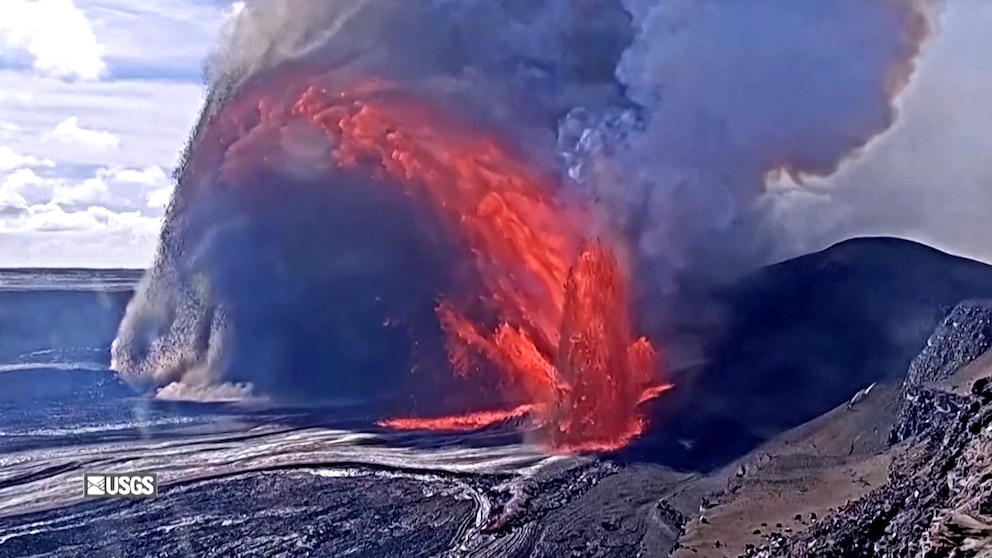
When Hawaii's Kilauea volcano began spewing high lava fountains over the weekend, it destroyed the U.S. Geological Survey camera situated in a closed-off area in the Halema‘uma‘u crater at Hawai‘i Volcanoes National Park on the Big Island.
Footage from the eruption shows the camera malfunctioning after it was engulfed by lava.
Eruptions at Kilauea began Saturday morning and sent lava shooting at least 1,000 feet into the air, according to the USGS.
At one point, a "rare" triple fountain occurred: three lava fountains spewed from vents in the north and south cones.
The eruption lasted for more than 12 hours.
Several of the eruptions that occurred since the series began in December 2024 have produced high fountains -- some up to 1,500 feet, according to the USGS.
The most recent eruption included threats of high levels of volcanic gas and Pele's hair, the term for strands of volcanic glass produced by lava fountaining activity.
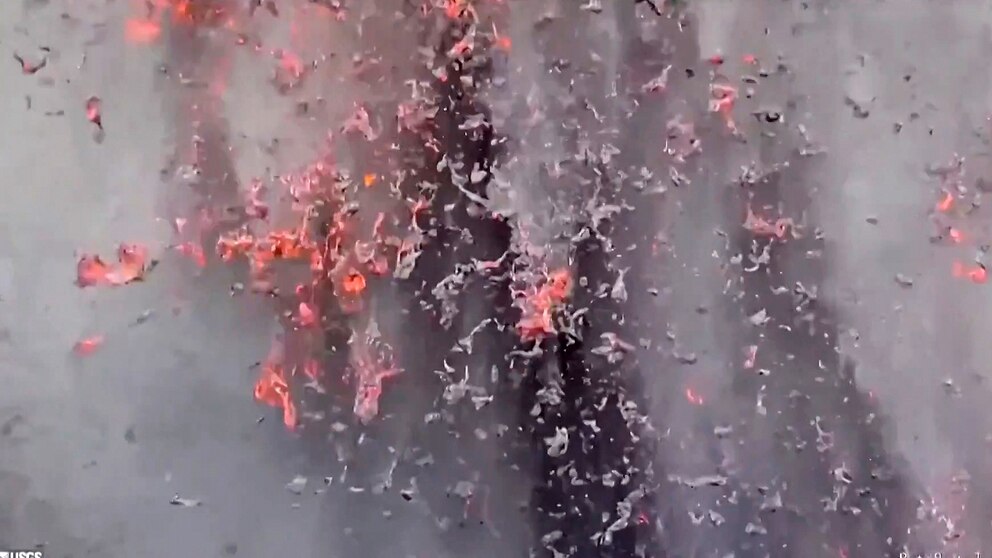
Volcanologists also warned of tephra, or hot glassy volcanic fragments, as well as volcanic ash, pumice, scoria and reticulite, which can fall on the ground within one to three miles of the eruptive vents.
Various volcanic fragments have been known to fall on Highway 11, west of Hawai'i Volcanoes National Park.
Instability, ground cracking and rockfalls are present around the Kīlauea caldera, which is why that area of Hawai'i Volcanoes National Park has been closed since 2007.
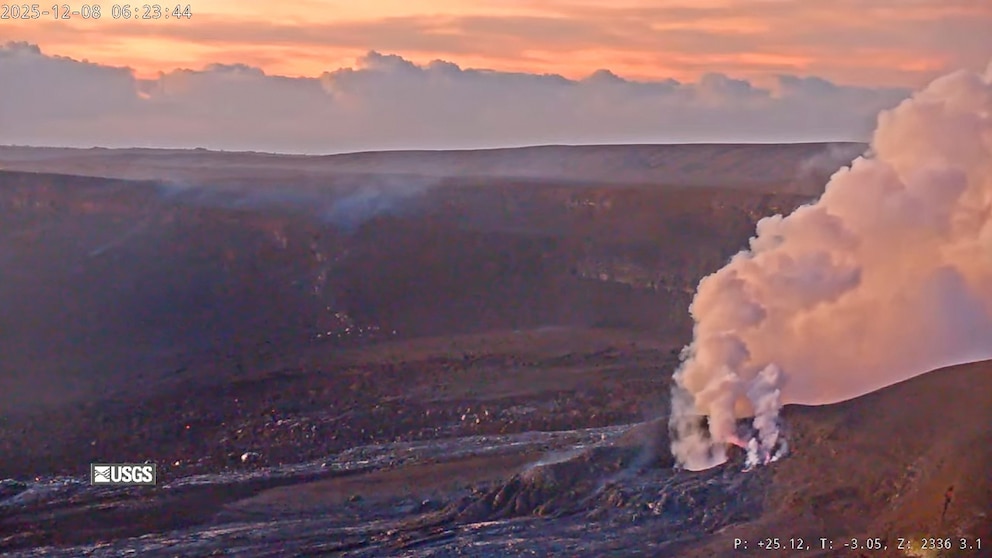
A code orange, or Volcano Watch, was still in place for Kilauea on Monday morning, according to the USGS. A code orange indicates that an eruption is either likely or occurring, but with no, or minor, ash.
The onset of another eruption is expected in the next two to three weeks, according to the USGS.