• Video
  • Shop
  • Culture
  • Family
  • Wellness
  • Food
  • Living
  • Style
  • Travel
  • News
  • Book Club
  • Newsletter
  • Privacy Policy
  • Your US State Privacy Rights
  • Children's Online Privacy Policy
  • Interest-Based Ads
  • Terms of Use
  • Do Not Sell My Info
  • Contact Us
  • © 2026 ABC News
  • News

New Horizons: What's Next for Space Probe After Pluto Flyby
1:41
Space Fans Await Photos From NASA's Pluto Flyby
SSPL/Getty Images
ByALYSSA NEWCOMB and ERIN DOOLEY
July 15, 2015, 3:10 PM

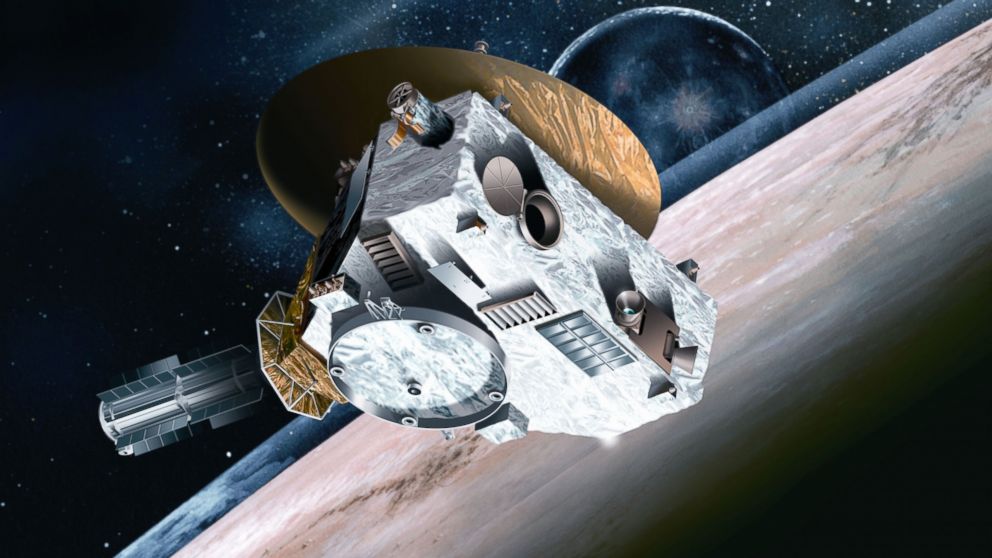
— -- After flying by Pluto, the work isn't over yet for NASA's New Horizons spacecraft.

The piano-sized probe will spend the next 16 months transmitting data from back to Earth from its encounter with Pluto, with the information being categorized by low, medium and high priority. It will likely make its last transmission in October or November of next year, officials said.

Related Articles

New Horizons: 5 Discoveries the Space Probe Made on Its Journey to Pluto

Related Articles

Pluto Flyby: New Horizons Carrying Ashes of Astronomer Who Discovered Dwarf Planet

Related Articles

New Horizons: A Look At Its 9-Year Path to Pluto

Pluto and its moons aren't the last objects New Horizons will explore. While the spacecraft loses about a few watts of power each year, it still has plenty of power left, giving it the potential to explore for 20 more years.

If all goes according to plan, the probe will head deeper into the Kuiper Belt, an area that is the largest structure in the planetary system, with more than 100,000 miniature worlds ripe for exploration, according to NASA.

After the Kuiper Belt, New Horizons would then have the chance to go further, according to principal investigator Alan Stern, "to explore the deep reaches of the heliosphere," an area extending far beyond the orbit of Pluto.

"Eventually, we’ll get to a point where we can’t operate the primary spacecraft computer and the communications system. We’ve estimated that that point will be reached sometime in the mid 2030s, roughly 20 years from now," Stern said at a news conference on Tuesday. "Over those next 20 years, if a spacecraft continues to be healthy, it could operate and return scientific data."

Launched in January 2006 on a 3 billion mile journey to Pluto, New Horizons "phoned home" on Tuesday night, indicating that it had successfully navigated just 7,700 miles from the dwarf planet Tuesday morning, NASA said.


Up Next in News—

Mother charged after teen son allegedly hits and injures 81-year-old veteran while riding e-motorcycle

April 23, 2026

UK bill banning smoking products for those born after 2008 is one step away from becoming law

April 22, 2026

Pilot killed in Florida plane crash hailed as hero

April 21, 2026

Athlete drowns during Ironman Texas triathlon

April 20, 2026

Shop GMA Favorites

ABC will receive a commission for purchases made through these links.

Sponsored Content by Taboola

The latest lifestyle and entertainment news and inspiration for how to live your best life - all from Good Morning America.
  • Contests
  • Terms of Use
  • Privacy Policy
  • Do Not Sell My Info
  • Children’s Online Privacy Policy
  • Advertise with us
  • Your US State Privacy Rights
  • Interest-Based Ads
  • About Nielsen Measurement
  • Press
  • Feedback
  • Shop FAQs
  • ABC News
  • ABC
  • All Videos
  • All Topics
  • Sitemap

© 2026 ABC News
  • Privacy Policy— 
  • Your US State Privacy Rights— 
  • Children's Online Privacy Policy— 
  • Interest-Based Ads— 
  • Terms of Use— 
  • Do Not Sell My Info— 
  • Contact Us— 

© 2026 ABC News