Iran's Ayatollah Khamenei said he rejects Trump's offer to talk
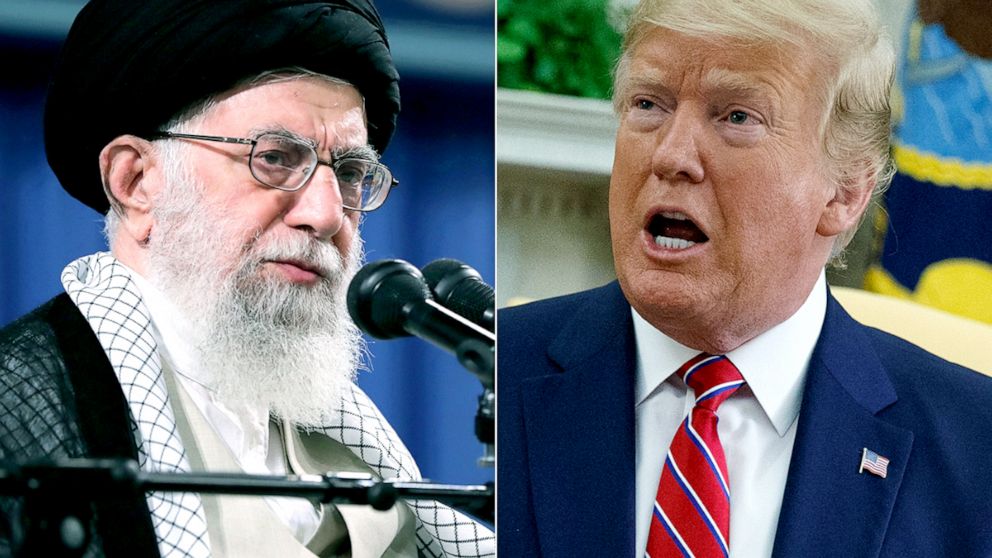
Amid renewed high tensions in the Persian Gulf, Iran's Supreme Leader says he has rejected an offer from President Donald Trump to talk, blasting the U.S. as insincere in its offer and untrustworthy.
"I do not consider Trump as a person worth exchanging any message with," Ayatollah Khamenei reportedly said.
Hours later, Trump tweeted that he wasn't "ready" to talk either and it was "too soon to even think about making a deal."
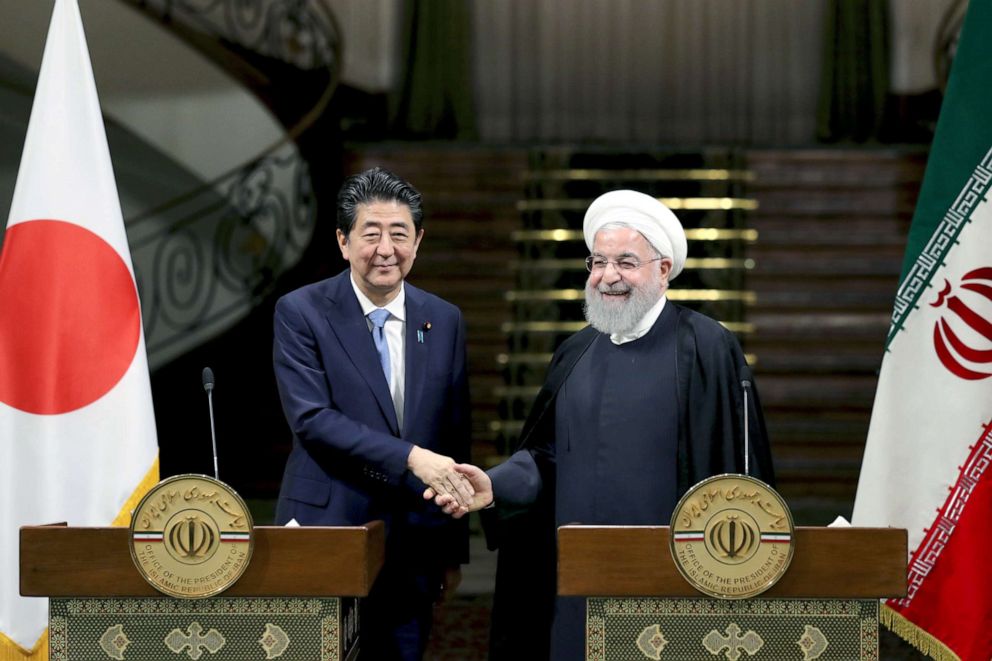
Khamenei met with Japan's Shinzo Abe on Thursday in Tehran, saying that the prime minister carried a message from the president that "negotiations with the U.S. would lead to Iran's progress."
The White House has not responded to questions about whether Trump gave Abe a message, but the president himself thanked Abe for "going to Iran to meet with Ayatollah Ali Khamenei."
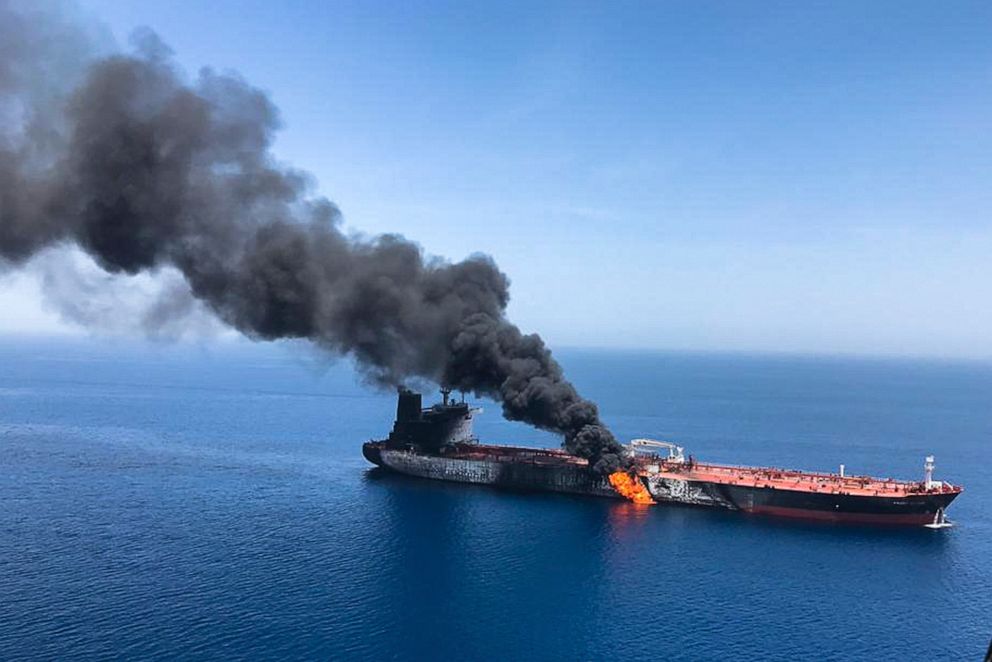
The public rejection of talks with the U.S. came as two oil tankers were reportedly attacked in international waters in the Gulf of Oman. One ship reportedly was on fire, and the other suffered damage. Twenty-one mariners from one of the ships were taken aboard a U.S. Navy destroyer after having abandoned ship, while 23 mariners from the other vessel were reportedly taken to Iran.
Secretary of State Mike Pompeo blamed Iran for the attacks, calling them an "insult" to Japan and Abe because one of the ships is Japanese.
"Iran is lashing out because the regime wants our successful maximum pressure campaign lifted," he said Thursday. "Our policy remains economic and diplomatic effort to bring Iran back to the negotiating table at the right time to encourage a comprehensive deal that addresses the broad range of threats -- threats today apparent for all of the world to see."
Last month, the U.S. accelerated the deployment of an aircraft carrier strike group to the Middle East and set B-52 bombers in what the Trump administration called an act of deterrence amid heightened threats from Iran and its proxies to U.S. personnel in Iraq, Syria, and on the high seas. Iran denied threatening U.S. personnel, in turn accusing the U.S. of ratcheting up tension with its military deployments.
Tensions between the two countries have remained fierce, but the visit of Abe -- a close ally of Trump and the first Japanese leader to visit Iran in over 40 years -- marked a possible off-ramp. Trump spoke by phone with Abe days before he arrived in Tehran, where he was welcomed as a potentially stronger economic partner amid Iran's crumbling economy.
"I would like to give you a message from the President of the United States," Abe told Khamenei at the start of their meeting, according to Khamenei's office.
"We do not doubt your sincerity and goodwill. However, regarding what you mentioned about the President of the U.S., I do not consider Trump as a person worth exchanging any message with and I have no answer for him, nor will I respond to him in the future," Khamenei reportedly said in response.
Both sides have expressed vague openings to dialogue, but only on their own terms and while accusing the other of closing the door.
In particular, Khamenei said the U.S. has shown itself not to be trustworthy or genuine in its peace talks offer by continuing to ramp up economic sanctions on his government, including sanctioning Iran's petrochemical industry last Friday.
"We do not believe at all that the U.S. is seeking genuine negotiations with Iran; because genuine negotiations would never come from a person like Trump. Genuineness is very rare among U.S. officials," Khamenei added in a series of tweets Thursday.
Pompeo, in turn, said it was the Supreme Leader that had "rejected Prime Minister Abe's diplomacy today by saying he has no response to President Trump and will not answer."
While Khamenei repeated that Iran is not pursuing nuclear weapons, he also asserted Iran's right to pursue them if it wanted to, adding, "America could not prevent us."
ABC News's Luis Martinez contributed to this report from the Pentagon.