Has the Jan. 6 committee investigation changed American politics?
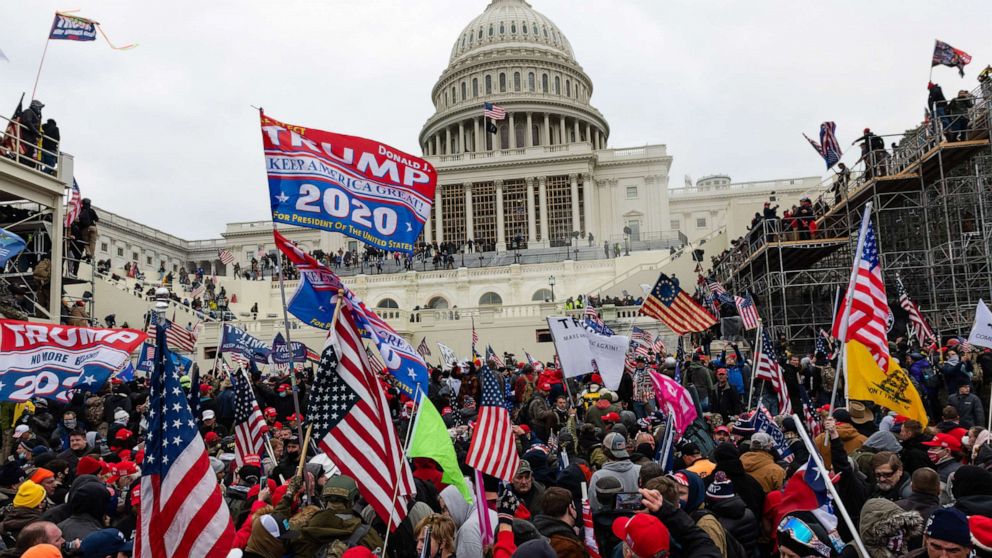
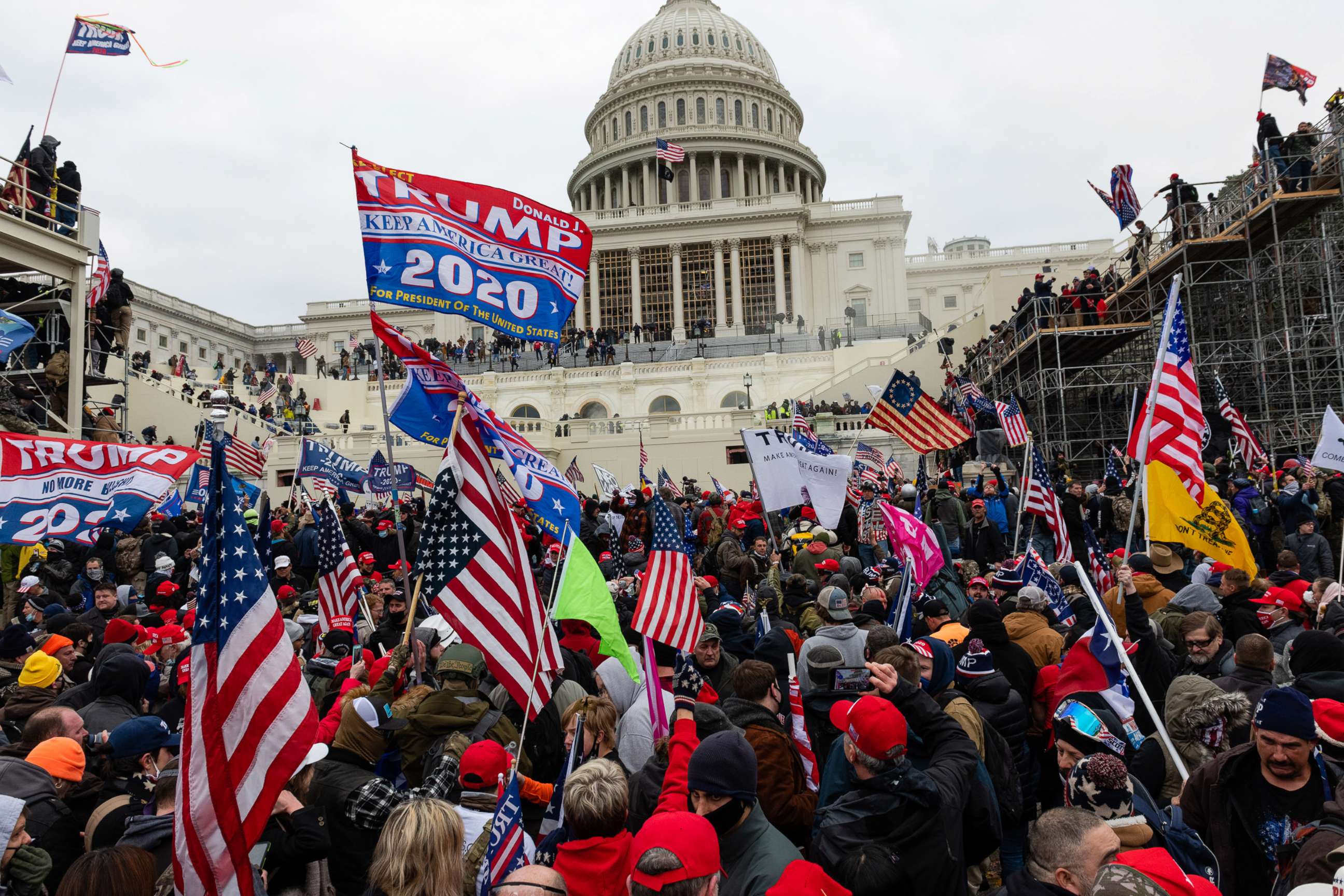
They've been called some of the "darkest days" for American democracy.
The Jan. 6 attack on the U.S. Capitol and the alleged plot to overturn the 2020 election have become alarming inflection points in the nation's history.
Millions of Americans watched as a House select committee revealed the sobering results of its investigation in a series of public hearings from June to December, including moments of bombshell testimony. The panel released its final report just before Christmas, including recommendations for how to avoid another such attack.
But now, two years later, did the committee's probe of what it calls an "attempted coup" have lasting political impact?
There have been some positive signs of change, political scientists told ABC News, pointing to election-denying candidates being defeated in some high-stakes midterm races.
Yet, on other fronts, despite all that has come out, much has stayed the same. Former President Donald Trump has not been deterred from running for the White House once again, and polling shows Americans still polarized about the significance of what happened, while the risk of more political violence remains alarmingly high.
"It's tempting to think that the forces that generated the Jan. 6 insurrection and the anti-democratic strain in American politics are receding," said Robert Lieberman, a political science professor at Johns Hopkins University.
"At the same time, we've got to remember that this was not a product of just one candidate or one president," Lieberman told ABC News. "There are still a lot of underlying structural conditions in American politics that produce this sense of threat ... I think it would be a mistake to believe that the danger has passed."
What's changed
Approximately 900 rioters have been charged in connection with the attack as part of the Justice Department's ongoing investigation into the violence on Jan. 6.
Steward Rhodes, the leader of the far-right Oath Keepers group, and his associate Kelly Meggs have been found guilty of seditious conspiracy -- a rarely used, Civil War-era statute that outlaws attempting to overthrow the government by force.
Political observers also point to midterm election results, as candidates who spread Trump's "big lie" lost bids for senator, governor or secretary of state in battleground states like Arizona, Georgia and Pennsylvania.
Many of those candidates went on to concede, with the exception of Kari Lake in Arizona, quelling concerns of the kind of legal disputes Trump's team carried on for months following the 2020 race.
"We seem to have, at least temporarily, returned to a kind of politics of normalcy," said John Carey, a government professor at Dartmouth College and co-founder of Bright Line Watch, a multi-university effort to assess the state of American democracy. "In this most recent election, mainstream candidates were the ones to prevail."
Bright Line Watch's latest report found ratings of U.S. democracy increased among all political science experts and the public overall after the midterm elections.
What hasn't changed
A familiar face is running for president again. Trump, the man the Jan. 6 committee has said "orchestrated" the attempted coup, announced his candidacy just a week after the midterms.

While some Republicans appear less enthusiastic about what is now Trump's third run for the White House, he's still something of a frontrunner for the party nomination in 2024. Among Republican voters, 70% have a favorable opinion of Trump and more than half of registered Republicans want him to be the GOP nominee, according to a Quinnipiac University poll.
Trump has dismissed the Jan. 6 committee's work and the blasted the panel as partisan, despite two Republican members and a slate of Republican witnesses who've described his pressure campaign to hang onto power.
Republicans in Congress, too, have largely ignored the committee's findings so far. Rep. Kevin McCarthy, who is seeking to become the next House speaker, has indicated he plans to investigate the committee's work and launch a separate, GOP-led investigation into why the Capitol "wasn't secure."
"The unwillingness of Republican elected officials to call out Jan. 6 and describe it as norm-breaking was itself really shocking. And they still have not renounced those positions," Carey said.

In fact, nearly two years later, there's still little the two parties agree on when it comes to Jan. 6 -- or on most anything else.
"What's been continuous of course is the polarization and a clear divide among people who call themselves Democrats and Republicans," said Karen Hult, a political science professor at Virginia Tech.
Ahead of the midterms, polling showed overall public views on the U.S. Capitol attack had not changed much despite the made-for-television hearings. Partisan divides remain on how Democrats and Republicans view Jan. 6. When asked in a recent Quinnipiac University poll if the storming of the Capitol was "an attack on democracy that should never be forgotten" or whether it was time to move on, 77% of Republicans said it was time to move on while 90% of Democrats said it was a day that should never be forgotten.
Still, FiveThirtyEight surveys showed that 33% of Americans, in the days following the election, ranked "political extremism or polarization" as the most important issues facing the country -- second only to inflation.
Plus, a broad number of Americans -- 88% -- are concerned that political divisions are increasing the risk of politically motivated violence, according to a November ABC News/Washington Post poll.
"It seems like the bubbling of contempt and concern of real violent tendencies is still out there in many parts of the United States," Hult said.