Japanese Prime Minister to Meet With Trump at White House, Mar-a-Lago
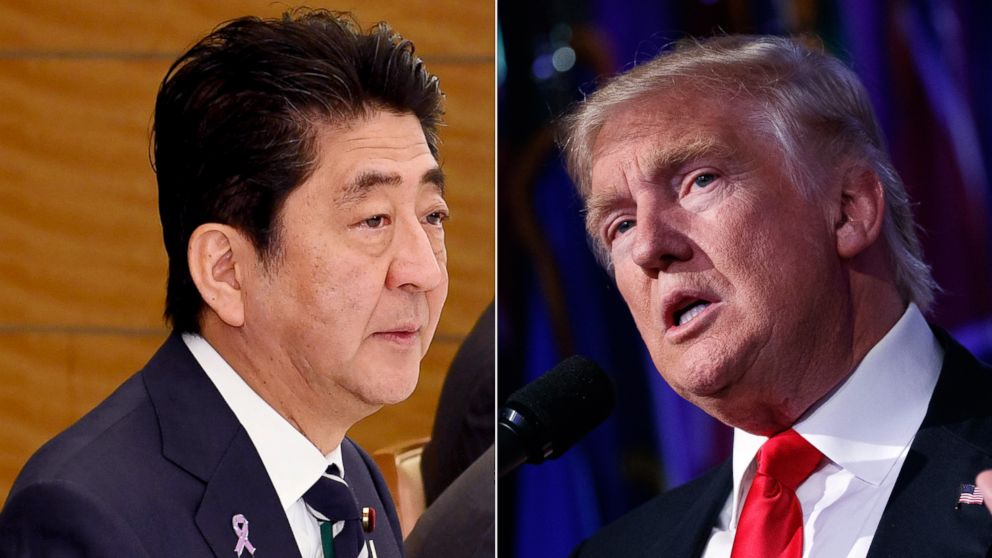
— -- Japanese Prime Minister Shinzo Abe is set to meet with President Donald Trump Friday, becoming the second world leader to meet with Trump at the White House since his inauguration. The Prime Minister will be accompanied by Finance Minister Taro Aso and Foreign Minister Fumio Kishida.
Abe is expected to unveil an economic proposal to invest $150 billion in U.S. infrastructure projects, according to the Japanese newspaper The Asahi Shibun, which reported on details of the draft proposal released earlier this month. The proposal, which includes plans for high-speed railway systems in Texas and California, could create 700,000 jobs in the U.S.
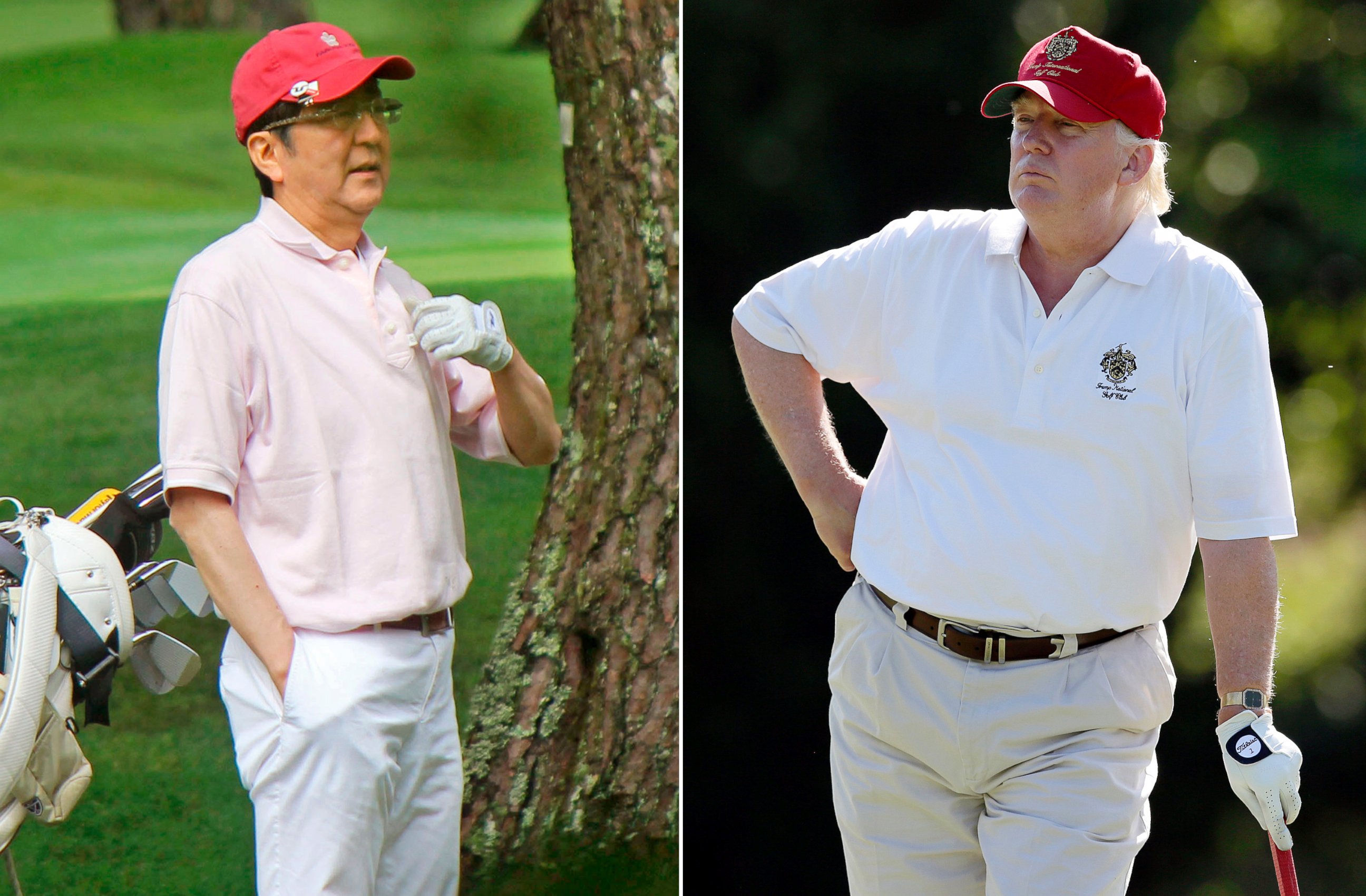
Following meetings in Washington that will likely focus on defense and economic cooperation, Abe and his wife, Akie Abe, will fly to Trump's "Winter White House," the Mar-a-Lago resort in Florida, for weekend golfing. Abe gifted Trump a high-end golf driver when the pair met at Trump Tower in New York last November.
Japan, one of the closest U.S. allies, has already become a focal point for the new administration.
Secretary of Defense James Mattis visited South Korea and Japan on his first official foreign trip in his new post, highlighting the Pacific region’s importance to U.S. security interests. Mattis reaffirmed to Abe the U.S. commitment to the mutual defense treaty with Japan, especially in the wake of North Korea aggression, according to a Pentagon statement on their meeting.
In addition to defense cooperation, one of the most important topics of conversation between Trump and Abe will undoubtedly be some sort of bilateral trade agreement.
In his first days in office, Trump signed an executive order withdrawing the U.S. from the Trans-Pacific Partnership (TPP), much to Japan's dismay. Abe has said he will appeal that decision to the new administration, but has also signaled openness toward constructing a Japan-U.S. free trade agreement or an economic partnership agreement.
According to a White House statement on the Jan. 28 call between Trump and Abe, the pair is "committed to deepen the bilateral trade and investment relationship."
News of America's withdrawal from the TPP drew concern from partners in the region who had seen the trade pact as a check on China's economic and geopolitical influence. Without U.S. participation in the deal, China is free to work its own trade pacts or push an alternative regional treaty that does not include the U.S.
In crafting a trade deal between the U.S. and Japan, expect vehicle sales to be a key issue.
Trump complained on Jan. 23 that Japan does "things to us that make it impossible to sell cars in Japan, and yet, they sell cars [in the U.S.] and they come in like by the hundreds of thousands on the biggest ships I’ve ever seen."
According to Bloomberg, Japan exported 1.6 million vehicles to the U.S. in 2015, while the U.S. sold less than 19,000 to Japan, helping to account for the fact that the country has the fourth-largest trade surplus with the US.
Japan’s trade minister Hiroshinge Seko responded to Trump, saying that Japan does not apply tariffs to US cars and he wants to "explain this to the U.S. side."
Instead of tariffs, some attribute the severe trade imbalance to a perception by Japanese consumers that U.S. vehicles have poor quality.
"I wouldn’t mind driving American cars if they didn’t need maintenance for a year," said Kunihiko Miyake, a former diplomat who is now a visiting professor at Ritsumeikan University in Kyoto, told Bloomberg. "Cost-performance-wise, American cars are not good. That’s why I don’t buy them, not because of the non-tariff barriers."
ABC News' Anthony Trotter and Luis Martinez contributed to this report.