Jobs report shows strong hiring in March, exceeding economists' expectations
The U.S. recorded strong job gains in March, rebounding from dismal losses a month earlier, a jobs report on Friday showed. The reading far exceeded economists' expectations.
The U.S. added 178,000 jobs in March, according to the report, which marked a sharp increase from 133,000 jobs lost in the previous month.
The unemployment rate ticked down to 4.3% in March from 4.4% in February, the Bureau of Labor Statistics (BLS) said. Unemployment remains low by historical standards.
The BLS collected survey data through the second week of March, before the full effects of the oil shock set off by the Iran war.
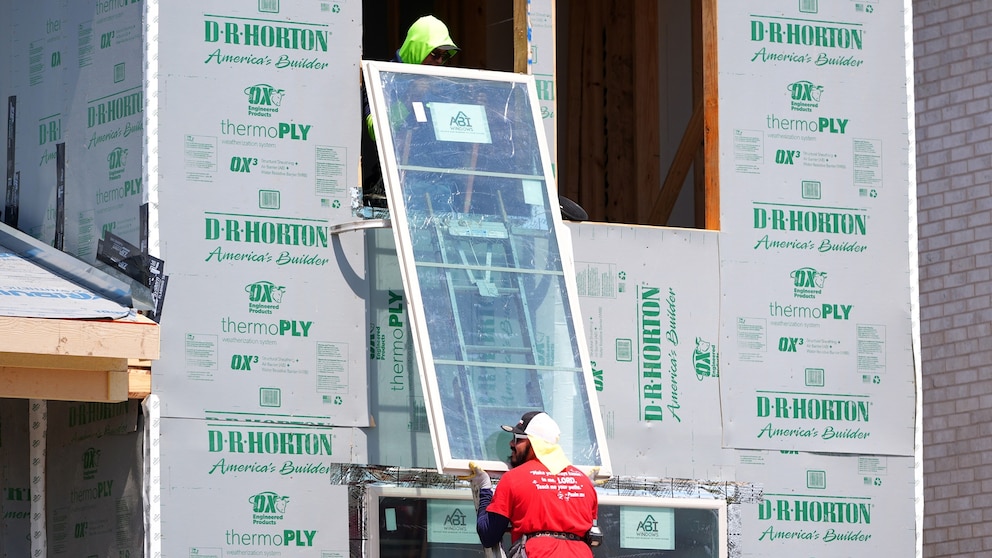
As in previous months, the health care sector stood out as a top source of hiring in March, adding 76,000 jobs, the BLS said. The construction sector, as well as transportation and logistics, also contributed to the surge in hiring.
Employment in the federal government continued to decline in March, shedding 18,000 jobs, the BLS said. The federal government has lost 355,000 jobs, or nearly 12% of its workforce, since October 2024, a month before President Donald Trump was elected.
The government report arrived as the war continues to drive up gasoline prices and borrowing costs, threatening a drag on the economy.
The U.S. added an average of about 15,000 jobs per month in 2025, U.S. Bureau of Labor Statistics (BLS) data showed. That performance amounted to a sharp slowdown from 186,000 jobs added each month in 2024.
The U.S.-Israeli war on Iran, which began on Feb. 28, triggered one of the worst global oil shocks in decades, prompting gloomy forecasts on Wall Street of a potential U.S. recession over the coming months.
In theory, a prolonged oil shortage could drive up prices for a vast array of goods, sapping energy from consumer spending, which powers most of the nation’s economic growth.
Iran has mounted an effective closure of the Strait of Hormuz, a critical maritime trading route that facilitates the transport of about one-fifth of the global oil supply.

The U.S. is a net exporter of petroleum, meaning the country produces more oil than it consumes. But since oil prices are set on a global market, U.S. prices move in response to swings in worldwide supply and demand.
The disruption in oil shipping has pushed U.S. crude prices above $110 a barrel, which marks a staggering rise of more than 50% since the war began on Feb. 28.
Gasoline prices in the U.S. ticked up to $4.08 on average per gallon as of Wednesday, marking a leap of $1.09 over the past month, AAA data showed.
A potential jump in costs for additional goods delivered through the Strait of Hormuz -- such as fertilizer and diesel fuel -- could also raise prices beyond gasoline, putting pressure on the Federal Reserve to hike interest rates in an effort to quell possible inflation.
The benchmark interest rate stands at a level between 3.5% and 3.75%. That figure marks a significant drop from a recent peak attained in 2023, but borrowing costs remain well above a 0% rate established at the outset of the COVID-19 pandemic.
If the Fed moved to raise interest rates, it would hike borrowing costs for many consumer and business loans, risking a slowdown in hiring.
Speaking at Harvard University on Monday, Fed Chair Jerome Powell said the central bank could take a patient approach as it monitors potential price effects from the Middle East conflict.
"We feel like our policy is in a good place for us to wait and see how that turns out," Powell said.
Editor’s note: This story has been updated to reflect the time period covered by the BLS survey.