What CDC found about wearing 2 masks
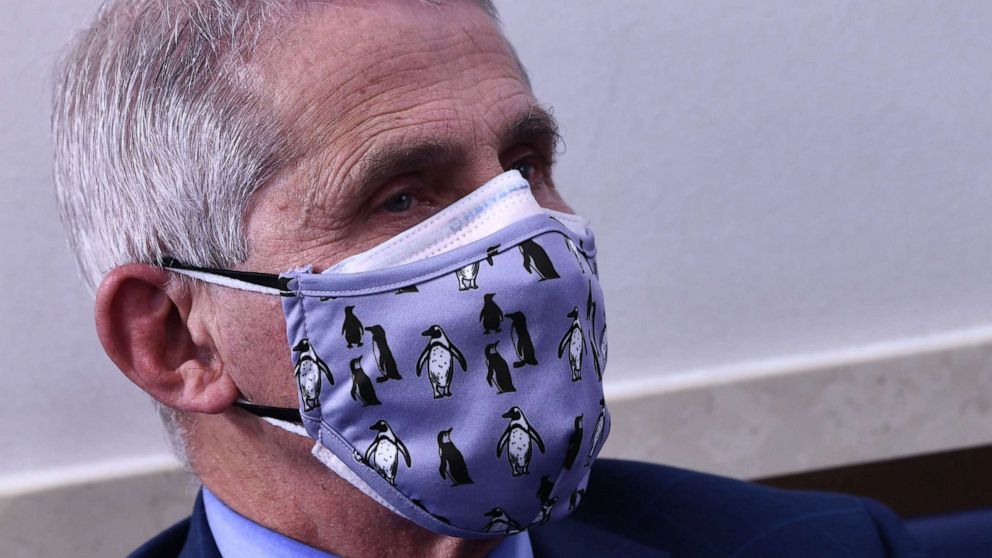
Fit matters when it comes to your mask protecting you against the virus that causes COVID-19, and layering a well-fitting cloth mask over a surgical mask is likely to prove beneficial, according to new findings released Wednesday by the Centers for Disease Control and Prevention.
The findings were not expected to lead to new mask recommendations by the CDC. The public health agency maintains that everyone age 2 and older should wear a face covering when outside their home.
It also doesn’t change the recommendation that primarily medical workers in high-risk environments should rely on N95 masks, which act as a strong filter against any contaminants but is notably tougher to breathe in and withstand for long periods of time.
Still, the experiment touches on some of the big questions Americans have on how best to protect themselves when mixing in public, such as grocery stores and airplanes.
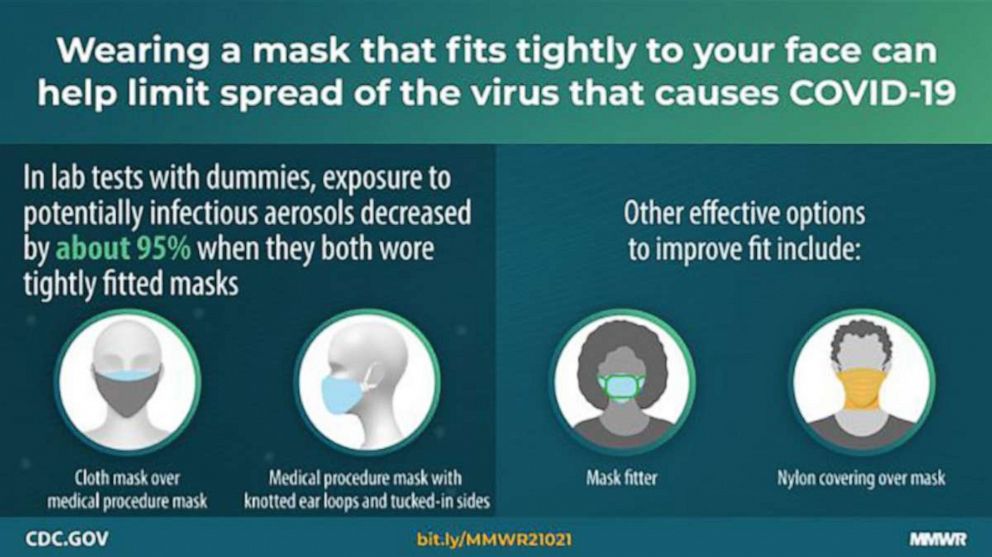
The research suggests that when a person “double masks” -- wearing a polypropylene surgical mask with a cloth mask on top -- and the people around them did the same, the risk of transmitting the virus falls more than 95%.
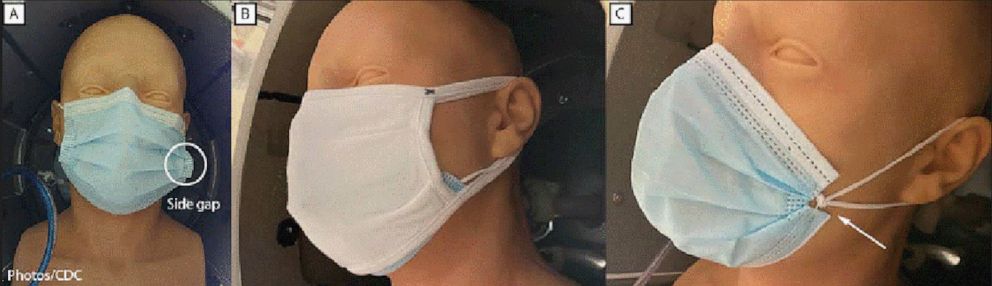
Researchers, who used two mannequin-like forms to test exposure, found a similar benefit with tightening a single surgical mask around the ears to improve its fit. Using a hack known as a “knot and tuck,” the researchers ensured the surgical mask fits closely around the face without gaps.
The benefit, though, fell to 80% if only one person wore the double mask and 60% if only one person knotted their surgical mask for a tighter fit.
Dr. John Brooks, chief medical officer for the CDC’s COVID-19 emergency response, said the research results suggest that combining the close fit of a cloth mask with the filtration of a surgical mask is a good option.
It also makes the case that “community masking” -- everyone wearing a mask and not just a few people -- matters.
“Universal masking is one of our most potent interventions to control the pandemic, we believe,” Brooks told ABC News in an interview.
“When all of us mask, not only does it giving us some personal protection. But by each of us doing that, we're protecting other people,” he added.
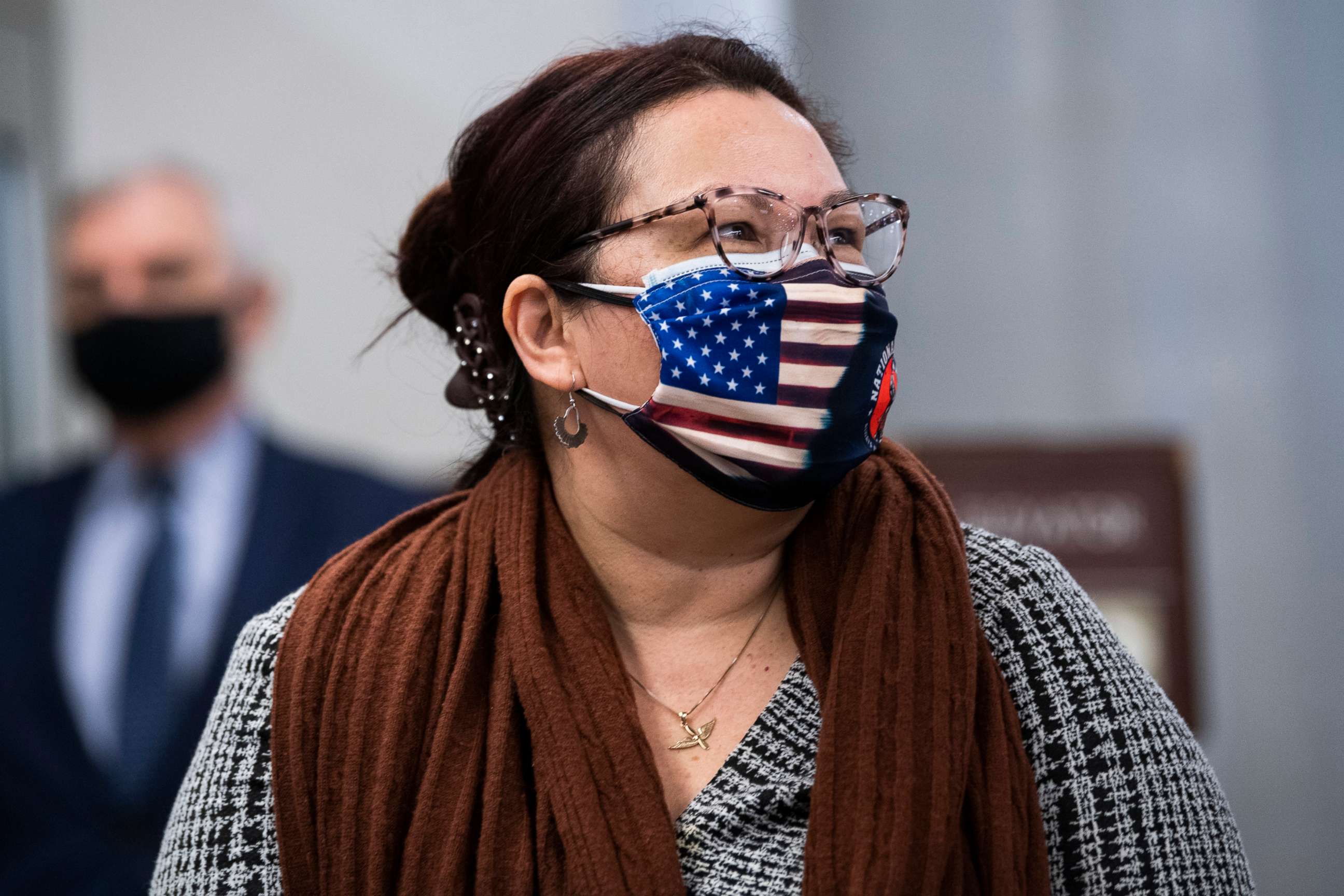
The CDC has struggled with its public message on masks. Early in the pandemic, health officials urged the public not to wear masks because of concerns about dire shortages for health care workers. They also believed the virus would behave like other respiratory viruses and mostly transmit when a person shows symptoms like a cough and fever.
But after research showed the virus that causes COVID-19 was spreading at an alarming rate through some people who never had symptoms, the CDC in April 2020 abruptly shifted gears and began recommending the public wear cloth masks. By June 2020, the World Health Organization agreed that people should wear masks especially when social distancing is not possible.
In recent weeks, the CDC has been pressed on whether it should toughen its recommendation on masks because of new variants of the virus that make it more transmissible. One question was whether the CDC might embrace N95 masks for public use and try to boost production. There are still shortages of N95 masks.
But agency officials have declined to suggest specifically that Americans wear the tight-fitting N95s because -- while highly effective -- they are particularly difficult to wear for long periods of time because they are harder to breathe in.
Also, CDC Director Rochelle Walensky has said wearing an N95 mask probably isn’t necessary in public places.
“I think if everybody is wearing a mask, if you're wearing it and six feet apart … you have enough protective effectiveness in the barriers of those two masks and the space between you that you probably don't need it,” Walensky said Jan. 27 during a CNN Town Hall.
Dr. Anthony Fauci, the nation’s top infectious disease expert and President Joe Biden’s chief medical adviser, has said people shouldn’t read too much into the evolving discussion on masks. Scientific experiments are likely to shed new light on what’s most effective, but the recommendation on face coverings remain the same.
“The discussion is changing, not the goalposts,” Fauci told Fox News on Jan. 27, responding to a question about how many masks a person should wear.
He later added: “You know what would be a good start? If everybody wears at least one mask. I think that would be important.”
Brooks cautions that people shouldn’t read too closely into the specific efficacy numbers from the experiment. Researchers didn’t experiment with different types of cloth materials and other combinations might be just as useful. Brooks said other options might be using “mask fitters” and a nylon stocking sleeve.
But the research demonstrated the principle that when the fit is improved, that improves the overall efficiency of how the mask performs. And if the mask is better at stopping the virus, that in turn can prevent viral mutations that threaten the efficacy of vaccines.
“We want to communicate to the public that if you want to get more out of that mask, there's a number of low-tech ways you can improve its performance,” Brooks said.