Massachusetts' COVID-19 response was science-based, so why are cases rising?
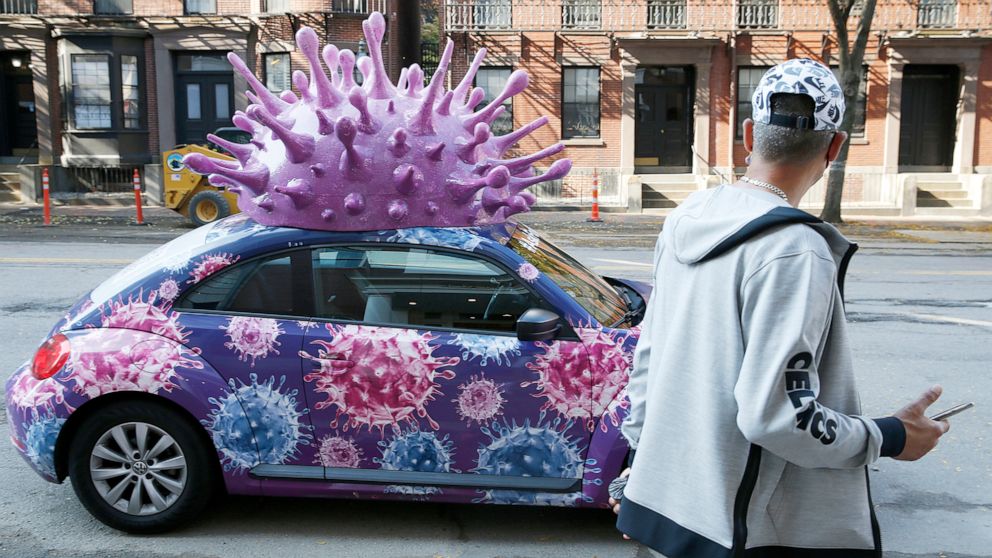
Massachusetts' initial pandemic response is considered to be among the best in the country.
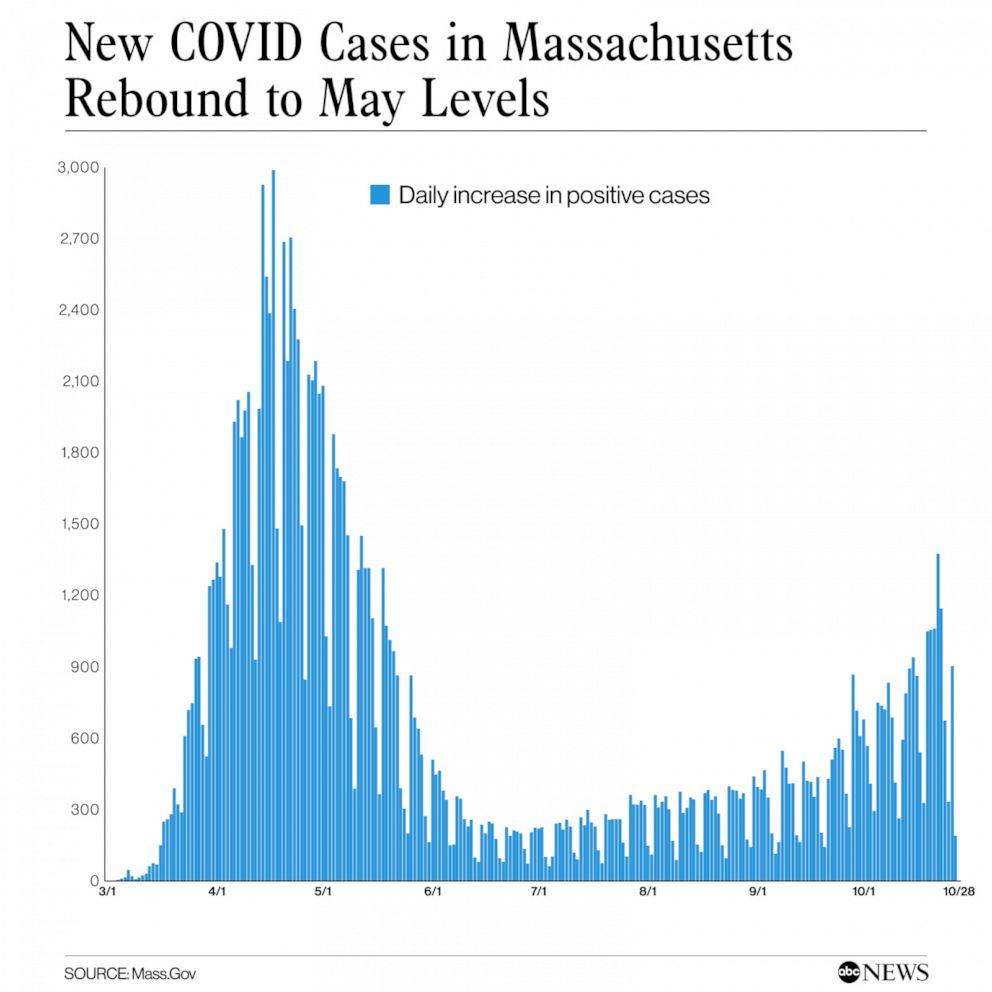
Residents have been wearing masks and the state has collected COVID-19 data and launched one of the nation's first contact tracing programs. For months, the safety measures seemed to be working, but now, cases are on the rise once again. On Thursday, Massachusetts reported 1,243 new COVID-19 cases, according to the health department, marking the sixth day in a row it logged more than 1,000 single-day cases.
Daily case counts now look similar to what the state was experiencing in mid-May, with a seven-day average for new cases up nearly 339% since early September, according to an ABC analysis of state data.
In addition to rising case counts, 121 communities across Massachusetts are currently considered "high risk," according to the state department of health. Identified communities have an average rate of new cases greater than eight per 100,000 over the past 14 days.
To date, Massachusetts has reported more than 151,740 COVID-19 cases. The state has also had 9,727 deaths, more than 65% of which were in long-term care facilities, according to analysis of data provided by the state health department.
"The only silver lining is that the number of deaths has stayed fairly stable since the springtime," said Dr. Howard Koh, a professor at Harvard T.H. Chan School of Public Health.
"But we also know that when cases go up, hospitalizations and ultimately deaths generally follow," said Koh, the former public health commissioner in Massachusetts during the late 1990s and early 2000s.
"Everyone is watching those indicators carefully," he added.
Dr. Sandro Galea, an epidemiologist and dean at the Boston University School of Public Health, thinks it's too soon to draw a storyline about what's driving Massachusetts' rebound.
"There's enormous patchiness," he said of the state's outbreak, which looks very different in Boston than it does in rural areas in western Massachusetts.
And while there's evidence that people under the age of 30 are driving the rebound in new cases this fall, Galea doesn't think the rise is related to Boston's high density of universities, some of which have opened in person.
"Transmissions are quite low," he said of schools.
Instead, he pointed to informal gatherings, especially among young people. "Whether those can come under control is an open question," Galea said. "It's fluctuating day by day."
The weather isn't helping either. States across the country have seen rising COVID-19 cases and hospitalizations in recent weeks. "Drier conditions are creating more transmission," said Dr. John Brownstein, chief innovation officer at Boston Children's Hospital and an ABC News contributor. "People are starting to spend more time indoors with the temperature coming down."
A 'tenacious' virus
What Massachusetts' rising case count doesn't show is that the state took a more proactive COVID-19 response than almost any other place in the country and seemed to have the virus in check throughout the late spring and summer.
That's in part because of the strong public health infrastructure that existed in the state before the pandemic, including a hub of universities and hospitals in Boston. "This is a state with a strong public health position and a concentration of medical and public health expertise," Koh said. "This is a state that has been science-based in its response. They've been looking at data every day."
But even in a gold-standard public health environment, stemming COVID-19 without wrecking the economy has proved challenging.
"We're seeing a rise in cases over recent weeks, especially in the last month. This is a tenacious virus," Koh said. "You just cannot be too cautious."
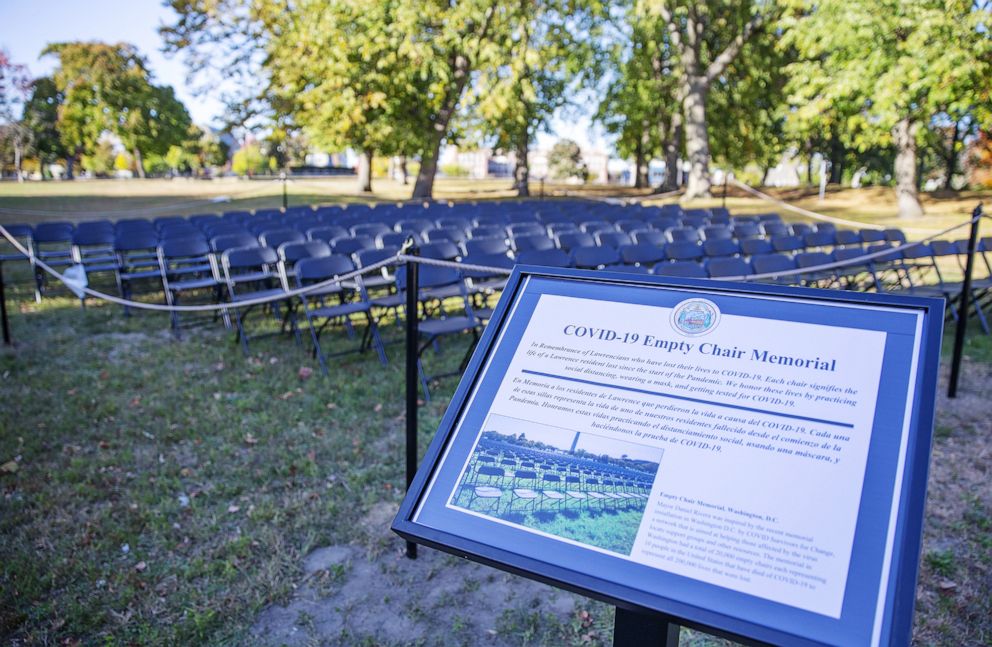
Disparities on display in Boston and Lawrence, Massachusetts
Boston, Massachusetts' biggest city, has unsurprisingly led the state in COVID-19 infections.
And similar to other cities around the country, those nearly 20,000 cases are concentrated in Black and brown neighborhoods. Although Boston's population is only 25% black and 20% Latino, Black and Latino residents are significantly more likely to be infected with COVID-19 than white residents are, according to city data.
Boston's average positive test rate has risen to 7.8%, Mayor Marty Walsh warned at a Thursday press conference. The uptick was even more pronounced in Dorchester, a majority Black neighborhood in the city, which reported a more than 10% testing positivity rate for the week ending Oct. 24.
"All the neighborhoods that are getting hit hardest are the lower-income neighborhoods, these are places where you have multi-generational households, you have many people who are essential workers, who are the ones having to bear the brunt," Brownstein said.
In Lawrence, Massachusetts, an 80,000-person city north of Boston near the New Hampshire border, where most residents are Latino, the 14-day average positive test rate topped 9% on Oct. 28, nearly twice the level that the World Health Organization recommends.
"The pandemic has disproportionately hit communities of color," Koh said. "They have all the social forces that put communities at risk, like being low-income and having multi-generational housing."
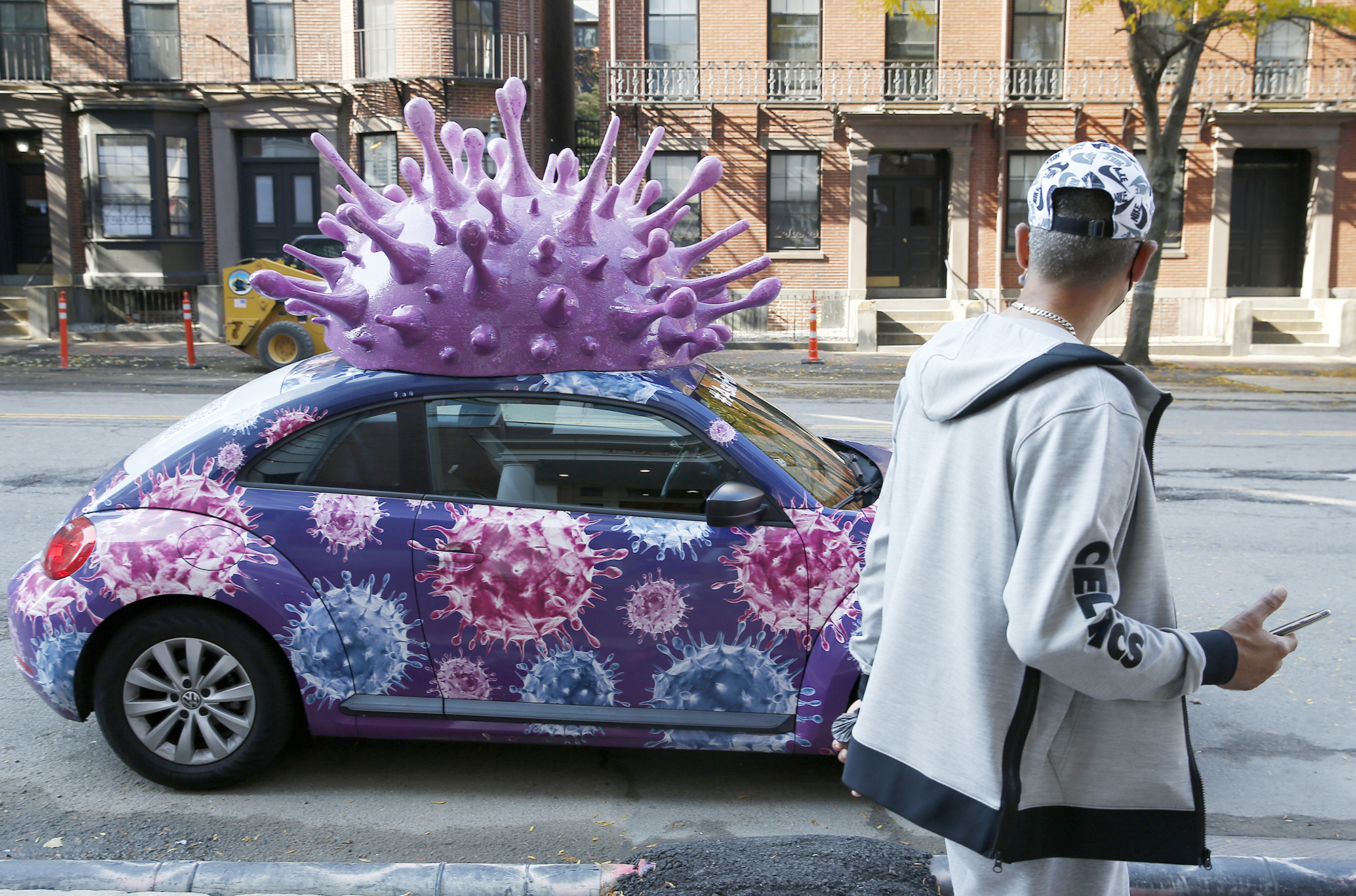
The hard reality of balancing public health and economics
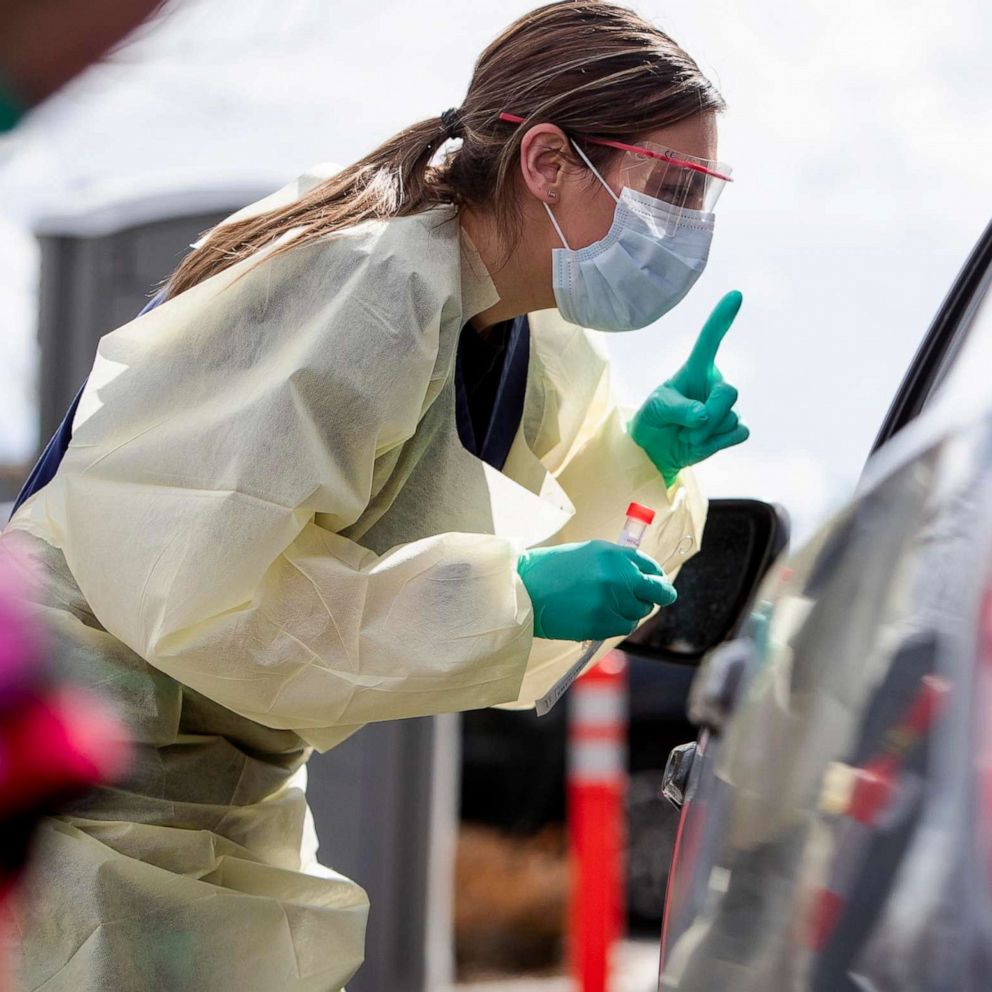
In June, as infections declined, Massachusetts laid off at least 200 members of the state's 1,000-person contact tracing team, an investigation by ABC affiliate WCVB found. In September, as cases ticked upward, the state started hiring contact tracers back.
Koh wishes that the state had kept those people on staff -- permanently.
"I hope contact tracers can be permanent members of revitalized workforce for the future," he said. Contact tracing is most effective when tracers are trusted members of their local communities, Koh explained. For some residents, it's also a lifeline. Tracers ensure that people in quarantine and isolation have access to food and medicine through social services and have their basic needs met.
"Their value goes well beyond infectious control," Koh said. "A large part of the suffering we're seeing reflects the fact that we have an under-resourced public health system," he said of the United States.
In Galea's opinion, Massachusetts officials have done their best to balance the state's public health and economic needs. He applauded leaders for ramping up contact tracing and for giving the public clear public health messaging about COVID-19.
"If you did a Melbourne-style lockdown, you would probably bring cases down," Galea said, noting that at one point last month, Massachusetts had the highest unemployment rate in the country. "That's really hard," he added.
As for places that could be improved, Galea pointed to testing. "Testing remains hampered by general federal chaos," he said. "It's hard to think of ways Massachusetts could be better in the vacuum, absent a broader federal strategy."
What to know about the coronavirus:
- How it started and how to protect yourself: Coronavirus explained
- What to do if you have symptoms: Coronavirus symptoms
- Tracking the spread in the U.S. and worldwide: Coronavirus map
Tune into ABC at 1 p.m. ET and ABC News Live at 4 p.m. ET every weekday for special coverage of the novel coronavirus with the full ABC News team, including the latest news, context and analysis.