Massive Saharan dust cloud headed for Florida: What to know about the annual event

While the idea of a massive dust cloud from the deserts of Africa hitting the United States might seem like the plot of a sci-fi movie -- it's actually just an annual weather event that can give way to some spectacular seaside sunsets.
The dust mass, which forms in the Sahara Desert in northern Africa and blows thousands of miles across the Atlantic Ocean, is forecast to arrive in Florida this week.
The size of the cloud is approximately 2,000 miles wide from west to east and 750 miles long from north to south, according to Accuweather.

When will the dust cloud reach the U.S.?
The plume, which is visible from space via satellite imagery, began reaching Florida on Wednesday and will spread over more of the southeast by Thursday.
The weather phenomenon is a normal, annual event that is often present in the region from late June to mid-August.
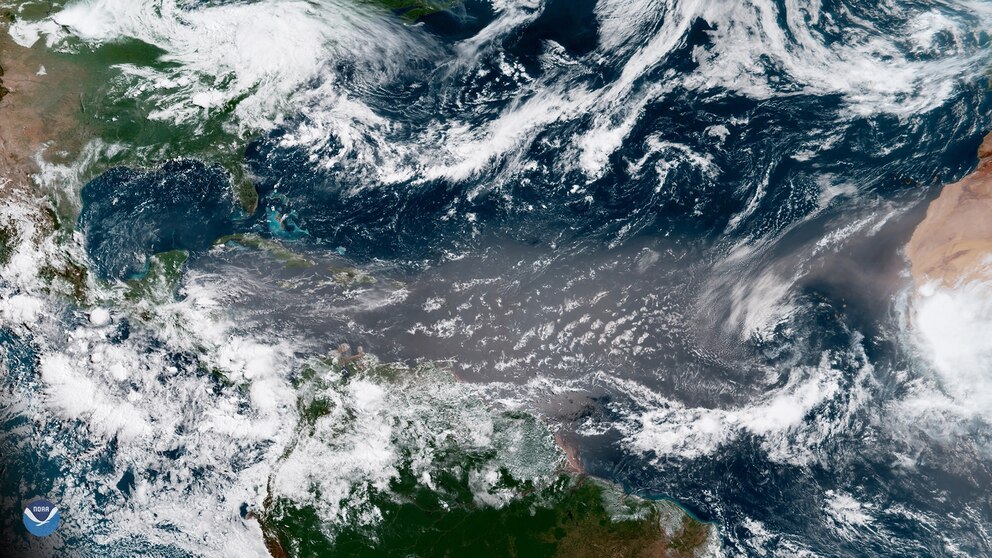
Each year, the atmosphere transfers several hundred million tons of dust, made of minerals such as iron and phosphorus, across the Atlantic to the Caribbean, Central America and South America. The dust mainly affects Puerto Rico but can reach states, including Florida and Texas.
What does the Saharan dust cloud look like?
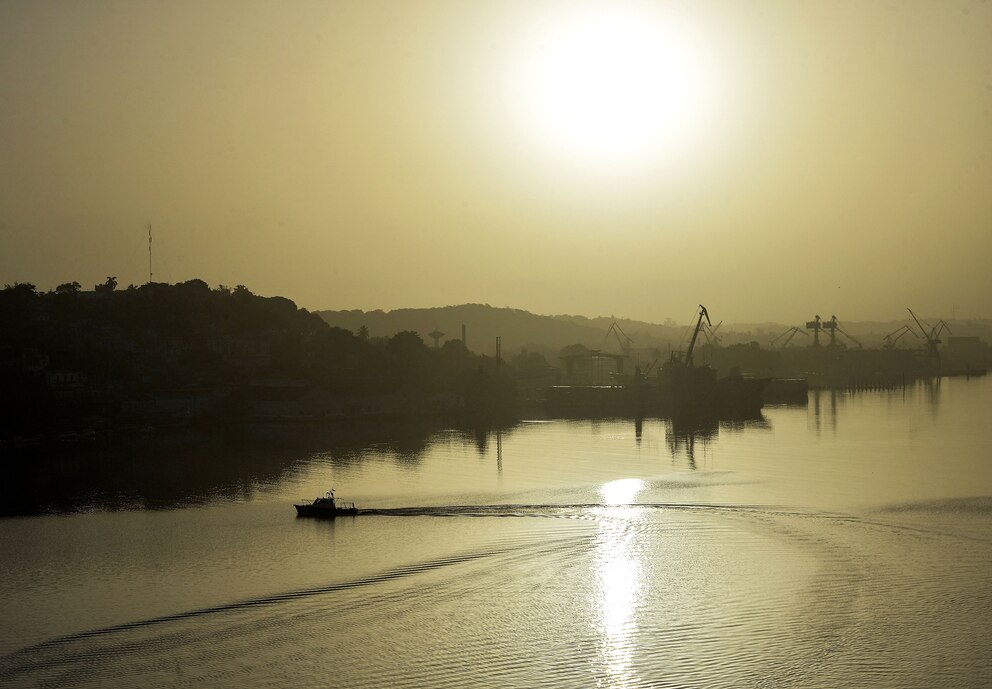
The dust plumes create colorful, picturesque sunrises and sunsets, giving way to deeper oranges and reds when the conditions allow it. Some say the dust cloud makes the sky appear "milkier" or "hazy gray" during the day.
Dry air from the dust cloud can limit the formation of tropical systems, but the moisture over Florida is likely to be stronger than the dust can squash.

If storms persist despite the Sahara dust cloud, the dust and rain combination could lend its way to dropping a mud-like consistency over the area.
Is the Saharan dust cloud bad for your health?
The presence of the Sahara dust in the atmosphere can also be harmful to health, according to the Centers for Disease Control.
Air quality can become poor as particulate matter increases in the air. Additionally, the particles can be breathed in, entering the lungs and bloodstream and affecting those with asthma and upper respiratory complications. Others have described feeling symptoms often related to allergies, the CDC reports.
Large particles from Sahara dust can also cause skin and eye irritation, the CDC said.
While anyone can be affected by Saharan dust, there are some groups at higher risk than others, including babies and children, older adults, people with underlying conditions and those with heart or lung conditions, according to the federal health agency.
Some studies suggest that exposure to desert dust events is associated with a higher risk of heart attacks, particularly in older and already vulnerable populations.
To protect one's health, the CDC recommends checking the local air quality index, reconsider spending time outdoors and, if you go outdoors, perform easy activities like walking as opposed to running.
How does the Saharan dust cloud impact the environment?
There are also benefits when it comes to how Saharan dust affects the ecosystem. For example, minerals in the dust, often rich in iron and phosphorus, can act like a fertilizer and help forests and other vegetation and soils gain nutrients.
Additionally, the ocean's phytoplankton and other marine life benefit from the minerals in the dust. This is important because phytoplankton are the beginning of the food chain in the ocean and help sequester significant amounts of carbon.
However, there are cons, including that dust can accumulate and cover plants, cutting off their ability to undergo photosynthesis, harming or killing the vegetation.
What's more, the dust could be hiding plant-like bacteria, which -- when deposited into the ocean -- can lead to harmful algal blooms, which can lead to a "red tide" of toxins in the oceans.
The dust can also aid in coral bleaching, along with other factors such as very warm water and ocean acidification.
ABC News' Mary Kekatos and Kenton Gewecke contributed to this report.