Military families push extended health care benefits for their children

Debra Ward -- a military wife and mother -- assumed her husband's more than 25 years of service would provide a safety net whenever their child became sick.
The couple's only son, 22-year-old Joel, was diagnosed diabetes over a a decade ago and has already suffered from three life-threatening hypoglycemic shocks while in college.
So when renewing her son's insurance card, it came as a surprise that he would only be eligible for the plan's benefits until he was 23, not 26 like most other dependents in the U.S. After that, she would need to start paying more than $450 in monthly premiums to remain insured under TRICARE, the civilian care component of the Military Health System.
"I didn't believe it at first, with my husband being in active duty and all," Ward said. "Looking at the premiums they were asking for, I thought surely something had been messed up."
While dependents under civilian insurance plans are eligible to remain under their parents' coverage at no additional cost or requirements until the age of 26 as dictated by the Affordable Care Act, the same protocols do not apply to children of military families using TRICARE.
Instead, dependents like Ward's son receive coverage until they turn 21 (or 23 if enrolled full-time at a university), at which point they can either find employment that offers independent coverage or pay hefty premiums through a program called TRICARE Young Adult to hold on to benefits until the age of 26.
"We're not expecting any special treatment, but it does seem like we ought to be at least getting the same treatment everybody else in the country has been receiving for the last 11 years," Ward said.
Across the country, families like Ward's say they are frustrated at a lack of congressional response to what many see as the unjust treatment of military members' dependents.
Despite bipartisan concern about the young cut-off age and high premiums for young adults, Congress has yet to hold a vote on changing TRICARE's young adult provisions.

A bill introduced last year by Rep. Elaine Luria, D-Va., and Rep. Michael Waltz, R-Fla., to extend dependents' coverage until age 26 without premiums failed to make the final version of the fiscal 2021 National Defense Authorization Act.
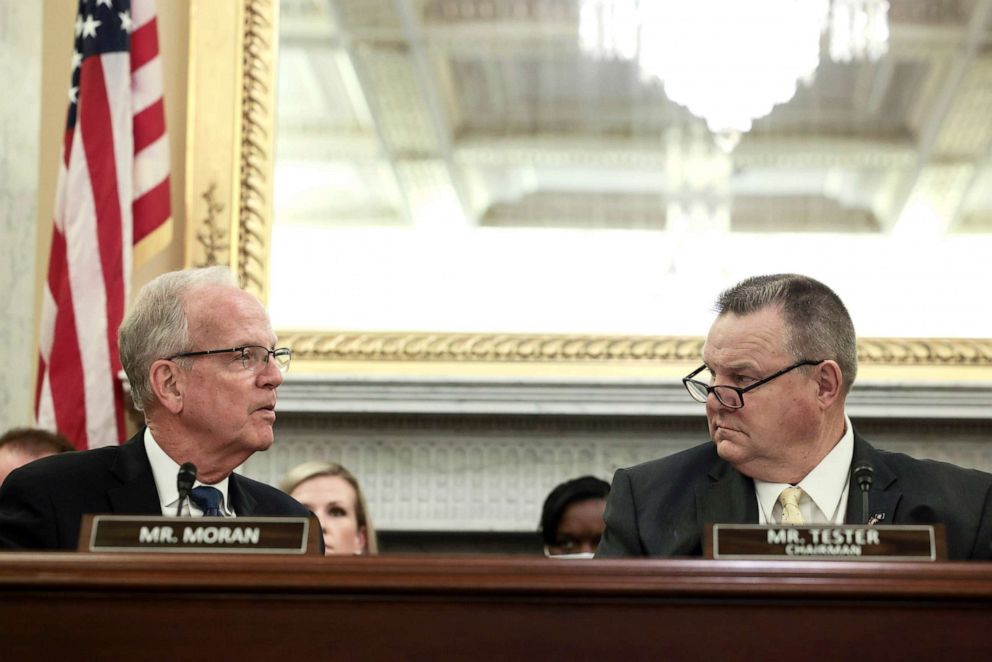
A similar bill introduced this year by Sen. Mark Kelly, D-Ariz., and Sen. Jon Tester, D-Mont., also aims to eliminate premiums for dependents, but it awaits a vote in both the Senate and House.
"Our bipartisan bill allows every military child under the age of 26 to continue receiving steady coverage under their parents' plan, enabling these young adults to finish school or start their careers without worrying about what happens if they get sick," Tester said in a release.
There are currently about 9.6 million beneficiaries under TRICARE, according to the Military Health System. Of those, 37,000 are unmarried, adult children of military sponsors enrolled in TYA.
Eileen Huck, senior deputy director of government relations for the National Military Family Association, said that TRICARE Young Adult is simply too expensive for many dependents, often requiring them to enroll in a university even if they are not prepared for higher education.
"We run into various families and individuals who ran into unexpected costs because their children decided to delay enrolling in college," Huck said. "And whether it's a special needs student, or just someone for whom college isn't the right choice, those life-changing decisions shouldn't' be driven by whether or not they're worried about losing their health care coverage."
TYA's Select and Prime programs were created in 2011 following passage of the Affordable Care Act because military service members are exempt from the national health care reform law, requiring separate legislation to extend benefits. The difference between TYA'S two options is largely the same as PPO versus HMO programs: Those covered under TYA Prime are restricted to receiving coverage from Veterans Affairs clinicians.
The 2011 legislation, however, required that no government funding would be used to cover the cost of TYA , necessitating premiums based on commercial insurance rates and coverage.
The price for the two options of TYA has only been rising since the law went into effect. In 2021, monthly premiums for were set at $257 per month for TYA Select and $459 per month for TYA Prime, a 12.7% and 22% increase from 2020, respectively. For comparison, a study from the Kaiser Family Foundation found that ACA rates have only increased by a median of 1.1% in the last year.
Huck said these steep price tags stem from the nature of TYA that requires all the costs to be borne by the beneficiaries, in addition to a decreasing number of TYA participants.
"Oftentimes we have healthier young adults leaving the program for cheaper but less comprehensive marketplace plans, which means the people with conditions that need more treatments covered through TRICARE end up remaining but paying more as the pool of people participating gets smaller," she said. "It turns into a vicious cycle."
Many military affairs advocates like Jennifer Akin, director of research at Blue Star Families, remain optimistic that bills to address these issues will either be passed independently or included in next year's defense budget.
"I think it's a parity issue," Akin said. "It's very difficult to make the case that military children shouldn't have access to the same health care rights that civilian children do by virtue of their parents' service."