Why a Mom Seeks Medical Marijuana Despite Pediatric Group's Opposition
— -- A leading pediatric medicine group has come out against the use of medical marijuana for children in all but the most exceptional circumstances.
The American Academy of Pediatrics said in a statement today that it is opposed to the use of marijuana for medical purposes in young people, except for drugs that are approved by the U.S. Food and Drug Administration. There are two FDA approved drugs that contain synthetic compounds similar to the active ingredients in marijuana, which the group said could be used with children with "debilitating or life-limiting diseases."
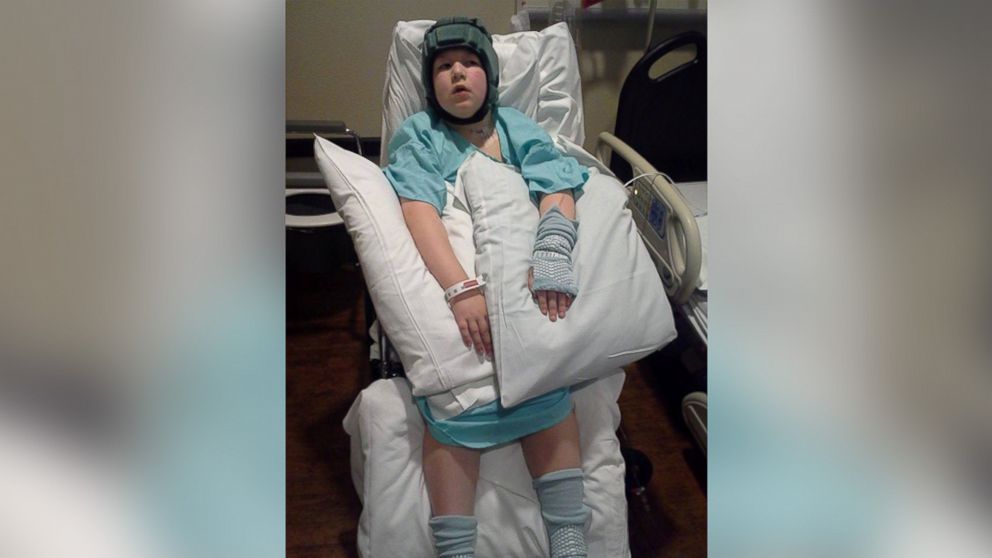
Andrea Saretti said she believes her son Sam, who was diagnosed with epilepsy last year, should be one of the exceptions. He starts each morning by putting on a special helmet and medical bracelet to protect him in case he falls to the ground with a seizure.
Sam, 9, has suffered seizures that have not stopped despite multiple medications and even an electronic implant that is designed to prevent seizures by sending mild electrical pulses to the brain through the vagus nerve.
"He misses a lot of school," Saretti told ABC News. "He had a seizure in the road on the way to the bus stop. ... It happens at school and happens at restaurants and happens everywhere."
The medications Sam is currently on have helped somewhat but they have also led to side effects, including significant weight gain, Saretti said, noting that Sam, who is also autistic, went from 80 pounds to over 120 pounds in just one year of treatment after being prescribed adult doses of medication to try and stop the seizures.
While AAP and other pediatric medicine groups recommend caution when prescribing marijuana for children with epilepsy, patients have turned to the remedy as anecdotal reports suggest it can reduce seizures.
Sam's doctors decided last fall they wanted to try using low-THC cannabis to help Sam, his mom said, referring to the psychoactive chemical found in marijuana. The timing seemed perfect as the Florida legislature passed the Compassionate Medical Cannabis Act in June, allowing doctors to prescribe low-THC cannabis to patients with certain criteria in Florida.
However, while the medical use of the drug became legal as of Jan. 1, Sam and his mother are still waiting to get the medication.
The reason for the delay is that a Florida administrative law judge invalidated the Florida Health Department's plan to use a lottery system to choose marijuana growers. As a result, no one in the state is currently allowed to grow marijuana. The Florida Department of Health said it will meet again with potential growers in February to decide how to proceed, according to ABC affiliate WFTV in Orlando.
Saretti said she's hoping something will change in the coming months so that Sam can stay in school rather than be stuck at home, where he can be more easily monitored. It's unclear if the new AAP statement will have any influence on the process.
"We're looking at [being] home-bound now for the remaining of the year," said Saretti. "You look at quality of life -- something like [the Compassionate Care Act] can give him back a quality of life."
The AAP's statement today reaffirmed the group's earlier position that more study is needed to determine the effectiveness and dosing of the drugs in young people. They are concerned that the risks outweigh the benefits, the statement said.
"We should not consider marijuana 'innocent until proven guilty,' given what we already know about the harms to adolescents," said Dr. Sharon Levy, chair of the AAP Committee on Substance Abuse.